Published
Everyday cleaningA weekly cleaning routine for an apartment
Clear what blocks your cloth, wipe the kitchen and bathroom, dust, then vacuum. Save the oven and cupboards for another day.
Written by  Emma Korhonen
6 min read

Quick answer
Clear what is in the way, wipe the kitchen and bathroom, dust, then vacuum. Wipe floor marks only where needed. Deal with dishes, spills and full bins between weekly cleans; save the oven, windows and cupboards for another day.
The routine at a glance
The apartment rarely waits politely for cleaning day. A mug lands on the desk, crumbs gather under the table and the hallway collects shoes. Start by moving what blocks your cloth. Wipe the kitchen and bathroom, dust the surfaces you can reach, then vacuum. Wipe a floor mark if it needs it. That is the weekly route. The oven and cupboard interiors can have their own day.
If that still feels like too much, do the kitchen worktop, toilet, basin, obvious floor mess and full bins. Pick up the rest later. A shorter clean still counts.
Martat's cleaning calendar (Opens in a new tab) puts dishes and fresh spills in everyday care, while dusting, vacuuming and bathroom cleaning sit in the weekly round. Use that as a guide, then let the state of your own home set the pace.
Your weekly round
What belongs in the everyday reset
The weekly clean goes faster when it does not begin with a week's dishes. Clear the place where you prepare food, wash or load the dishes and wipe fresh spills. Empty a bin when it is full. You do not have to tidy the whole apartment every evening.
One small habit can save a surprising amount of work. In a tiny kitchen, keep one stretch of worktop clear. In a shared flat, agree who handles the dishes and the shared bin. HOAS's home-care guide (Opens in a new tab) includes daily dishes and kitchen surfaces among its resident tasks.
Wipe up a spill when you see it, especially on a floor. Martat advises removing liquids and melted snow promptly (Opens in a new tab). A puddle by the door is easier to dry now than after it has travelled through three rooms.
Set up one kit and clear a route
Bring out clean cloths, your usual surface cleaner, bathroom supplies and a vacuum. Add a floor cloth or mop if the floor needs wiping. Martat says a small range of products is enough for ordinary home care (Opens in a new tab). Keep one cloth for the toilet area and use each cleaner as its label says. Do not mix products.
Move shoes, light objects and chairs just far enough to reach the surfaces underneath. You are clearing a path, not reorganising every drawer. If a shelf is packed, clean the exposed part and leave the inside for another day. Work through the rooms in an order that lets you vacuum toward the door at the end.
Wipe the kitchen you actually use
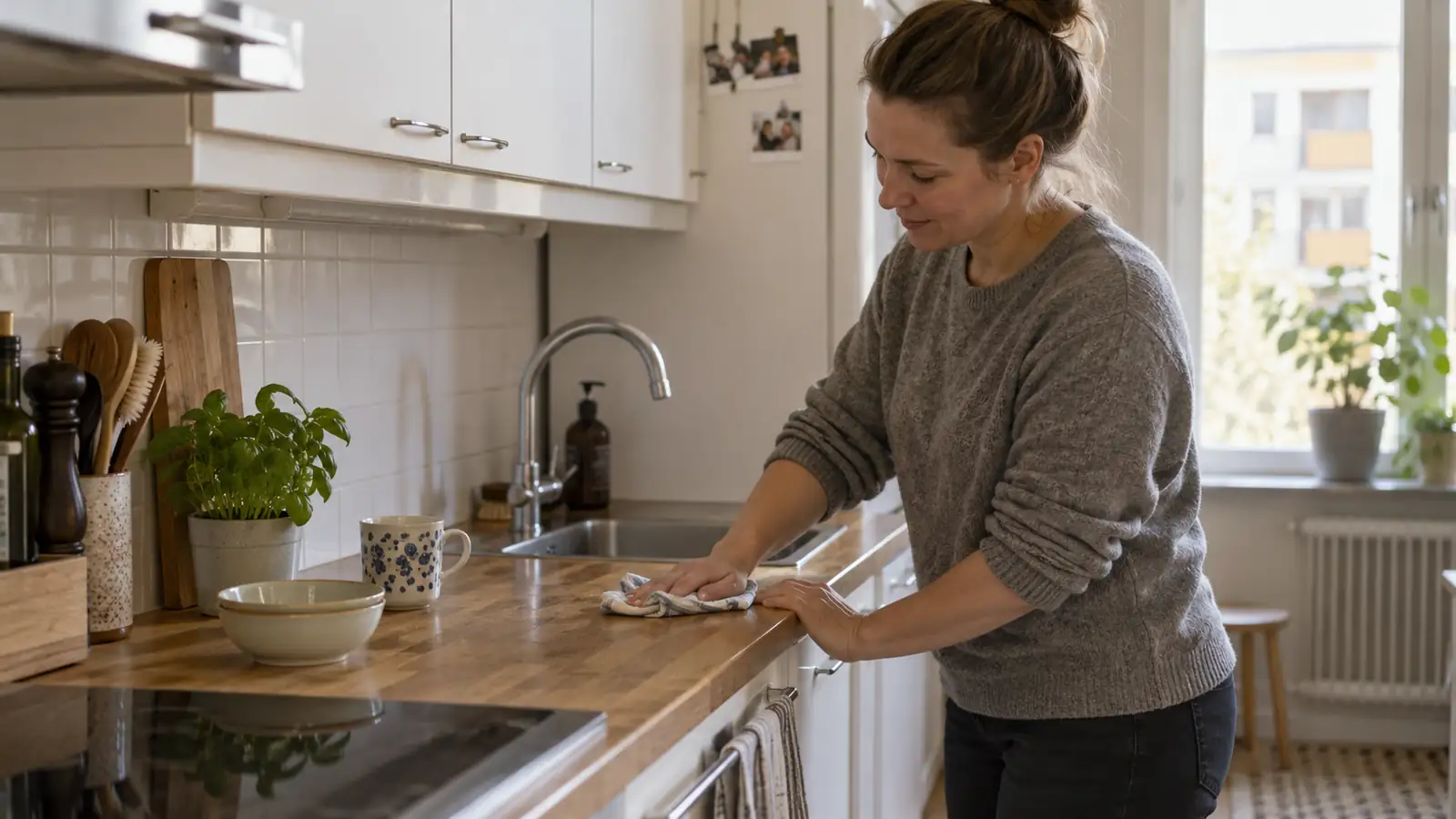
Start where food happens: the worktop, table, sink and cooled hob. Move loose items, pick up crumbs and wipe with a cleaner that suits each surface. Give the taps, handles and appliance fronts a quick pass if they are marked. Rinse or dry a surface when the product instructions call for it.
A spill inside the fridge is worth dealing with. Washing the entire fridge, oven or extractor filter is a different job. Martat's calendar (Opens in a new tab) treats appliance care and cupboard interiors as occasional work. Write one of those jobs down if it needs doing; do not let it quietly swallow the weekly clean.
In a studio, the kitchen might sit beside your desk or sofa. Wipe the cooking area before you carry your cloth into the living space. In a shared kitchen, clear the dishes together before anyone starts wiping. There is only so much a cloth can do under a stack of plates.
Clean the bathroom without expanding the job
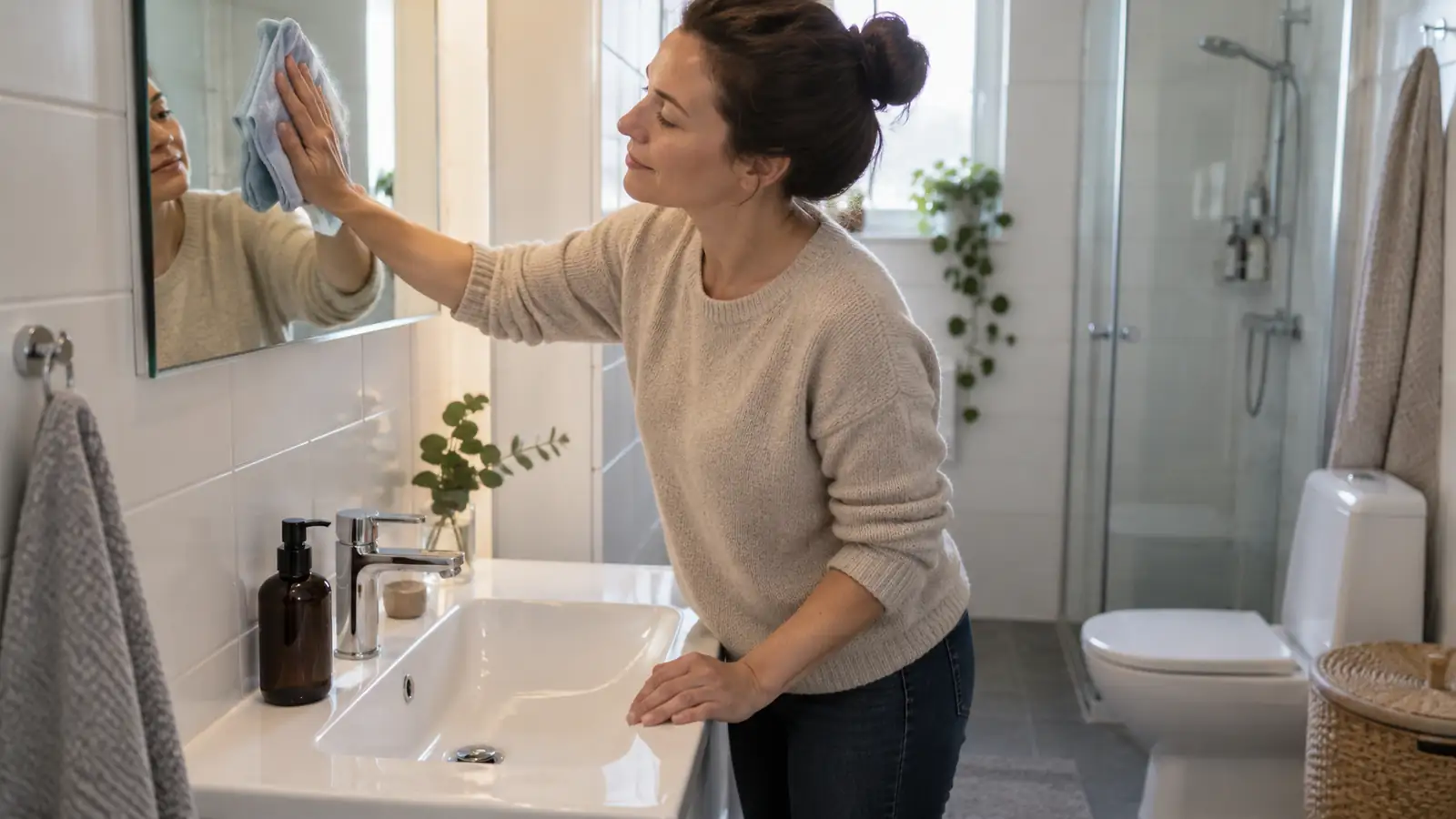
Clean the basin, tap and toilet, then wipe the mirror and shower surfaces where you can see marks. Use a separate cloth for the toilet. Follow the cleaner's label for how long it should stay on a surface and whether it needs rinsing. A strong limescale remover does not belong on every tile, stone or fitting.
Lift visible hair from the shower area and the top of the drain. A full drain clean can wait for its own session. If water keeps pooling or a fitting looks damaged, tell building maintenance or your landlord. Scrubbing harder will not repair it.
If several people use the bathroom, decide who takes which job. A shared room needs a shared plan, not a list that somehow ends up with one person.
Dust before the floor pass
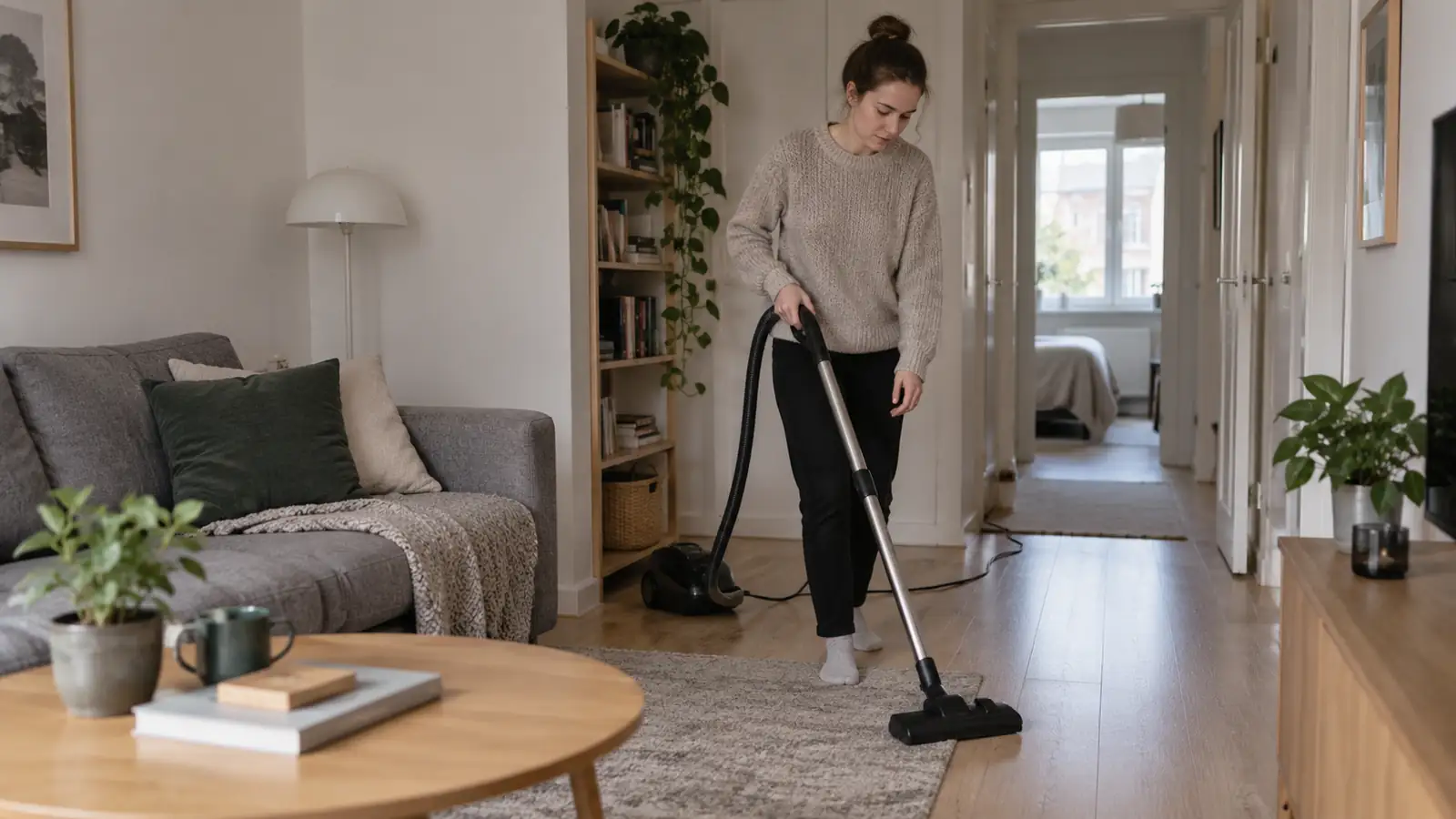
Wipe the shelves, tables and windowsills you can reach. Lift an object, wipe beneath it and put it back once the surface is dry. A slightly damp cloth can hold dust on many surfaces, but use the care instructions for delicate finishes and keep moisture away from electrical items.
Then vacuum the floors and mats. Go under light furniture you can move easily. The top of a tall bookcase does not need to join the weekly round just because you remembered it exists. Martat's dust guide (Opens in a new tab) treats frequency as something that depends on the home. If you use a robot vacuum, remember that it misses some corners and tight spaces, as Martat notes (Opens in a new tab).
Match the floor wipe to the material
Vacuum up grit before wiping. Then look for actual marks. A small spill may need a cloth, not a bucket for the whole room. Martat's floor guide (Opens in a new tab) recommends choosing the method for the material and avoiding excess water.
For laminate, Martat recommends a barely damp cloth or mop (Opens in a new tab). Wood floors vary by finish; Martat's wood-floor guide (Opens in a new tab) explains why lacquered, oiled and waxed floors need different care. If you do not know the finish, check the home's care instructions before choosing a product.
Winter has its own small addition. Leave wet shoes on a suitable mat, dry the puddle and pick up the grit by the entrance. In Helsinki, Espoo and Vantaa, that quick hallway pass can matter more than washing the rest of the floor.
Make the routine fit the people and the week
You can do this route in one session or split it: kitchen and bathroom one day, dust and floors another. Choose days you will actually use. If a pet, frequent cooking or a busy entrance makes one area dirty sooner, clean that area more often without turning every room into a deep-clean project.
For a shared apartment, put the common jobs somewhere everyone can see them. Name the finish line: "empty the bin and wipe the worktop" is clearer than "do the kitchen". DAS advises shared-flat residents to take cleaning turns (Opens in a new tab); your own house rules may add details.
If the plan keeps slipping, make it smaller. A clear cooking space, a usable bathroom and a floor without grit are a good place to start. A move-out clean is different: an empty home and a handover deadline bring cupboards and appliance interiors into the picture.
Know what can wait and when to get help
A leak, broken fitting or damp patch belongs with maintenance, not on a longer cleaning list.
If you would rather hand over the regular pass, see Novah's home cleaning in Helsinki, Espoo or Vantaa. Check the booking for what is included. Then let the weekend be a weekend.