Novah / Give laundry day a little care
How to clean a washing machine. Fresh start, empty drum.
Clean laundry is a lovely thing. A musty machine is less lovely. Before adding another capful of something, check the drawer, the accessible seals and your model's cleaning instructions. The machine may need a small reset, not a chemistry experiment.
Which part needs attention?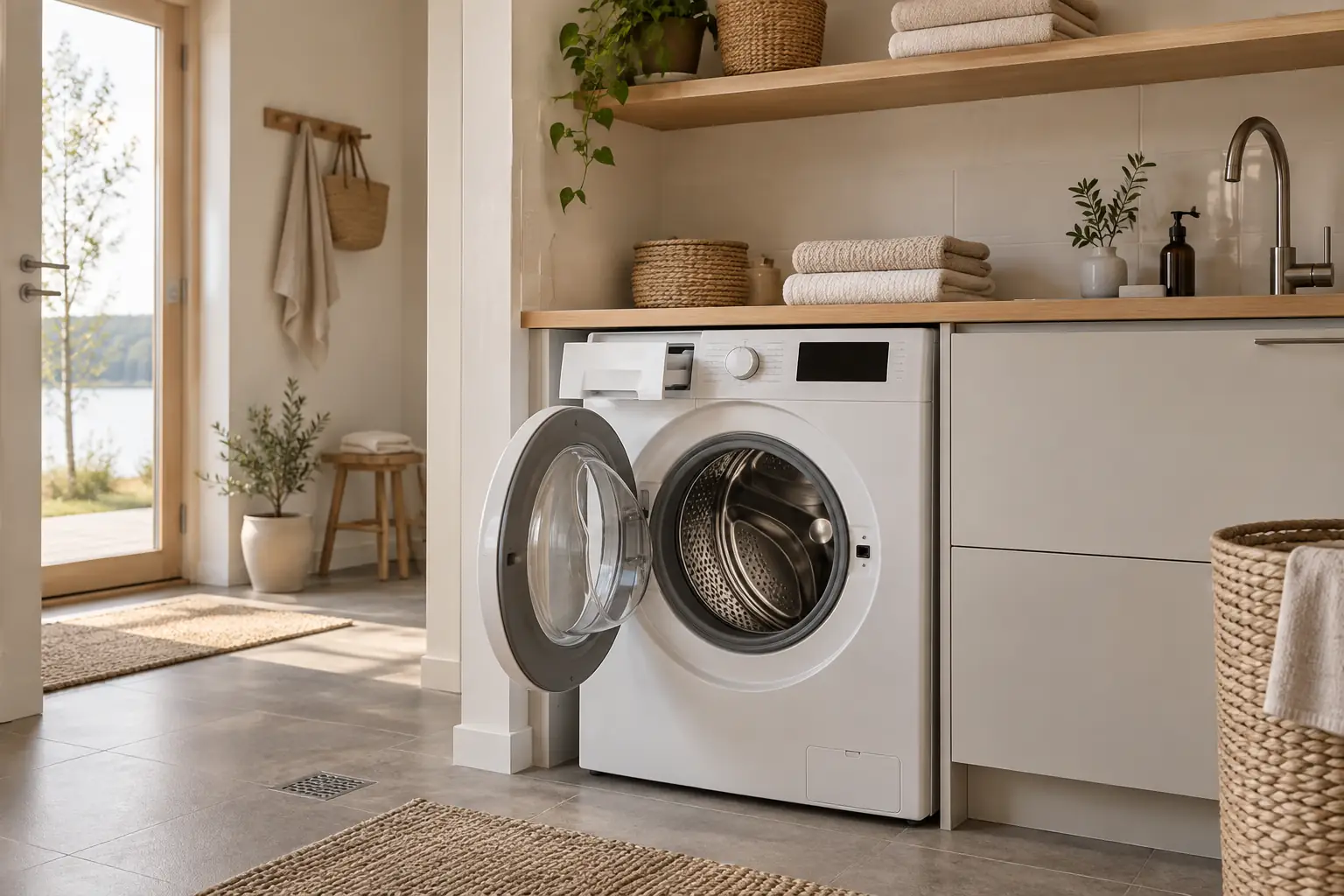
Clear the residue. Use the right cycle. Let it dry.
Empty the drum, clean removable detergent compartments as directed and gently wipe accessible seals. Refit parts, then run the manufacturer's machine-care programme with its approved cleaner. Afterwards, let the permitted openings dry when it is safe to leave them ajar. Persistent leaks, errors or drainage trouble need model-specific advice.
↘
Know the three everyday care areas.
The drawing shows a front-loader. Use your own machine's layout and instructions.
Detergent drawer
Residue can hide around removable compartments. The release and wash method are model-specific.
Door opening and seals
Wipe visible residue and foreign objects gently. Rubber stays attached to the machine.
Drum
Routine drum care uses the recommended empty cleaning cycle, not improvised dismantling.
01 / Before you start
Read the machine before the bottle.
Front-loaders, top-loaders and automatic dosing systems do not all want the same treatment.
Model and cleaning programme
Find the maintenance section and the dedicated drum-clean or machine-care cycle, if fitted. A random hot laundry cycle is not automatically an equivalent. Leave laundry out of a cleaning cycle.
Compatible cleaner
Use the product and quantity specified by the appliance and cleaner instructions. Check automatic dosing compartments separately. Do not assume vinegar, citric acid or a dishwasher product belongs in this machine.
A cloth and gentle brush
Choose a soft cloth for accessible seals and a small suitable brush for removable drawer parts. Prepare a protected washing area. Keep water away from the controls and never detach the door seal.
Which part needs attention?
Choose a starting point. The complete cleaning sequence stays below.
The manual's drawer release
Remove only the compartments designed for routine washing. Clean the parts gently, dry and refit in the correct position.
Forcing an automatic dosing tank out or putting a home mixture in its reservoir.
02 / The steps
Give the machine a useful reset.
Work on the accessible parts first. Let the approved cycle finish the job.
Empty and check the instructions
Remove laundry and make the appliance safe for manual cleaning as its instructions describe. Check for anything left in the drum or door area. Read the maintenance programme and cleaner requirements before deciding which product to buy. An error message or damaged part deserves troubleshooting before a cleaning cycle.
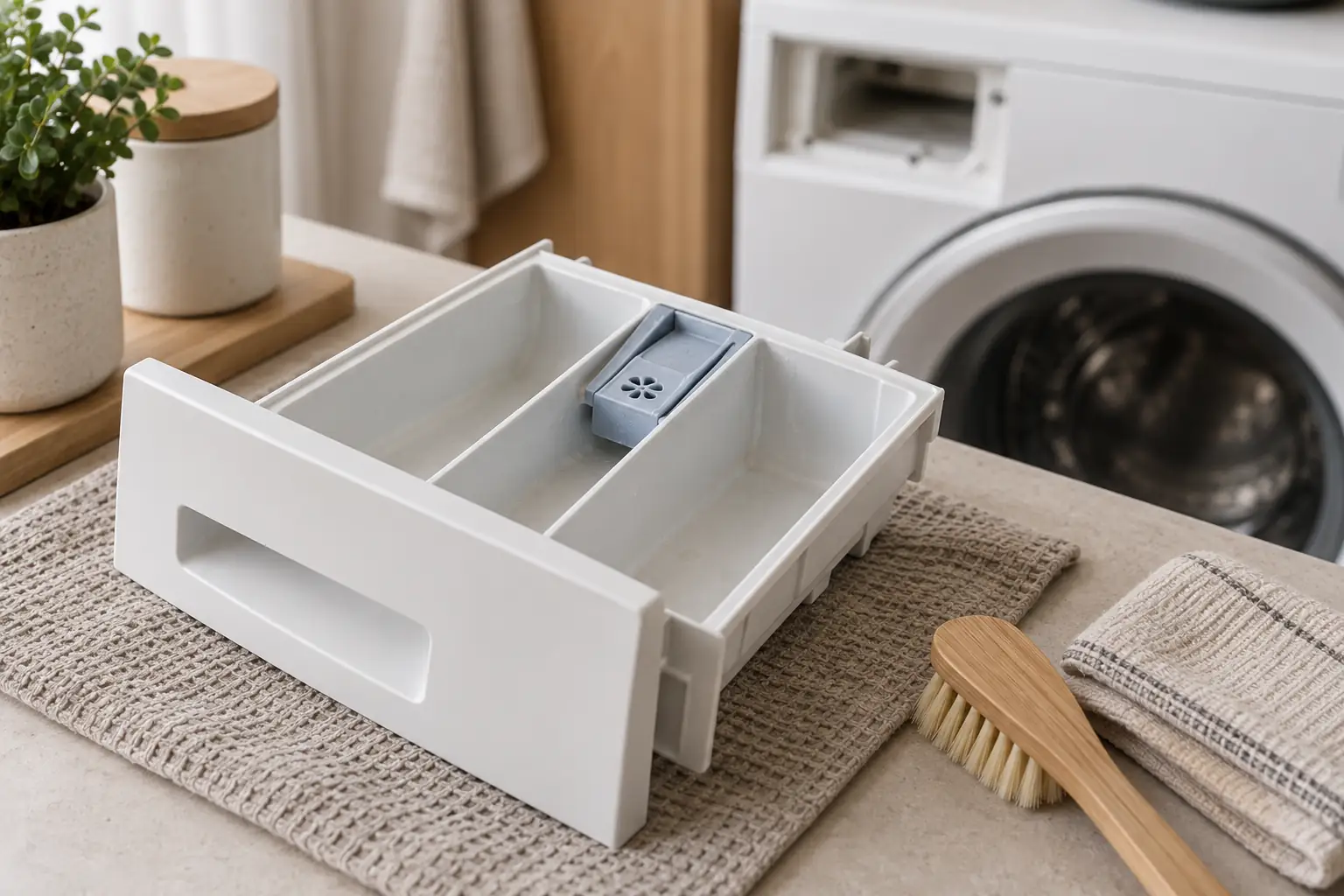
Clean the detergent drawer
Release removable parts by the correct mechanism. Wash away accessible residue with the allowed method and gently brush the corners. Remove cleaner residue, dry and refit. For automatic dosing, use that system's specific cleaning process rather than treating its reservoir as an ordinary drawer.
Guidance from: Martat · washing-machine care (opens in a new tab)
Wipe the accessible seal and opening
Gently remove visible lint or a small trapped object from accessible folds. Use the permitted cleaner and a soft cloth, then wipe and dry. Do not pull the seal away or dig into a gap. A tear, trapped sharp item or ongoing leak is a reason to ask for service.
Guidance from: Martat · washing-machine care (opens in a new tab)
Run the empty maintenance cycle
Refit the parts correctly. Use the recommended machine-care programme and approved product at the stated dose. Do not add another product just because the first one has no strong smell. Follow any required extra rinse. Stay available while the appliance runs and check the result after it is safe to open.
Guidance from: Martat · washing-machine care (opens in a new tab)
Dry the openings and reset the routine
Wipe residual moisture from permitted accessible areas. Leave the door or drawer ajar only as the manual allows and where children and pets cannot enter or reach them. Review everyday detergent dosing and allow the machine to dry between uses when suitable. A pump filter, if present, has its own model-specific draining and cleaning procedure.
Guidance from: Martat · washing-machine care (opens in a new tab)
Three popular ideas to check first.
The hottest cycle wins
Use the designated maintenance programme where provided. Its product and load instructions matter as much as temperature.
Vinegar fits every drawer
Some systems and materials do not allow it. Check the manual, particularly automatic dosing reservoirs.
Pull the rubber off to clean it
The door seal is not a routine removable cleaning part. Wipe accessible folds and leave attachment points alone.
03 / The finishing touch
Fresh laundry starts with small habits.
Use the detergent dose that suits the load, product and appliance. Wipe a visible spill instead of waiting for it to harden around the drawer. Give safe, permitted openings a chance to dry. You can keep the machine in good order without giving every wash day a maintenance chapter.
- Keep the drawer correctly fitted.
- Dry accessible seals as the manual allows.
- Recurring smell, leaks or drainage faults deserve appliance advice.
04 / Questions
Questions
Can I clean it with vinegar?
Check the manual first. Martat notes that some automatic dosing systems do not tolerate laundry vinegar in the dispenser. Do not treat an internet mixture as suitable for every washing machine.
Guidance from: Martat · washing-machine care (opens in a new tab)
Should I remove the pump filter?
Only follow the procedure for your model. Water may need controlled draining, and some machines have no user-cleanable filter. This ordinary care guide does not replace those instructions.
How often does the machine need cleaning?
Use its maintenance schedule and cleaning reminders. Laundry habits, dosage and drying conditions affect residue. An ongoing problem needs diagnosis rather than repeatedly shortening the interval.
Is this a guide to washing clothes?
This page is for caring for the appliance itself. Clothing temperatures, stains and drying methods come from textile care labels and separate laundry guidance.
Sources & material instructions
Novah
A little more breathing room at home.
Novah can help you plan the household cleaning you want to hand over. Tell us your priorities and confirm the booked tasks. Washing-machine repairs and technical maintenance need a suitable appliance professional.
Talk about your home