Novah / A home for you and the furry one
How to remove pet hair at home.
The dog has a favourite seat. So does the dog's hair. Start with the surface, gather what you can and use a suitable vacuum tool for the rest. You can keep the pet and reclaim the sofa.
Where has the hair landed?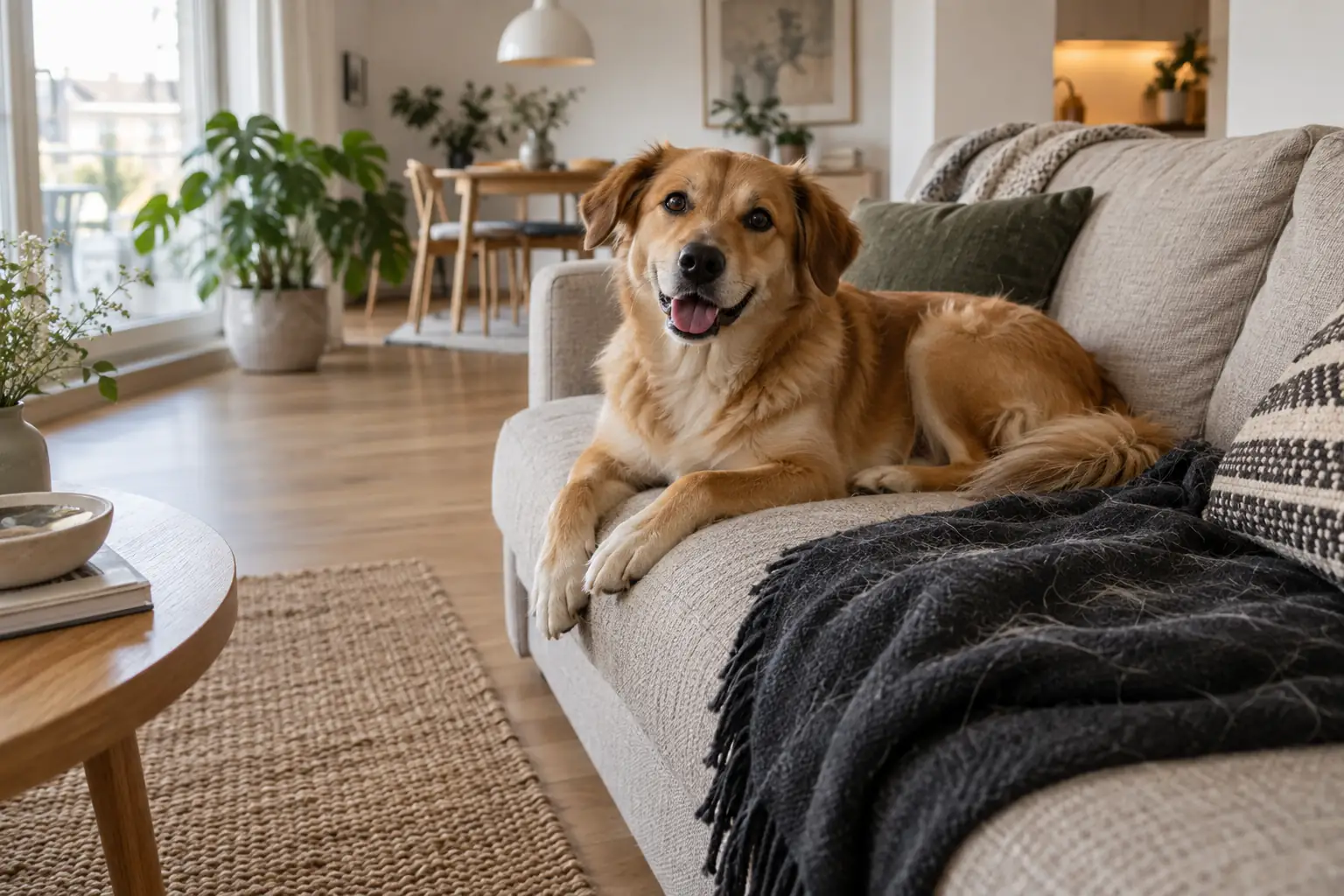
Collect first. Vacuum next. Floors last.
Lift loose hair from suitable fabrics with a lint tool, then vacuum using an attachment approved for the surface. Clean the furniture before the floor. For removable covers and throws, remove loose hair first and follow the care label for washing.
01 / Before you start
Match the tool to the surface.
The strongest brush is not automatically the best one for your favourite chair.
A suitable lint tool
A lint roller or a reusable brush can collect hair from suitable fabrics. Test an inconspicuous area and stop if fibres snag or the pile changes. Use the furniture's care instructions to decide what is suitable.
The right vacuum head
Use an upholstery attachment for furniture and the appropriate floor head for your floor or rug. Adjust suction where the material calls for it. Check the vacuum manual before removing hair from a brush roll.
A washable favourite spot
A care-label-approved throw on a favourite seat makes everyday upkeep easier. Choose one you can remove and wash as directed. Your pet may still choose the uncovered cushion. Naturally.
Where has the hair landed?
Choose the surface for a quick starting point. All the main steps remain below.
A suitable lint tool, then an upholstery nozzle
Check the cover's instructions. Collect loose hair gently, then vacuum the seat, seams and reachable gaps with suitable suction.
Aggressive scraping, excess suction and adding moisture to an unidentified fabric.
02 / The steps
Follow the hair, not a whole-house checklist.
Start where your pet spends time. Work from furniture down to the floor.
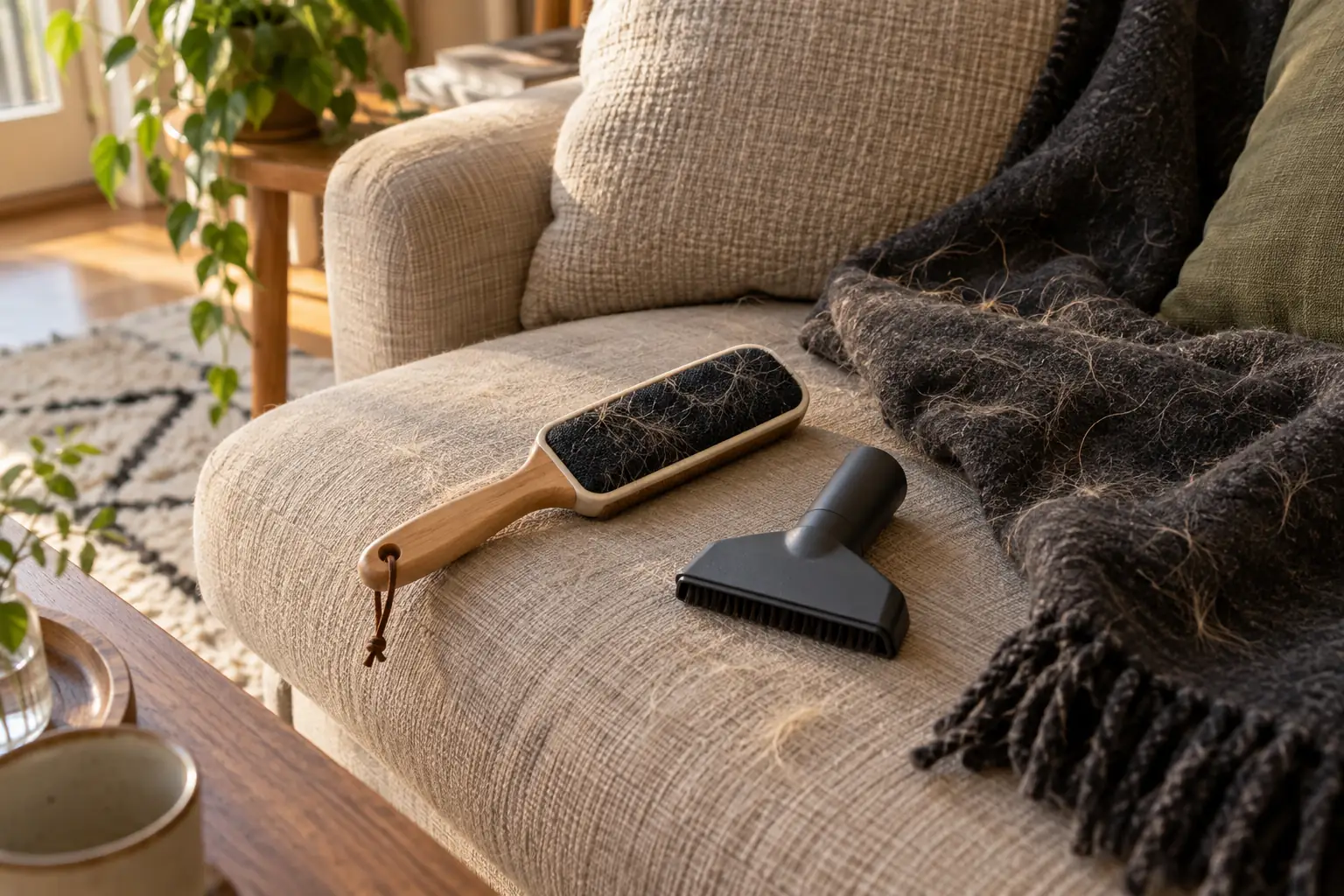
Check the fabric before trying a trick
Read the furniture care label or manufacturer's instructions. Loose-weave fabric, velvet, leather and a sturdy cotton throw do not respond the same way. Start dry. Avoid a scraper, wet rubber glove or spray simply because it worked on somebody else's sofa.
Guidance from: IKEA upholstery care (opens in a new tab)
Gather the loose hair
On a compatible fabric, use a lint roller or suitable reusable lint brush in gentle passes. Collect the hair the tool lifts rather than leaving it on the next cushion. For a rug, choose a lint tool approved for that material and test a small area first.
If the tool catches loops, pulls threads or changes the finish, stop and use the material's approved method.
Guidance from: SINI (opens in a new tab)IKEA upholstery care (opens in a new tab)
Vacuum the seat, seams and corners
Use a suitable upholstery attachment and a suction setting the fabric can tolerate. Remove cushions only if they are designed to come off. Work slowly over the seat and reachable gaps, then check the seams. Keep the nozzle moving instead of pulling hard at one spot.
Guidance from: IKEA upholstery care (opens in a new tab)Dyson (opens in a new tab)
Give rugs and hard floors their own pass
Finish on the floor after the furniture. Choose the floor head and brush setting suitable for the surface, then make slow passes where hair gathers. Check edges and reachable areas under furniture. On a delicate floor, follow its care instructions rather than using a fabric hair-removal trick.
Guidance from: Dyson (opens in a new tab)
Reset throws and tools
Remove loose hair from washable textiles before putting them in the wash. Follow the care label for the wash and drying settings. Empty or clean the lint tool as its instructions describe. Switch the vacuum off and follow its manual before clearing a head or brush roll.
Guidance from: SINI (opens in a new tab)Dyson (opens in a new tab)
03 / The finishing touch
Aim for a comfortable home, not zero hairs.
Keep a suitable lint tool near the favourite seat and deal with the small buildup when you notice it. A manageable routine beats repeatedly turning the whole living room upside down. A pet-friendly home can still look like a home.
- Keep one easy-to-clean throw in the favourite spot.
- Check the vacuum head when pickup gets worse.
- Finish furniture before the floor, so you collect what falls.
04 / Questions
Questions
Why is hair still there after vacuuming?
Hair can remain caught in fabric or rug fibres. Check that the tool and suction suit the surface, collect suitable loose hair with a lint tool and make slower passes. If the vacuum's pickup has changed, follow its instructions for checking the head and bin.
Guidance from: SINI (opens in a new tab)Dyson (opens in a new tab)
Can I use a rubber glove or squeegee?
These tools can collect hair from some fabrics, but they are not a universal method. Check the upholstery instructions and test a hidden spot first. Skip the technique on a material that snags, changes texture or does not allow it. Ordinary lint tools are a simpler starting point when approved.
Guidance from: IKEA upholstery care (opens in a new tab)Dyson (opens in a new tab)
Does the same approach work for cat hair?
Choose by surface and material, rather than by which pet left the hair. A suitable lint tool and vacuum attachment can collect both cat and dog hair. Keep to the care instructions for the fabric, rug or floor.
Guidance from: SINI (opens in a new tab)
Should I wash the sofa to remove hair?
Hair removal does not automatically call for a wet clean. Start with suitable dry tools. Removable covers are washable only when their label allows it. Stain treatment or deep upholstery cleaning is a separate task with its own material requirements.
Guidance from: IKEA upholstery care (opens in a new tab)
Sources & material instructions
Novah
More time with the pet. Less time chasing hair.
Tell Novah about the pets and surfaces in your home when planning a home clean. We can discuss the booked scope and the areas you would like us to focus on.
Talk to Novah about your home