Novah / Wash · rinse · dry
How to clean a stainless steel sink. A softer kind of shine.
The sink works harder than its shiny finish suggests. Give it a soft wipe, rinse the soap away and dry the drops before they leave a new outline. It is less polishing project, more nice final minute after the dishes.
Go to the steps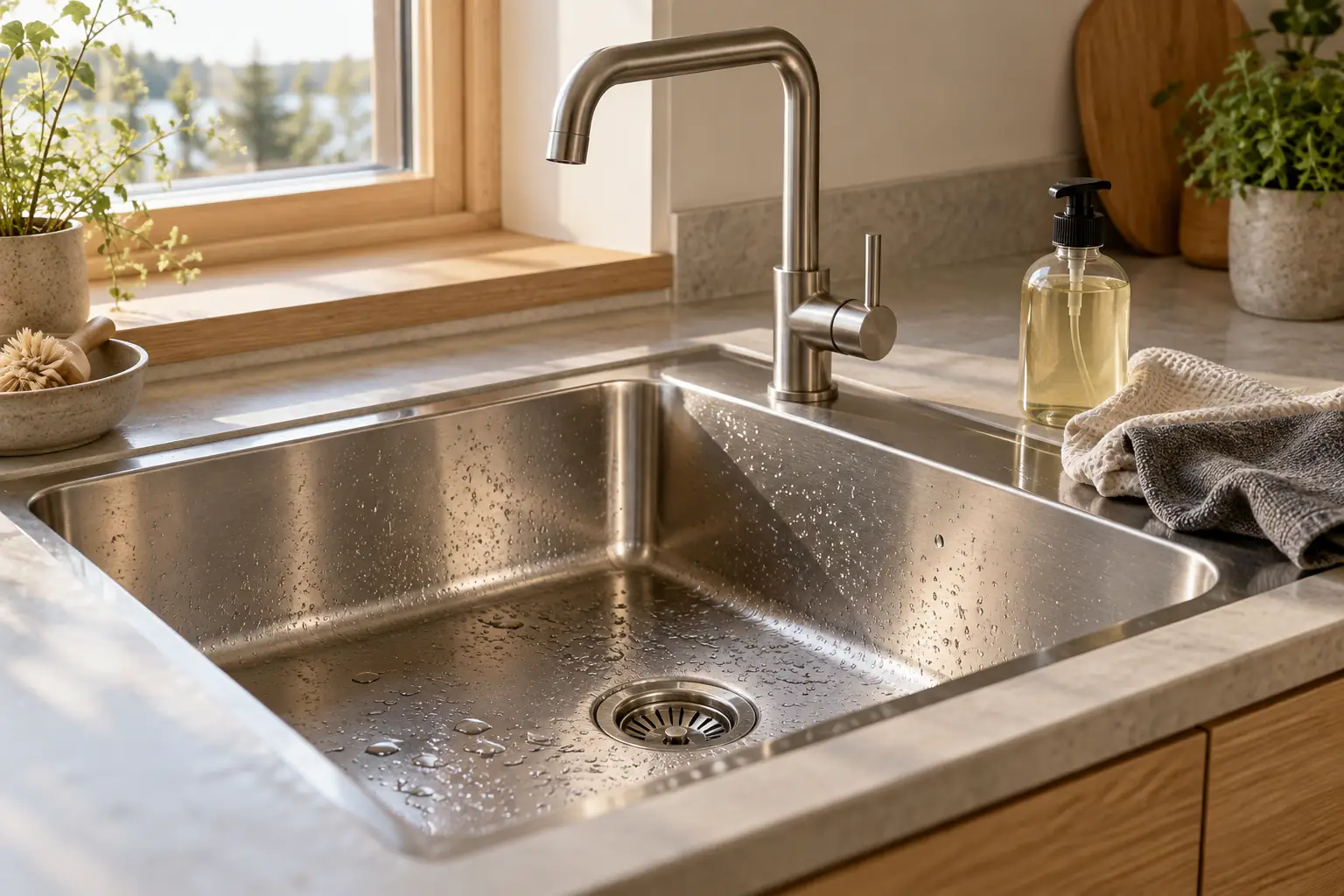
Dish soap for daily care. A dry cloth for the finish.
Empty a plain stainless-steel sink, rinse loose crumbs and wash with warm water, a small drop of hand dish soap and a soft cloth. Work with the brushed grain where visible, rinse thoroughly and dry. For a stubborn patch on plain steel covered by Stala's care advice, use a small amount of Cif Cream on a soft damp cloth, then rinse and dry. Coloured, coated and textured finishes are not the same surface.
The job, at a glance
Three moves that matter
This is for plain stainless steel. Stala's plain-steel care sheet is the worked material reference; an IKEA FYNDIG is another recognisable steel-sink example. Keep abrasive creams off coated, coloured or special decorative finishes unless expressly allowed.
- Routine wash
- 5–10 minOur estimate for a normal kitchen sink.
- Wash, rinse, dry
- 3 stagesDrying is how you avoid immediately replacing old water spots.
- Keep the finish
- Soft toolsNo steel wool, scouring powder or metal scraper.
Plain Stala steel: gentle daily care
Stala specifies warm water, liquid dishwashing detergent and a soft cloth or sponge for maintenance, followed by rinsing and drying. Its plain-steel sheet also permits Cif Cream for stubborn dirt and marks. Do not transfer the cream method to a special coating just because the bowl looks metallic.
Buy only what is missing
Daily soap, one cloth, an optional spot cleaner.
Fairy Original is the everyday example. Cif Cream is only the optional plain-steel spot route here, based on Stala's instructions. It is not a universal recommendation for every sink finish.
A practical choice
Fairy Original dishwashing liquid
654 ml bottle
A small drop on a wet soft cloth for daily grease.
A practical choice
SINI Yleisliina microfiber cloth
One 30 × 30 cm cloth
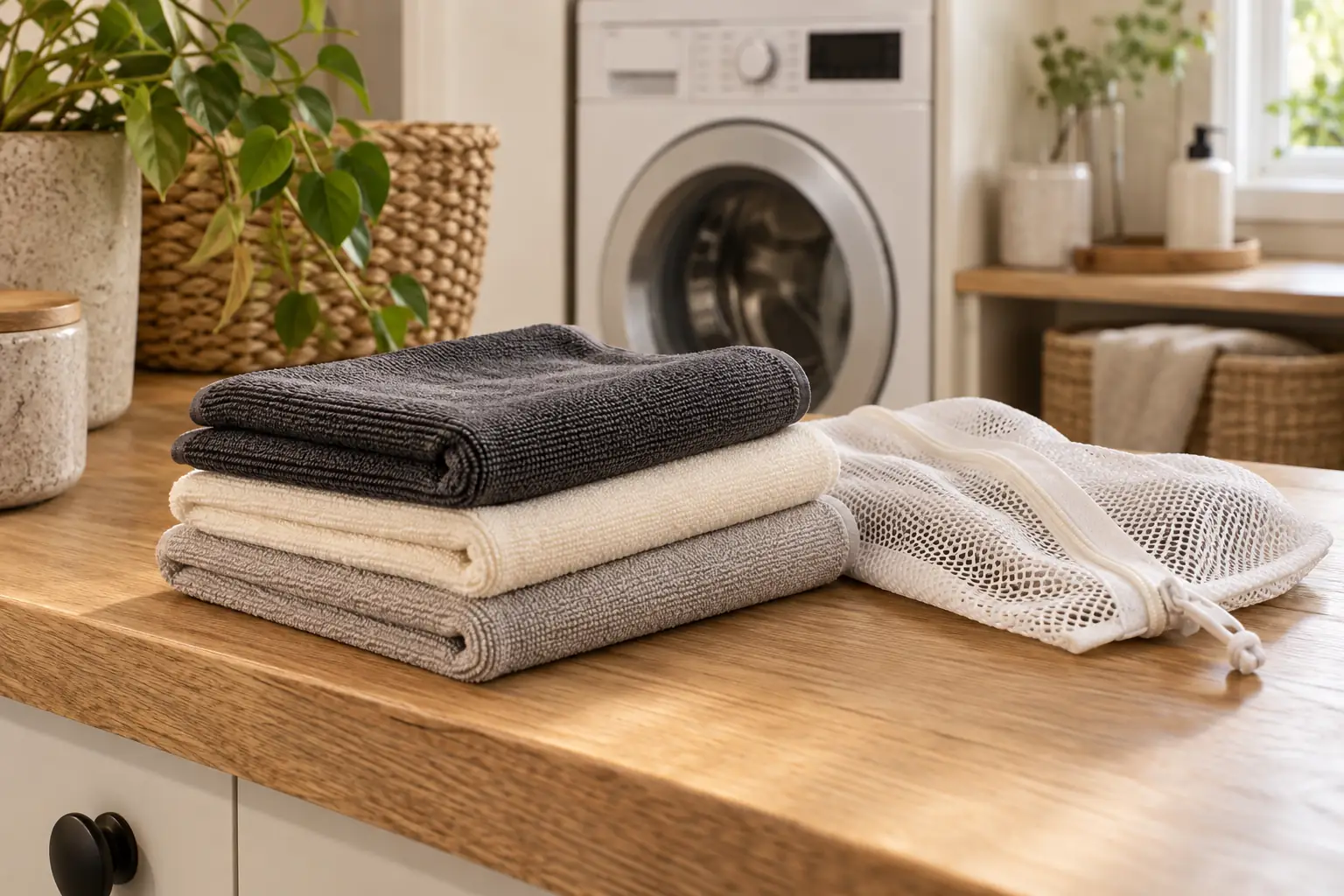
A soft damp wipe, followed by your clean drying towel.
Optional
Cif Cream Lemon
500 ml bottle
Optional for stubborn marks on plain steel where the sink permits cream cleaner.
Retailer prices were checked on the dates shown and may change. These are shopping suggestions, not products sold by Novah. Check delivery and local store stock before buying.
01 / Before you start
Make room for the whole bowl.
A stack of dishes hides the dirt around the drain and rim. Move it before you start.
Identify the finish
This routine is for ordinary plain stainless steel. A black PVD coating, patterned surface or composite bowl needs its own route. The colour alone does not make a sink steel.
Use a clean soft tool
Check the cloth or sponge for grit first. A soft cloth carrying a grain of sand can still scratch. Do not use a cloth that just cleaned a dirty cooker hood.
Take out the loose strainer
Lift out the removable strainer and pick food into the bin. Leave plumbing and fixed drain fittings in place.
02 / The steps
Give the sink its closing shift.
The basic method has no required chemical dwell time. Clean, rinse and dry rather than letting soap dry on steel.
Empty and rinse the loose debris.
Move dishes and metal pans out of the bowl. Remove the strainer, put trapped food in the bin and rinse crumbs away with warm water. Keep the worktop edges free of overflowing water.
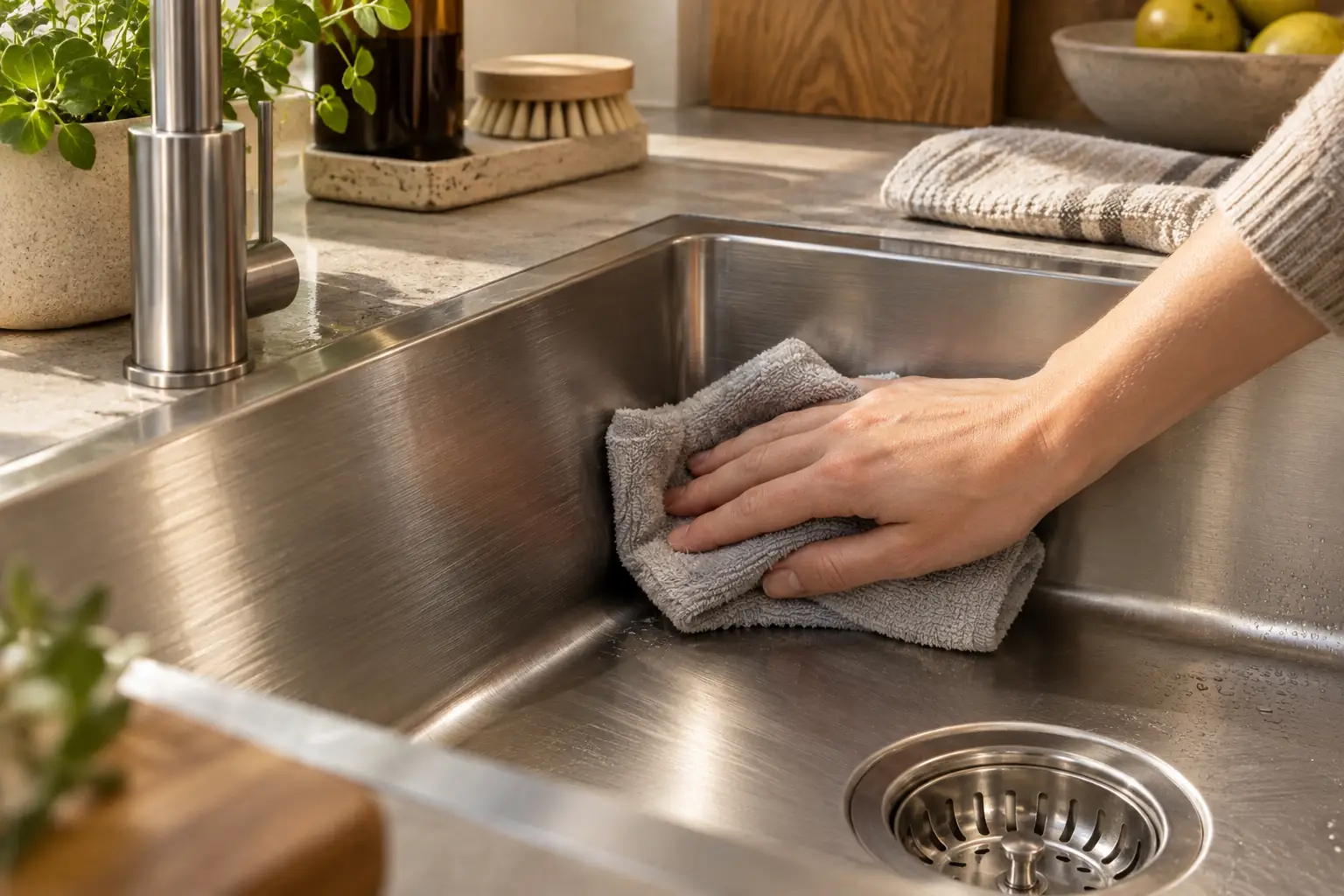
Wash the rim and sides with a soft cloth.
Wet the cloth, add a small drop of dish soap and wipe the rim, then the walls and bowl. Where the steel has a brushed grain, follow it with gentle strokes. Wipe around the overflow opening without pushing debris inside.
Guidance from: Stala · plain stainless-steel care instructions (opens in a new tab)
Clean the drain area and strainer.
Turn the loose strainer over and wipe both faces. Fold a clean cloth corner to reach the edge around the drain. Lift away food rather than grinding it into the steel. Rinse the strainer and leave it aside briefly.
Treat a remaining mark only if needed.
On permitted plain Stala-type steel, put a small amount of Cif Cream on a soft damp cloth, test an unobtrusive patch and gently wipe the mark. Follow the grain, keep the product wet and rinse thoroughly. Do not use it on a coloured or coated sink, and do not combine it with acid or bleach.
This is a spot-cleaning option, not a polishing treatment or a promise to erase scratches.
Guidance from: Stala · plain stainless-steel care instructions (opens in a new tab)Cif Cream Lemon · pack instructions (opens in a new tab)
Rinse every cleaned surface.
Rinse the rim, bowl and drain area until no soap or cream remains. Use a clean water-dampened cloth where the tap cannot reach. Rinse nearby splash marks so the cleaner does not dry on the edge.
Dry the bowl and put the strainer back.
Use a clean soft towel to dry the rim, walls, bottom and area around the drain. Refit the dry clean strainer. Move wet cast-iron pans away from the steel instead of leaving them there overnight.
Guidance from: Stala · plain stainless-steel care instructions (opens in a new tab)
Shine does not need force.
Steel wool and powder
Stala warns that steel wool and scouring powders scratch steel. They are not the tool for a stubborn spot.
Acid left to dry
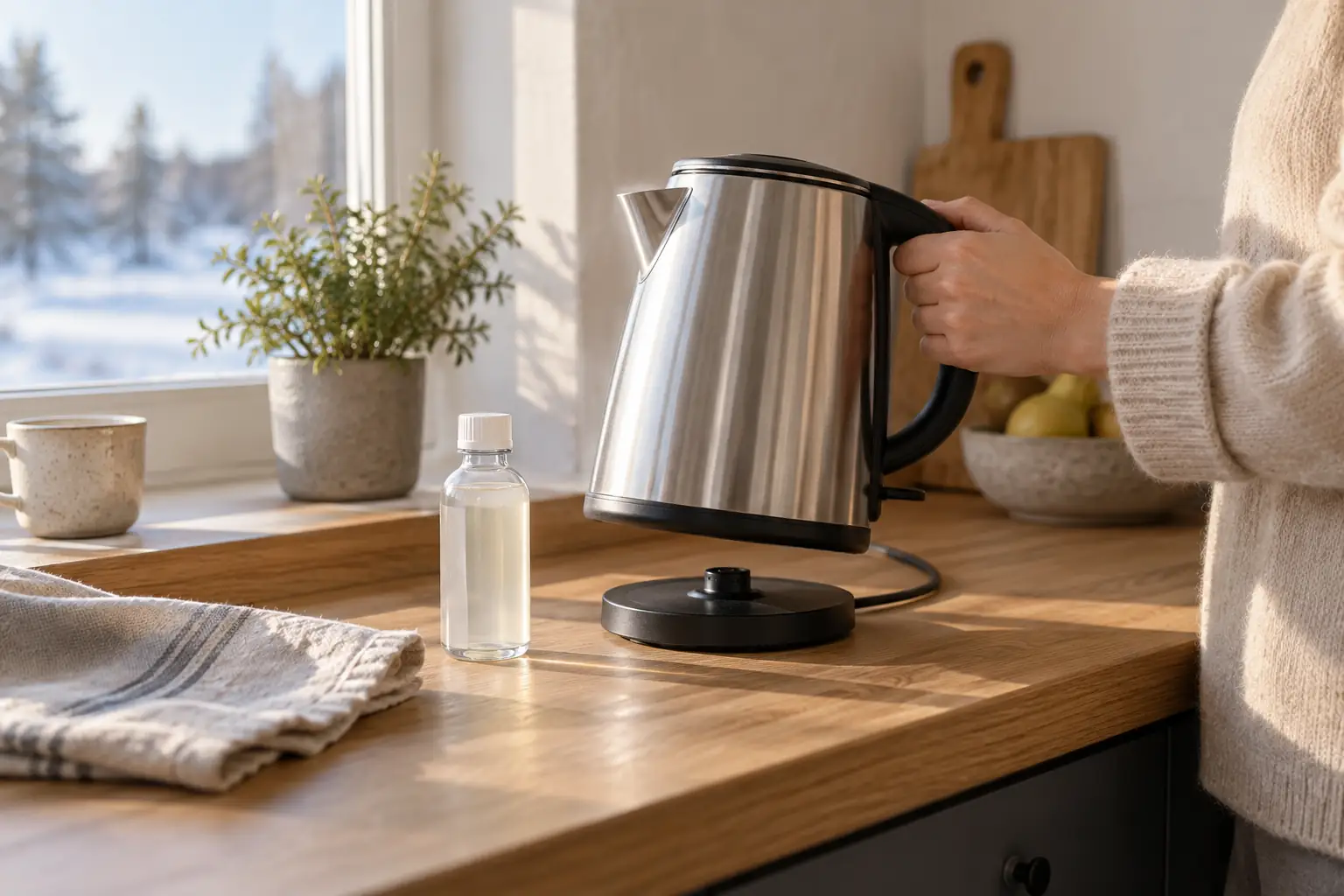
Do not leave acidic kitchen soap or descaler on the sink. Keep the kettle-descaling solution separate from this care routine and rinse spills immediately.
A scratch treated as dirt
Ordinary use leaves small marks on steel. A scratch is not something to scrub harder until it disappears.
03 / The finishing touch
A clean bowl, with no fresh water outlines.
The rinse removes cleaner. The dry towel does the finishing. Make that final wipe part of closing the kitchen for the evening.
- The bowl and rim feel clean, with no greasy or creamy film.
- The strainer is clean on both sides.
- No wet rust-prone pans or cleaner are left on the steel.
04 / Questions
Questions
Can I use Cif on every steel-looking sink?
No. This spot method is tied to permitted plain stainless steel. Coated, coloured or textured finishes can have different restrictions. Start with the gentle daily route and do not put an abrasive cream on an unidentified finish.
Guidance from: Stala · plain stainless-steel care instructions (opens in a new tab)
Why do water spots return so quickly?
Water left to evaporate can leave mineral outlines. Rinse away soap and wipe the bowl dry after use. Descaling a kettle and cleaning a sink are separate tasks, with different products and surfaces.
Is a small brown mark always rust in the sink?
Not necessarily. Stala notes that particles from installation or rust-prone objects can leave surface marks. Its special contamination treatment differs from the daily routine. A recurring or damaged area deserves inspection rather than stronger acid.
Guidance from: Stala · plain stainless-steel care instructions (opens in a new tab)
Will this remove scratches?
No. Cleaning removes deposits and grease. Stala explains that plain stainless steel develops small scratches with use; polishing or surface restoration would be a separate job.
Guidance from: Stala · plain stainless-steel care instructions (opens in a new tab)
Sources & material instructions
Novah
Leave the rest of the home to us.
Keep this guide for the small jobs between visits. If you would like help with everyday home cleaning in Helsinki, Espoo or Vantaa, tell us what your home needs. Specialist appliance servicing and textile restoration are separate tasks.
Talk to Novah