Novah / Let the glass feel light again
How to remove limescale from shower glass, gently.
The shower glass was clear once. Now it has a small weather system of white marks. You can often improve ordinary deposits with the right cleaner and a gentle method. The useful first question is what the glass—and everything around it—can tolerate.
What is beside the glass?
Match the cleaner to the glass and its surroundings.
Identify the glass coating, profiles, seals and nearby tile or stone. Choose a limescale cleaner permitted for those surfaces and use it by its label, on a small area first where directed. Work gently, rinse fully and dry with a suitable squeegee or soft cloth. Do not mix products or turn a stained patch into a scraping project.
↘
Check beyond the cloudy patch.
The treatment touches a small collection of materials, not just one sheet of glass.
The glass and coating
Identify the finish before choosing a chemical or tool. A scratch will not wash off.
Profiles and seals
Keep products off areas their instructions exclude, and rinse any allowed contact properly.
The tray, grout and floor
Protect nearby sensitive surfaces. Natural stone or a coated tray can need a different method.
01 / Before you start
Glass is not the only material nearby.
A cleaner that suits one panel may not suit the frame, tray or floor below it.
The shower's care instructions
Find the glass finish and any protective coating. Check the profiles, seals and tray separately. Textured or frosted glass may need different treatment from clear glass.
A suitable limescale cleaner
Choose a product permitted for the glass and neighbouring surfaces. Follow contact time, application and rinse instructions. Acids are not automatically suitable for stone, grout, metals or shower trays.
Soft tools and a drying finish
Use a permitted soft cloth or non-scratching tool and a suitable rubber squeegee. Prepare to rinse residue away without spreading cleaner onto incompatible materials.
What is beside the glass?
This helps you identify which instructions to check before applying a cleaner.
The coating manufacturer's approved method
Use only compatible products and tools. If the coating is unknown, get the shower's product information before tackling a deposit.
Abrasive pastes, rough pads or a universal acid recipe.
02 / The steps
Work on a small area first.
You are removing residue, not trying to polish a new surface into the glass.
Identify the shower materials
Check the maker, glass finish, coating and care instructions. Look at the profiles, seals, tray and nearby grout or stone too. If the surface is cracked, a fitting is loose or a coating is uncertain, get advice before treating it. Leave shower repairs separate from the cleaning task.
Guidance from: INR · shower-glass care (opens in a new tab)IDO · bathroom surface care (opens in a new tab)
Choose and check one compatible product
Read the product label and the shower's instructions together. Confirm the permitted application, contact time and rinsing method. Test a small inconspicuous area if the instructions call for it. Use the specified protection and ventilation, and keep children and pets out of the working area.
Treat the allowed glass area gently
Apply by the permitted method, controlling where the cleaner goes. Work on a manageable section and keep it away from excluded profiles, seals and other surfaces. Use a soft tool without abrasive pressure. Do not extend contact time because a mark is stubborn; follow the label and reassess the result.
Guidance from: INR · shower-glass care (opens in a new tab)
Rinse the residue away
Remove the cleaner completely as directed, including any surrounding material it was allowed to touch. Do not add another chemical to the wet treatment. If a deposit remains, evaluate whether another permitted application is sensible or whether the glass needs manufacturer advice. Hard scraping can create a permanent problem.
Guidance from: INR · shower-glass care (opens in a new tab)IDO · bathroom surface care (opens in a new tab)
Dry and keep the next buildup smaller
Finish with a suitable rubber squeegee or soft cloth, taking care around edges and seals. Keep the bathroom's intended ventilation working and dry accessible glass after normal shower use where practical. If the cloudy appearance is inside a damaged coating or etched surface, repeated cleaning will not necessarily restore it.
Guidance from: INR · shower-glass care (opens in a new tab)
Keep the clear-glass goal gentle.
An acid recipe for the whole shower
Glass, metals, seals, grout and stone may have different limits. Check every material the cleaner can reach.
A rough pad for a quicker result
Abrasive tools can scratch glass or coatings. Use the permitted soft tool.
Mixing cleaners to make them stronger
Never combine cleaning products. Choose one compatible method and follow its complete application and rinse instructions.
03 / The finishing touch
A small habit after the shower.
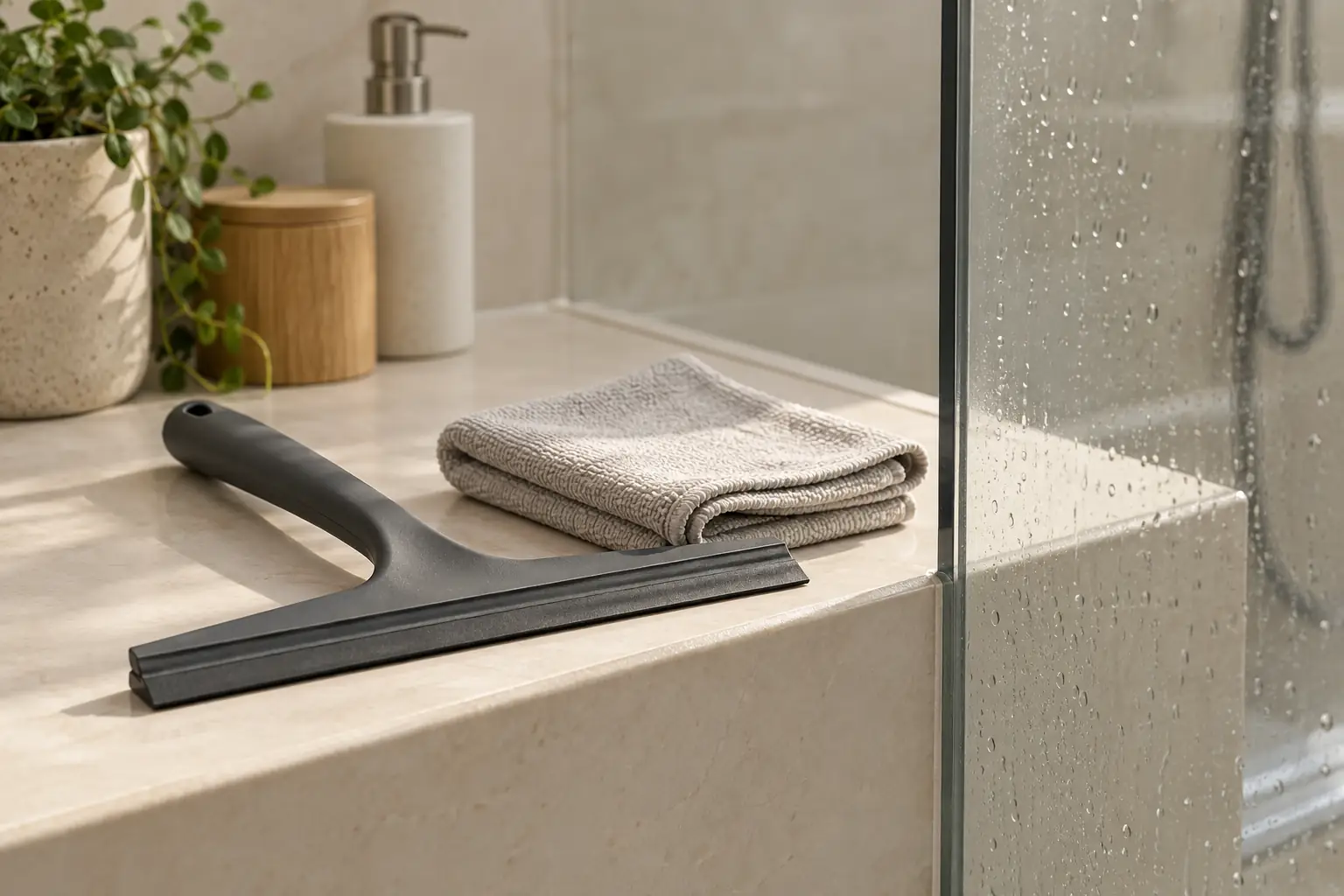
A quick squeegee pass over safely reachable glass can save a bigger cleaning session later. Keep the tool somewhere convenient and rinse it when needed. The glass may still get the occasional splash. It is a shower, after all.
- Use a suitable squeegee or cloth after use where practical.
- Keep profiles and seals clean by their own care rules.
- Persistent marks or damaged coatings need manufacturer advice.
04 / Questions
Questions
Can I use vinegar on shower glass?
Only when the shower's instructions permit it and nearby materials are also compatible. INR describes an allowed method for its products, but that does not make vinegar suitable for every coating, metal, tray or floor.
Guidance from: INR · shower-glass care (opens in a new tab)
Is white cloudiness always limescale?
Not necessarily. Soap residue, surface damage or coating changes can look similar. Check the care guidance and reassess a mark that does not respond to the permitted cleaning method.
Can I use the window-cleaning method?
The drying tools may be similar, but bathroom deposits and the materials around shower glass need their own compatibility checks. The window guide stays focused on household window panes and frames.
What if the mark is on a silicone joint?
Use the joint's own care instructions. Do not scrub silicone as if it were glass or mineral grout. The linked tile-grout guide explains that distinction without covering joint replacement.
Sources & material instructions
Novah
A bathroom that feels easier to enjoy.
Tell Novah about the shower materials and the areas you would like us to focus on. Confirm specialist deposit removal in the booked scope. Repairs and damaged coatings need the relevant manufacturer's advice.
Discuss your bathroom