Published
Seasonal cleaningKeep winter grit out of your hallway floor
Dry the meltwater, collect loose grit, then wipe any mark left behind. Lift the mat after a wet day.
Written by  Laura Nieminen
5 min read
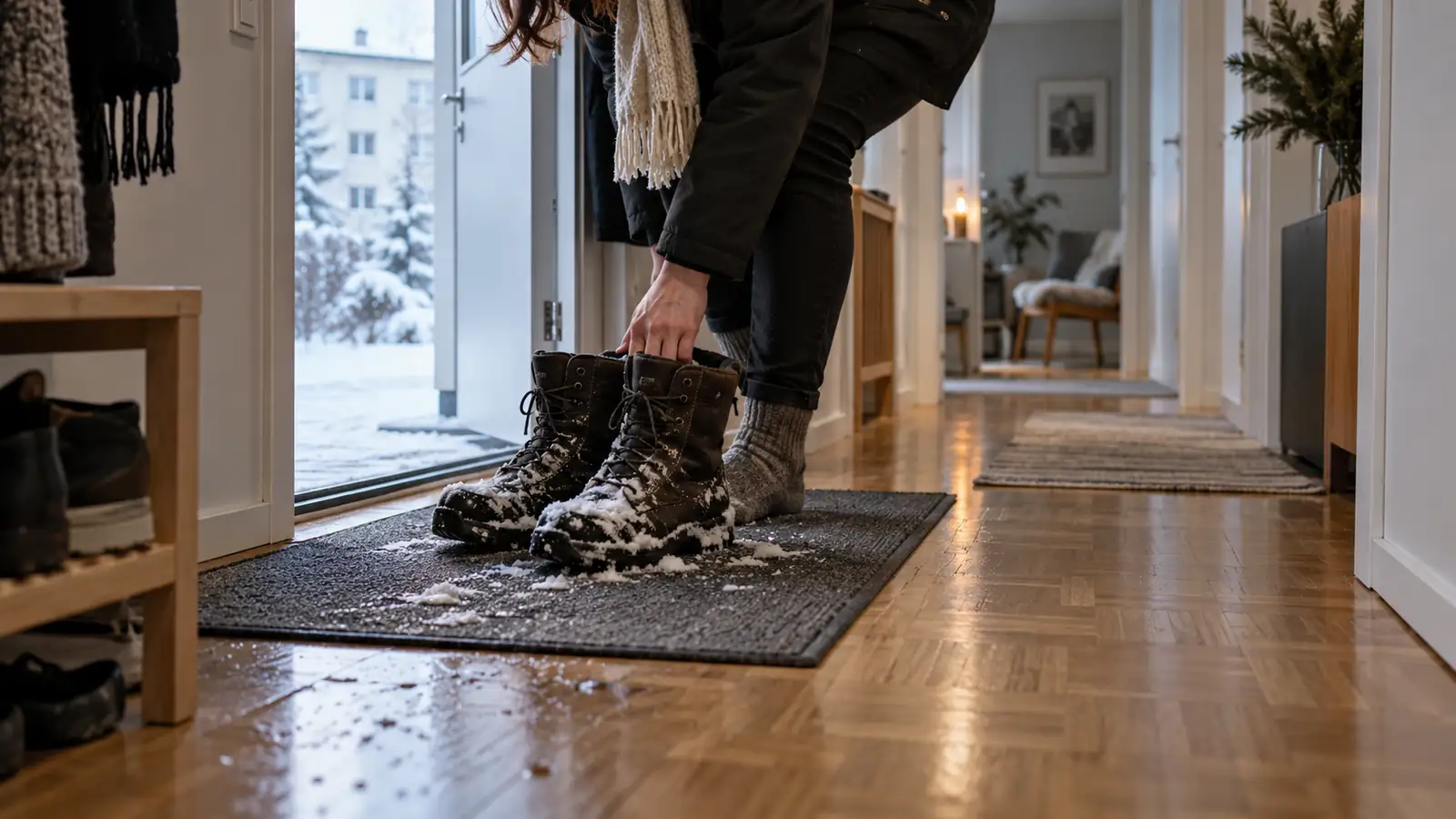
Quick answer
Dry the puddle, collect the grit, then wipe any mark that remains using the right method for your floor. Lift the mat when it gets wet: that is where the surprise puddle likes to hide.
Start at the door, then clean the floor
In winter, the hallway keeps a record of the day's weather: morning snow, afternoon slush, and grit hiding under the mat. You don't need to wash the whole floor every time. Give wet boots a place to drip, dry the puddle, and collect loose grit with a vacuum or soft brush. If a mark remains, wipe that spot using the right method for your floor.
That's the whole everyday routine. Martat advises drying melted snow promptly and removing sand that wears the floor (Opens in a new tab). The details depend on what's under the mat and which floor you have.
Give grit and wet shoes separate places
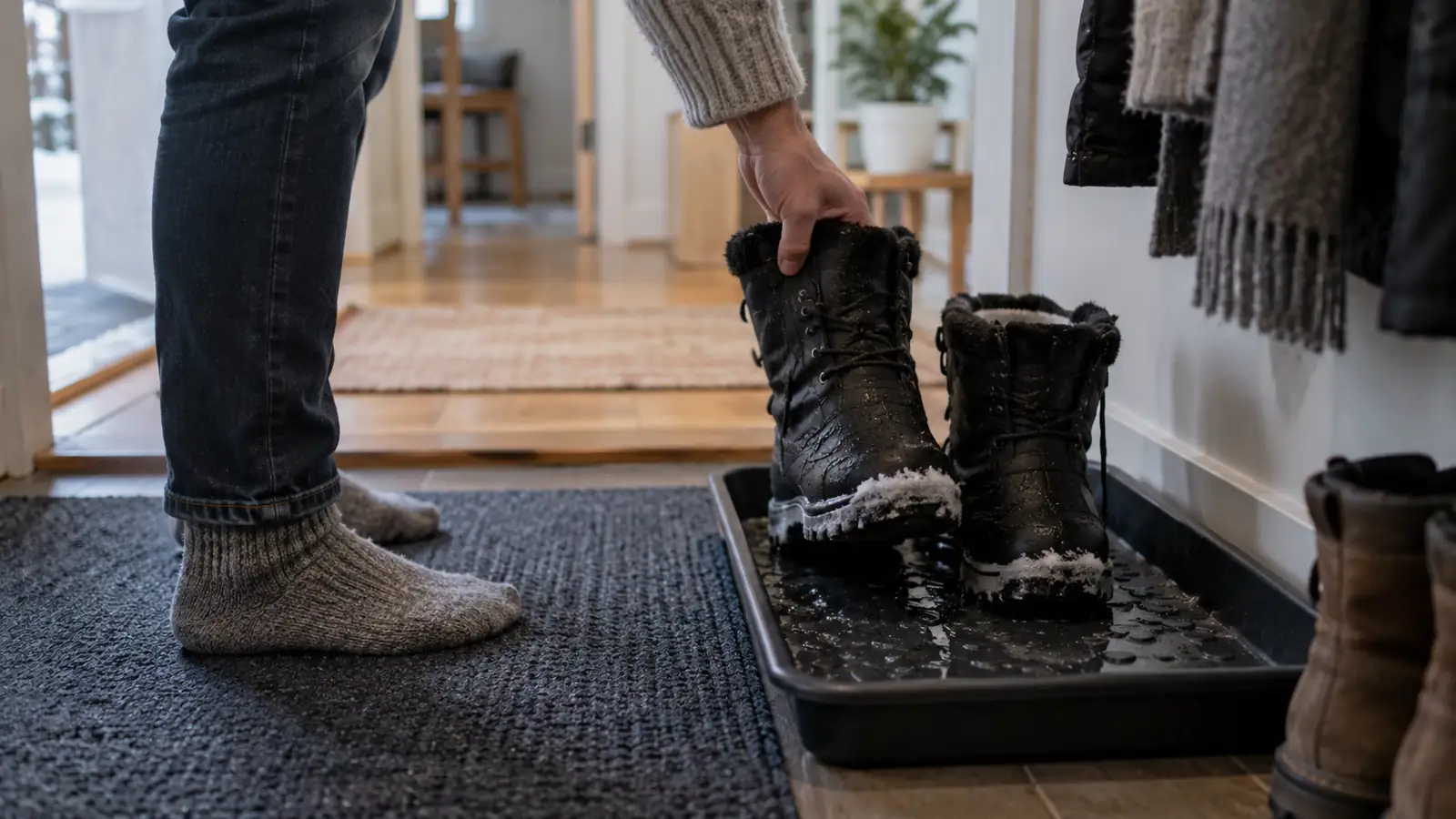
A mat catches what comes off the soles. A tray catches what drips from the boots. Put them where shoes naturally land, with room for the door to open and people to walk past. If there's a scraper at the building entrance, use it on the way in. Your own mat and tray belong inside your apartment unless the building says otherwise.
You don't need a new set of matching gear. A mat you can lift and clean and a tray that holds the water will do more than a grand entrance setup you can't move. Timberwise recommends entrance mats and protection beneath wet shoes for its lacquered parquet (Opens in a new tab). Check that any mat backing suits your own floor; if it sticks or leaves a mark, take it away and ask the flooring maker or housing provider before trying to scrub the mark off.
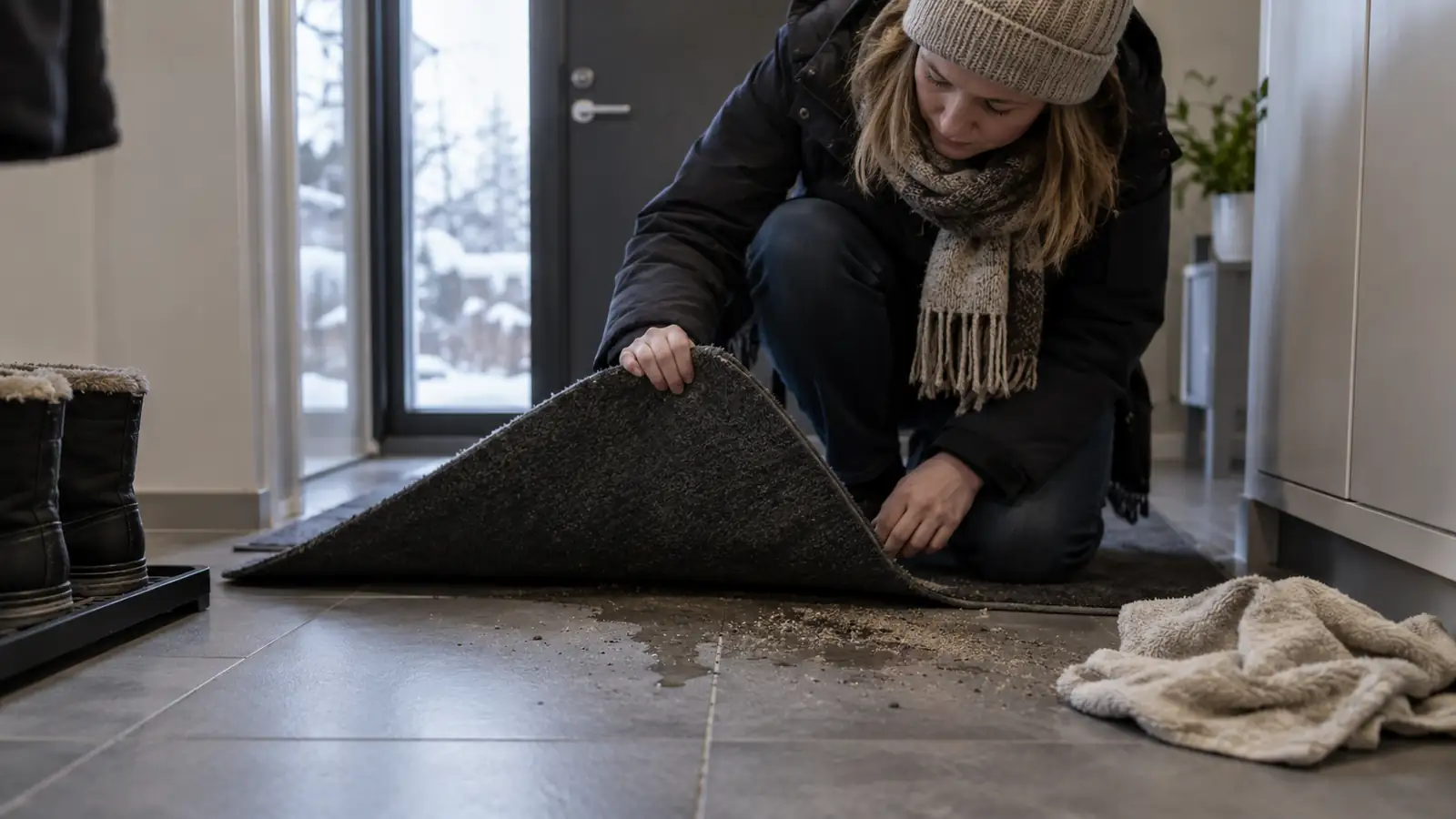
Lift the mat after a wet day. It may feel dry on top while the floor underneath is damp or sandy. Shake or vacuum out the grit, dry that patch and let the mat dry before you put it back. Martat gives the same dry-before-returning advice for a mat cleaned in snow (Opens in a new tab). In a small hallway, keeping the walkway clear matters more than covering every centimetre of floor.
The small clean after a snowy or gritty arrival
Some days bring a puddle, some bring a line of sand, and the best days bring both. Look at what's there and do only the steps it needs:
- Park the wet shoes. Put them on a tray or other surface that catches drips. Move wet bags off a floor that should stay dry.
- Dry any water. Blot the puddle with an absorbent cloth, especially near a threshold or board joint.
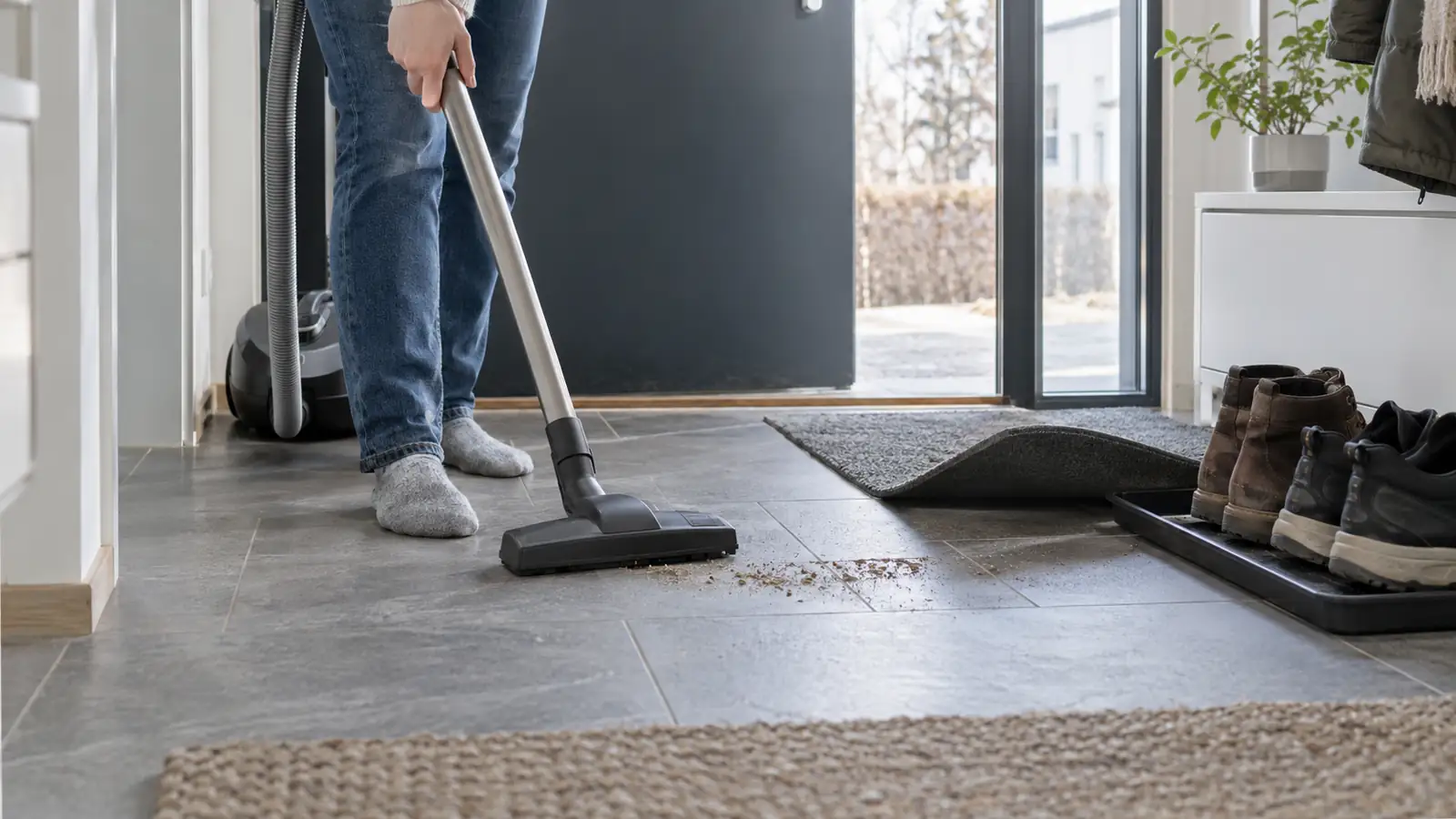
- Pick up the grit. Lift wet clumps gently. When the loose grains can be collected, vacuum them with a floor-safe head or use a soft brush and dustpan. Dragging a damp mop across sand just takes the sand for a walk.
- Check the hiding spots. Lift the mat or tray and look along the threshold and wall edge. A quick pass through the middle misses those places.
- Wipe a remaining mark. Use the method for your floor, then dry the spot. If the floor is already dry and grit-free, you're done.
Keep a cloth and a soft brush or vacuum head somewhere you can reach them. The routine is much more likely to happen when it doesn't start with a search through three cupboards. Let a used cloth dry before putting it away; Martat also advises rinsing and air-drying floor-cleaning tools (Opens in a new tab).
What needs doing right now?
- Puddle by the door
- Park the boots on a tray and blot up the water, including any under the mat.
- Sand underfoot
- Vacuum the loose grains or sweep them up with a soft brush.
- A mark that stays put
- Check what floor you have, then wipe the mark as its care guide says.
- Raised edge or lasting damp
- Take a photo and tell the landlord or building maintenance contact.
Match the last wipe to the floor
The floor that looks like wood might be parquet, laminate or vinyl. If you're unsure, check the home documents or ask your landlord or housing provider. You only need this distinction when there's a mark to wipe, but it decides what to do next.
Parquet or another wood floor
Wood needs a light hand. For its lacquered parquet, Timberwise recommends vacuuming first, then wiping with a slightly damp microfibre mop and little water (Opens in a new tab). That is a useful model for a quick entrance clean, though your own floor may have a different finish. Check its care instructions before choosing a cleaner. If a dark mark stays put, don't keep rubbing at it: it may be a mark from the mat, wear or moisture rather than dirt.
Laminate
Pay attention to the joins between boards. Pergo says its laminate can be cleaned with a lightly damp cloth and suitable mild cleaner (Opens in a new tab), but warns against a wet mop over bevelled joins and says to dry water there. So if boots have left a puddle at a join, soak it up instead of pushing it along. Check your own laminate's instructions; products differ.
Vinyl, resilient flooring or tile
These floors can often take a damp wipe, but check the edges and any doorway leading to wood. Martat notes that plastic floor tiles tolerate water less well than sheet flooring (Opens in a new tab). Collect the sand first, follow the maker's cleaner advice for a remaining mark, and dry the area afterward. A hard surface is no invitation to attack it with a rough brush.
When a mark is more than dirt
A gritty patch should feel better after cleaning. A raised board edge, a soft spot, or a dark patch that stays wet is different. Don't try stronger chemicals or harder scrubbing to make it disappear. Take a photo and tell the landlord or building maintenance contact where you found the moisture, especially if it was under the mat. They can help work out what happened beneath the surface.
For the rest of the home, see Novah's home cleaning service in Helsinki. The little hallway check is still worth doing between visits when the weather turns.