Published
Surfaces and windowsEveryday care for a parquet floor
Vacuum grit, blot spills and use a lightly damp cloth for marks that remain. Check the floor finish before adding cleaner.
Written by  Sanna Laine
4 min read
Quick answer
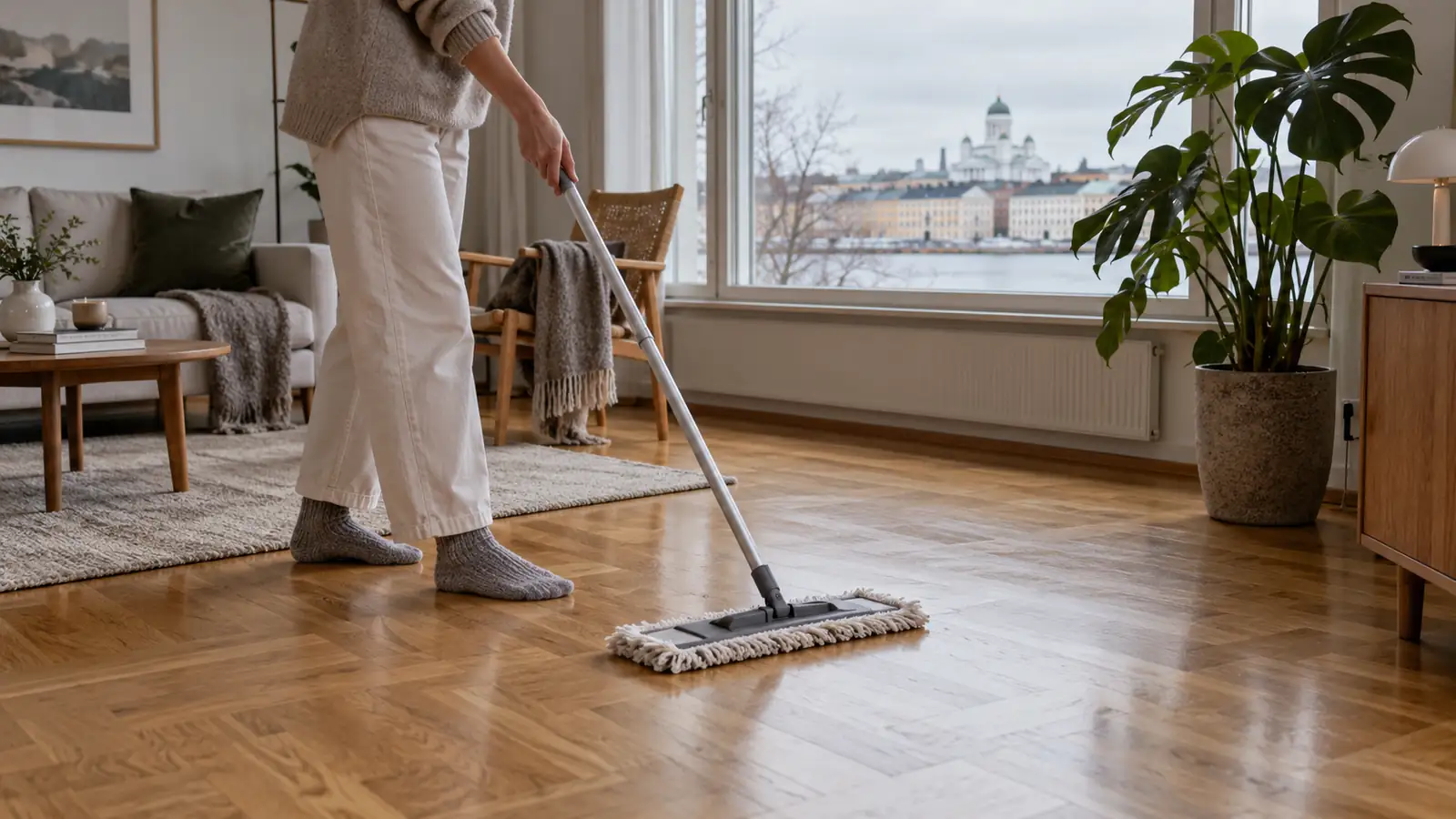
Vacuum grit with a soft floor head, wipe spills when they happen, and use a lightly damp mop only for dirt that needs it. Check the floor finish before choosing a cleaner or maintenance product.
The useful routine is dry first
Walk in with sand under your shoes and the parquet tells on you with a little crunch. That is the bit to tackle first. Vacuum the grains with a soft floor head, then wipe any spills while they are fresh. If a mark remains, try a lightly damp cloth. Check the floor's finish before adding a cleaner. Leave the bucket in the cupboard. This floor needs a quick pass, not a bath.
That routine works for ordinary dirt on most parquet floors. The one question worth answering is whether yours is lacquered or oiled. The finishes can look alike, but deeper care differs. Kährs (Opens in a new tab) and Tarkett (Opens in a new tab) both start with dry cleaning and a lightly damp wipe when needed. Follow your floor's own instructions for cleaners and treatments.
Find out what is under your mop
Look in the home's handover papers, renovation documents or floor-care guide for the maker and finish. If you rent, ask the owner or building contact. A photo of the boards will not settle it: a floor can be refinished, and two finishes can look much the same. Martat's wood-floor guide (Opens in a new tab) explains the common treatments.
Until you know, vacuum or dry-mop as usual. Save the cleaner, oil and wax for when you have the right instructions. There is no need to leave sand on the floor while you investigate a bottle.
What do you know about the floor?
- You do not know the finish
- Vacuum or dry-mop as usual. Find the floor guide before trying a cleaner, oil or wax.
- The floor is lacquered
- Use its lacquered-floor guide when a mark needs a damp wipe or cleaner.
- The floor is oiled or hardwax-oiled
- Follow that finish’s guide. Re-oiling is a separate job from cleaning.
- A board is swollen or soft
- Photograph it and tell the owner or building contact. Cleaning will not repair it.
Stop grit at the entrance
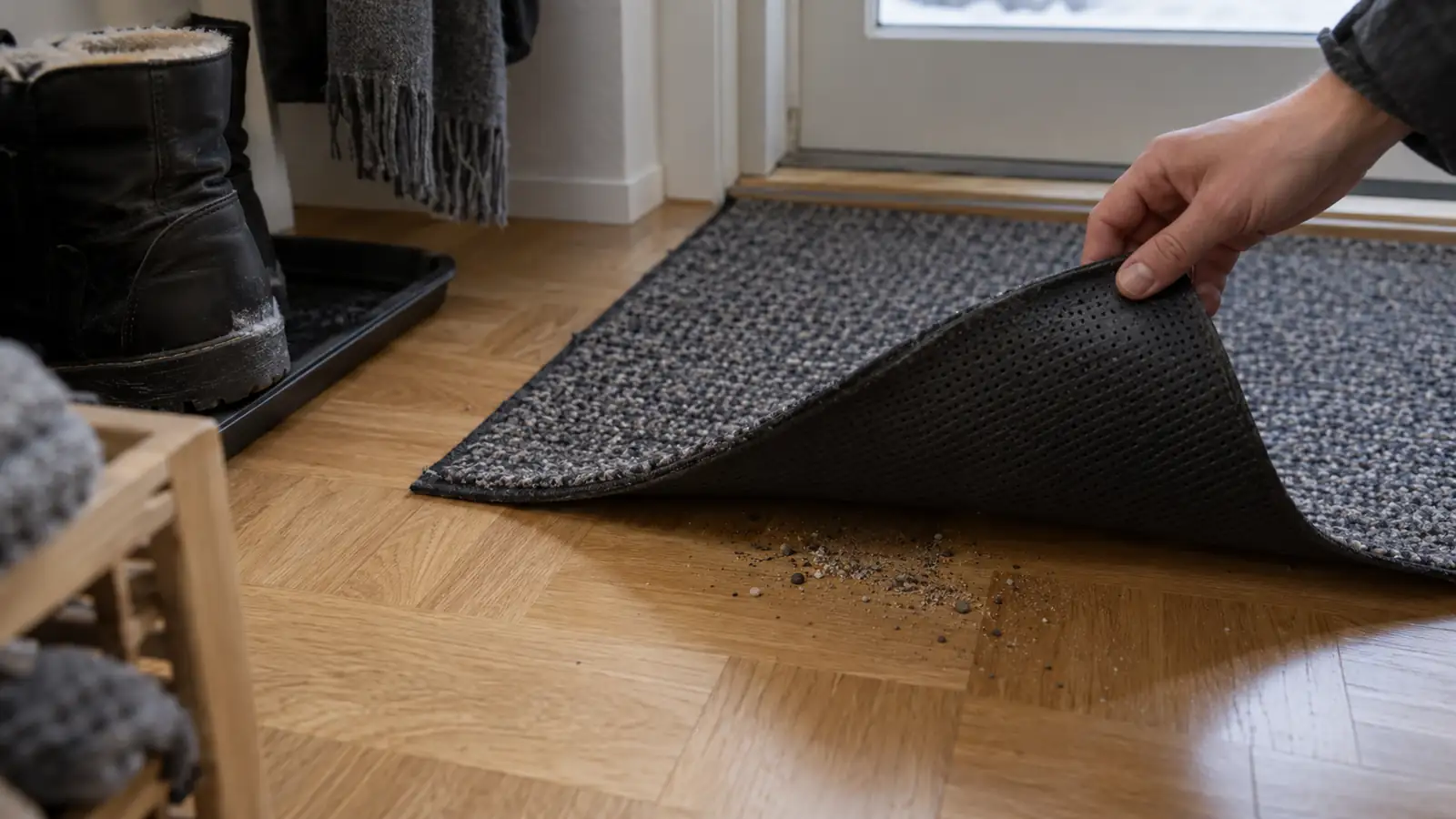
Finnish winter has a habit of coming indoors on shoe soles. Put a mat where people step in and give wet shoes a place to drip. Lift the mat if it is damp underneath, and shake or vacuum out trapped grit. An overflowing sand collection is not doing the floor any favours. Both Kährs (Opens in a new tab) and Tarkett (Opens in a new tab) recommend entrance mats for this reason.
Check chair legs while you are there. A clean felt pad protects the floor; a loose one with sand stuck to it can become the scratch-maker. Replace it before dragging the chair again.
Clean in a sequence that suits the floor
- Move light things out of the way. Pick up any spill you can see.
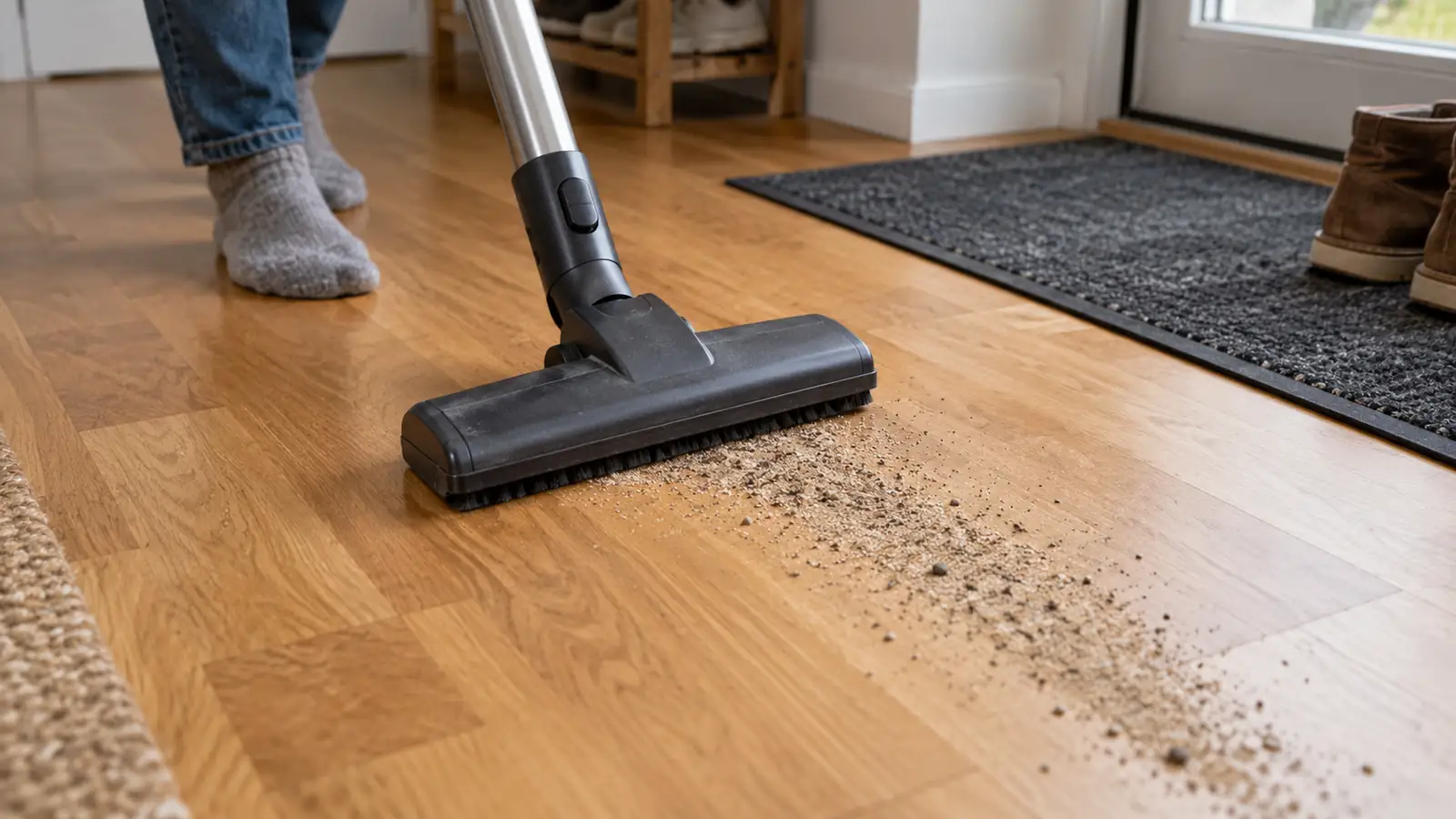
- Vacuum with a clean soft floor head or use a dry microfiber mop. Start where shoes leave grit.
- Wipe a remaining mark with a lightly damp cloth. If it needs cleaner, use one approved for the floor's finish.
- For a larger dirty area, use a well-wrung microfiber mop. Work in small sections and leave no puddles. Let the floor dry before putting a dry mat back.
The order saves work. Dry cleaning collects the grains that a wet mop would push around. A local wipe deals with a mark without wetting the rest of the room. Tarkett's lacquered-parquet advice (Opens in a new tab) says dry cleaning is often enough and warns that a string mop can hold too much water. Kährs (Opens in a new tab) says its floors should dry quickly after a lightly damp wipe. If you can see a wet trail, wring the mop again.
Deal with spills and marks without escalating them
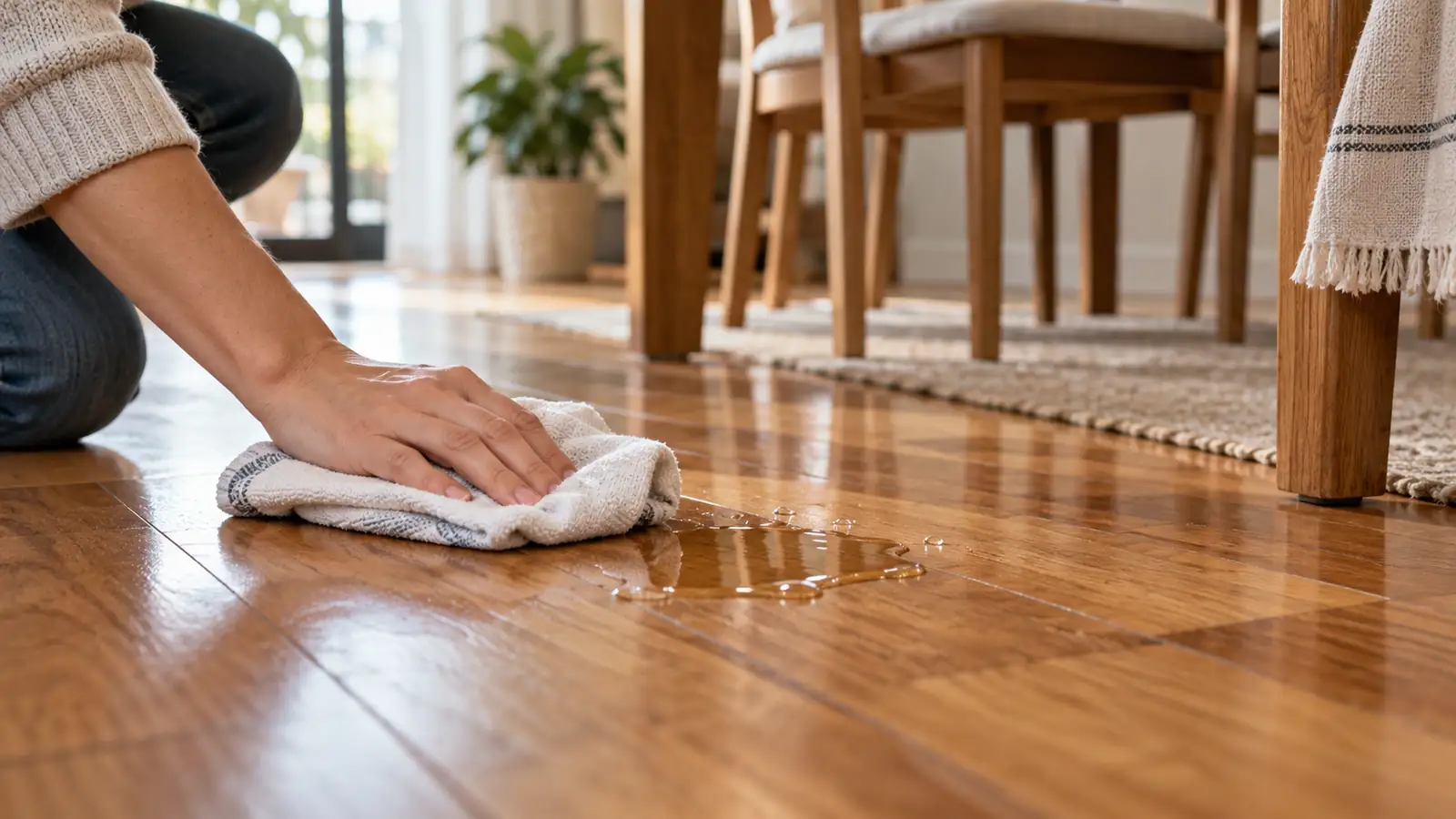
Blot a fresh spill and dry the spot, especially along the board joints. For sticky food, lift what you can without scraping, then try a suitable damp cloth. A stubborn mark needs the floor maker's stain advice, not harder scrubbing or a stronger mystery product. Kährs advises prompt stain removal (Opens in a new tab).
Lacquered and oiled floors need different decisions
The everyday routine is much the same, but maintenance is not. Lacquer forms a surface coating. An oiled floor needs care chosen for its oil treatment. Kährs separates its lacquered and oiled instructions (Opens in a new tab), while Tarkett warns against soap or wax on its lacquered parquet (Opens in a new tab) because they can leave a film.
If a floor looks dull, do not buy a tin of oil on that evidence alone. Find its product instructions and ask the owner before treating a rental floor. A routine clean removes dirt; recoating changes the floor.
What changes with Finnish seasons?
During the heating season, wood can move as indoor air gets drier, as Tarkett explains (Opens in a new tab). A new gap is not dirt. Pouring water into it will not fix it; ask the owner or floor supplier if the change concerns you.
Know when cleaning has reached its limit
Ordinary dirt comes onto the cloth. A raised board, soft spot or dark patch that stays wet does not. Photograph and report those changes, a leak or a stain inside the wood. Do not polish over damage or hide a damp patch under a rug.
Moving out? Check the floor section of the move-out cleaning checklist against your own handover instructions. If you would rather hand over the regular cleaning, see Novah's home cleaning service in Helsinki and tell the team what finish your floor has.