Published
Home lifeBuild a useful kotivara in a small apartment
Organise household supplies for a three-day interruption using food you already eat. A practical water calculation, cupboard plan and real container option.
Written by  Novah Team
4 min read
Quick answer
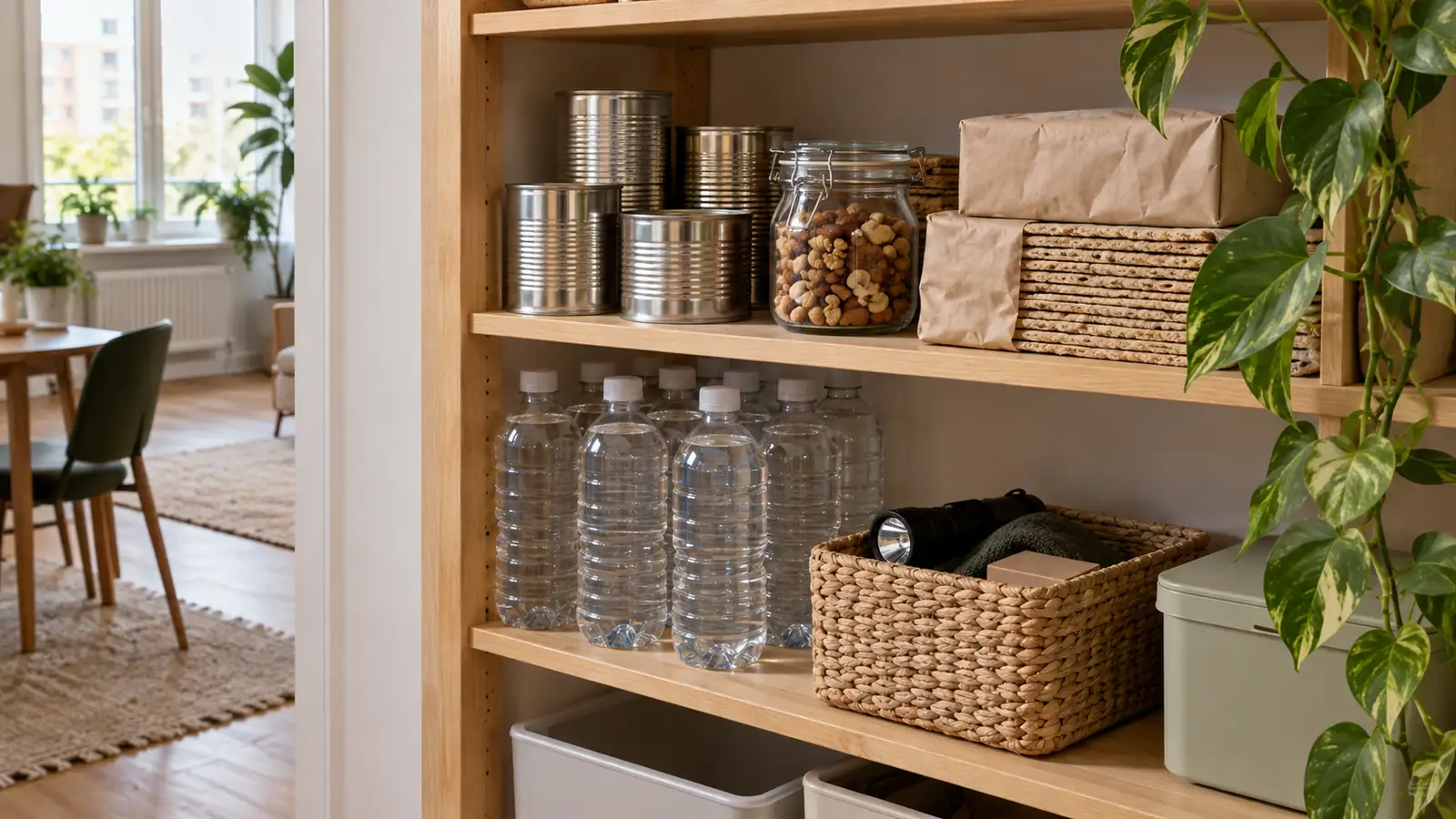
Plan suitable food for everyone for at least 72 hours, store drinking water and keep clean covered containers for collecting more. Rotate supplies through everyday use and group essential equipment.
Start with your normal cupboard
A useful kotivara is a little more of the food and household supplies you already use, organised so you can manage an interruption. It does not need its own mysterious cupboard full of things nobody likes.
Finland's 72 tuntia guidance (Opens in a new tab) recommends supplies for the whole household for at least 72 hours. Include everyone's actual dietary needs and pets. Choose some foods that keep well and can be eaten as they are, without relying entirely on electricity or a full working kitchen.
Start by counting the people you are planning for. Then look at what is already in the cupboard before buying more.
Work out drinking water separately
The 72 tuntia water guidance (Opens in a new tab) describes about two litres of clean drinking water per person per day, with additional water needed for cooking and hygiene.
Using that daily figure for three days gives this drinking-water planning example:
| People | Drinking water for three days |
|---|---|
| 1 | 6 litres |
| 2 | 12 litres |
| 3 | 18 litres |
| 4 | 24 litres |
These amounts cover the drinking-water calculation, not all cooking, hygiene or pet needs. The official kotivara checklist also calls for bottled water and clean covered containers for collecting water.
For a straightforward stored reserve, use sealed bottled water and keep its storage information and date visible. Separately, keep a clean food-grade container ready for collecting water. An empty container provides carrying capacity, not drinking water already at home.
One real container you can size before buying
Plastex 728 water container with tap, 10 litres (Opens in a new tab) is listed by Prisma. The product is food-grade plastic with a wide opening. Its stated dimensions are 16 cm wide, 24 cm deep and 38 cm high.
Measure the storage shelf and think about carrying a full container: ten litres of water alone weighs roughly ten kilograms. Smaller containers can make carrying easier. Keep the container clean, covered and reserved for water or its suitable food use.
For one Helsinki shopping location, Prisma Tripla in Pasila (Opens in a new tab) is at Firdonkatu 2b. The product listing and store page serve different purposes; select the shop's availability before planning a collection.
Make a simple three-day food plan
Write down three breakfasts, three lunches and three dinners for each person, with suitable snacks. Use familiar foods and include choices that need no cooking.
| Role in the plan | Ordinary options to consider |
|---|---|
| Breakfast or snack | Crispbread, suitable spread, nuts or dried fruit where they fit dietary needs |
| A meal base | Canned or packaged cooked foods suitable for eating as sold |
| Fruit or vegetables | Suitable shelf-stable fruit or vegetable products and fresh choices that keep for your plan |
| Drinks | Stored clean water and suitable shelf-stable drinks |
| Pet supplies | The pet's usual food and its separate water needs |
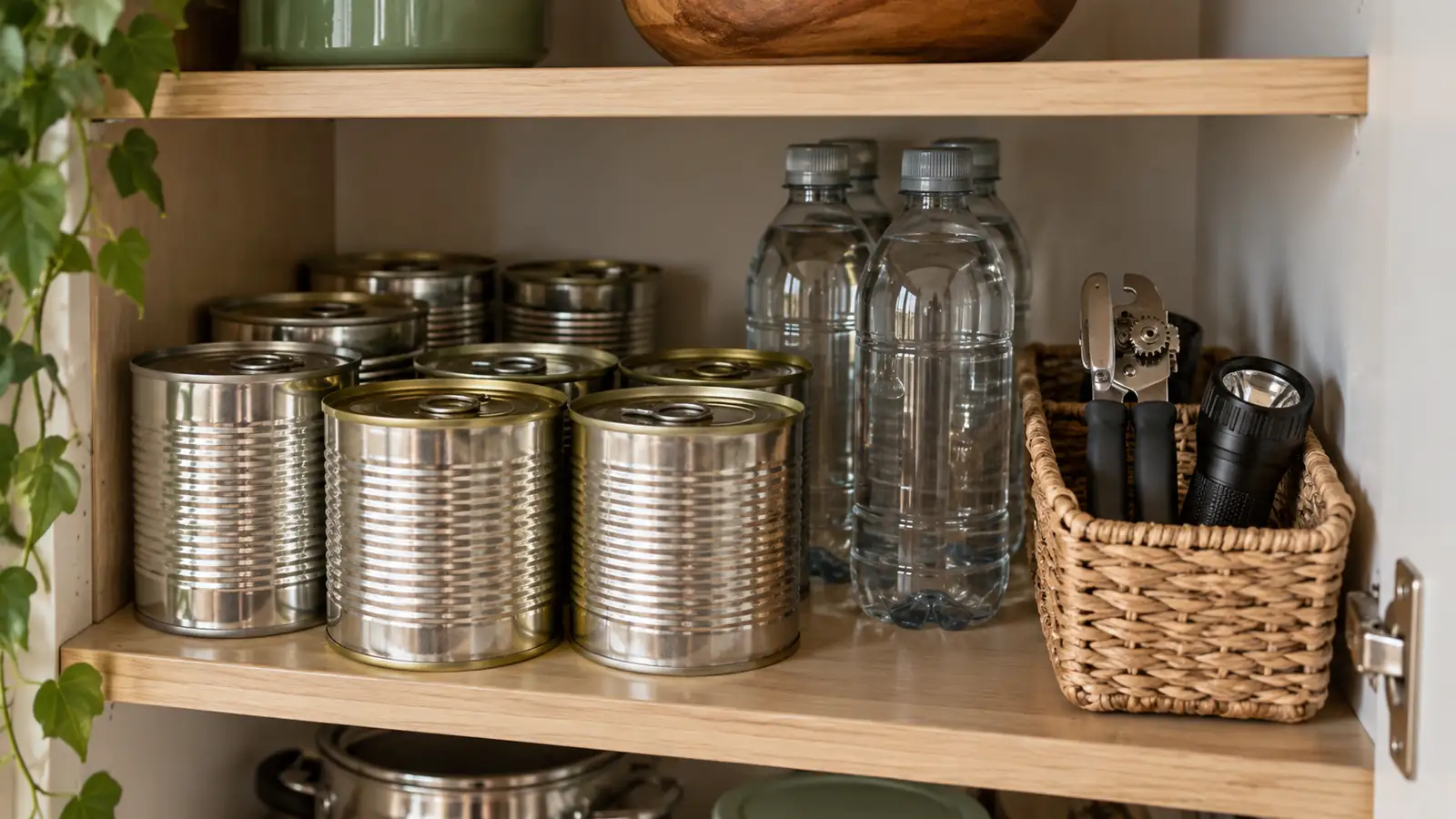
Build the portions around what people normally eat. A packet of crackers is a useful item, but not a complete three-day meal plan by itself. Keep a manual can opener if the chosen packaging needs one.
Include ready-to-eat options for times when the kitchen cannot be used.
Group equipment you can find in the dark
Collect the everyday essentials in one accessible place: a battery torch with working batteries, a charged power bank and cable, and a battery-powered radio. Include your necessary hygiene items, first-aid supplies and personal medicines in their suitable storage.
The official 72 tuntia checklist (Opens in a new tab) covers these wider household needs, including cash and fire-safety equipment. Check that a torch lights up and that a stored radio can receive a station. Having batteries somewhere in the home is less useful than finding the right batteries with the device.
Keep supplies where the household can reach them. Store heavy water low and leave the exit route clear.
Rotate the supplies through normal life
Put the earlier suitable date at the front. When you use a reserve item, add its replacement to the shopping list. Do the same for sealed water according to its storage information.
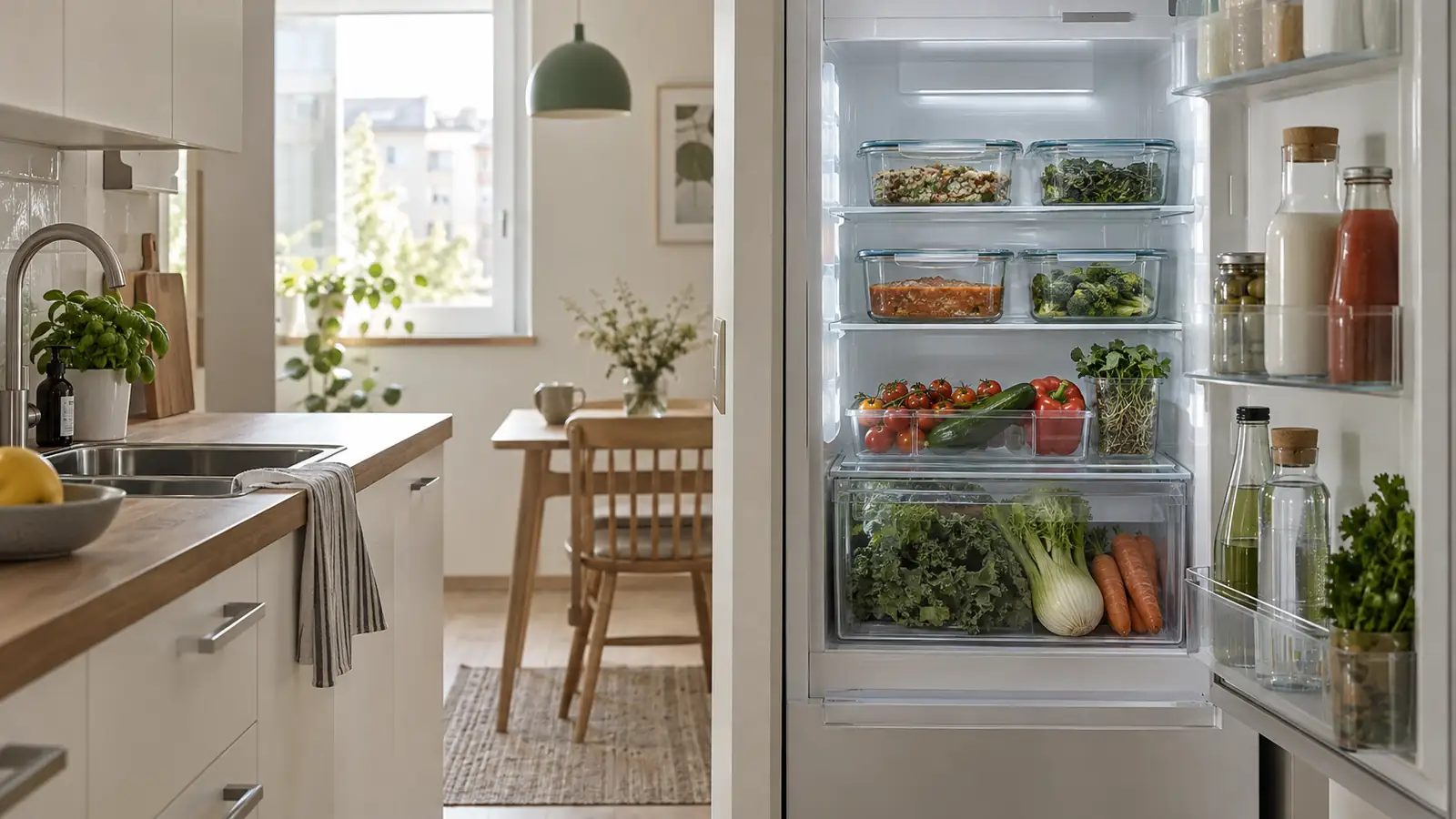
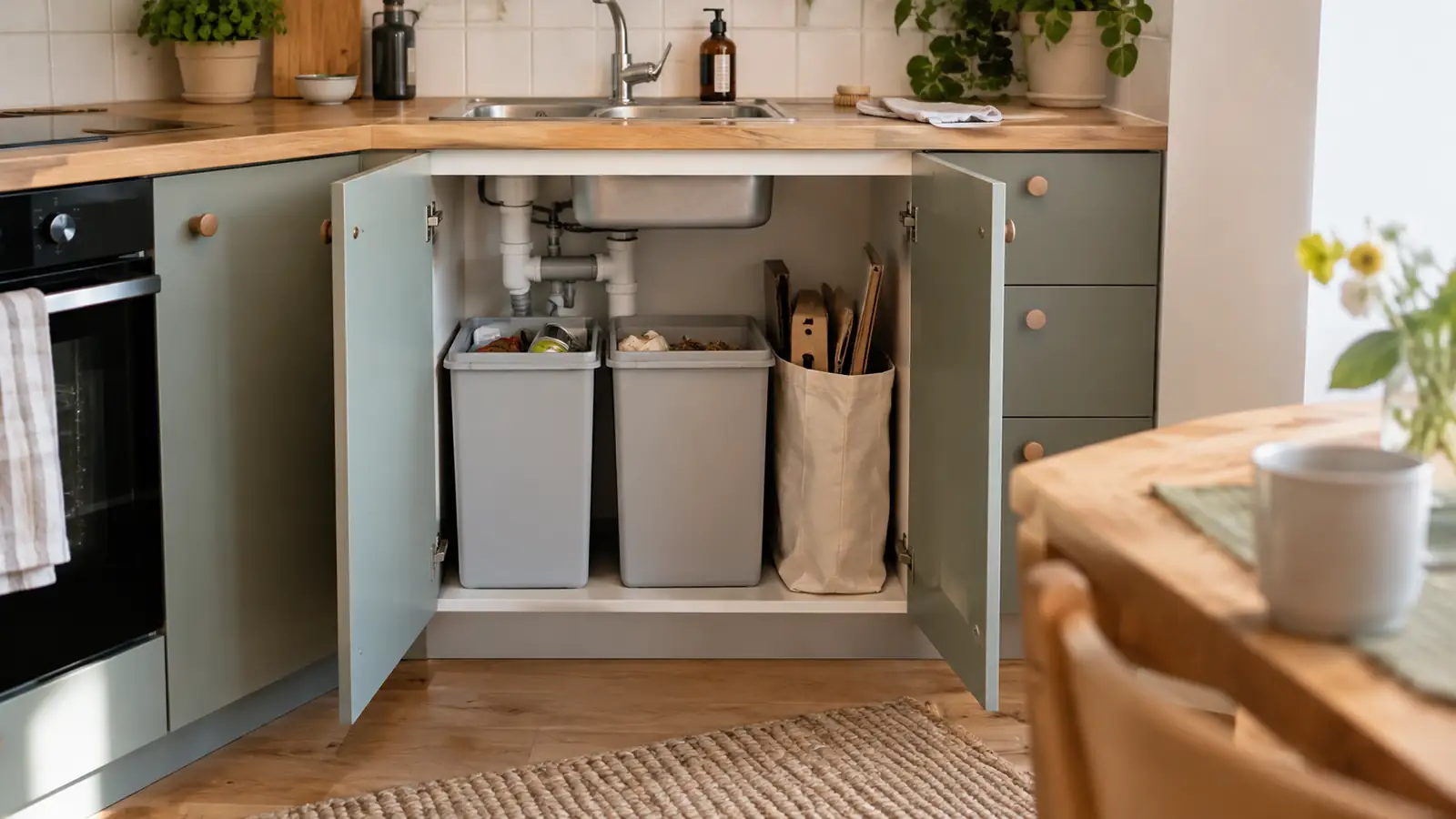
Review the shelf when household needs change, such as a new diet or a different pet food. The use-first fridge routine uses the same habit of seeing food before buying more, while small-kitchen recycling gives the empty packaging a place afterwards.
During an actual interruption, follow the relevant water utility and authorities for current instructions. Prepared supplies make that situation easier; they do not replace a current notice about contaminated water.
Your finished setup has suitable food, actual stored drinking water, collection containers and equipment you know how to find.
Check the cupboard and equipment