Published
Home lifeA recycling setup that fits a small kitchen
Give everyday waste a place without filling the kitchen with bins. A compact setup with Helsinki-region sorting guidance and a measured bin option.
Written by  Novah Team
4 min read
Quick answer
Keep food waste and mixed waste near the worktop, collect packaging separately and flatten cartons as you empty them. Size the containers around how often you take them outside.
Build around the waste you make every day
A recycling cupboard should open without launching a milk-carton avalanche. Start with the waste you produce most often and the route to your building's collection point.
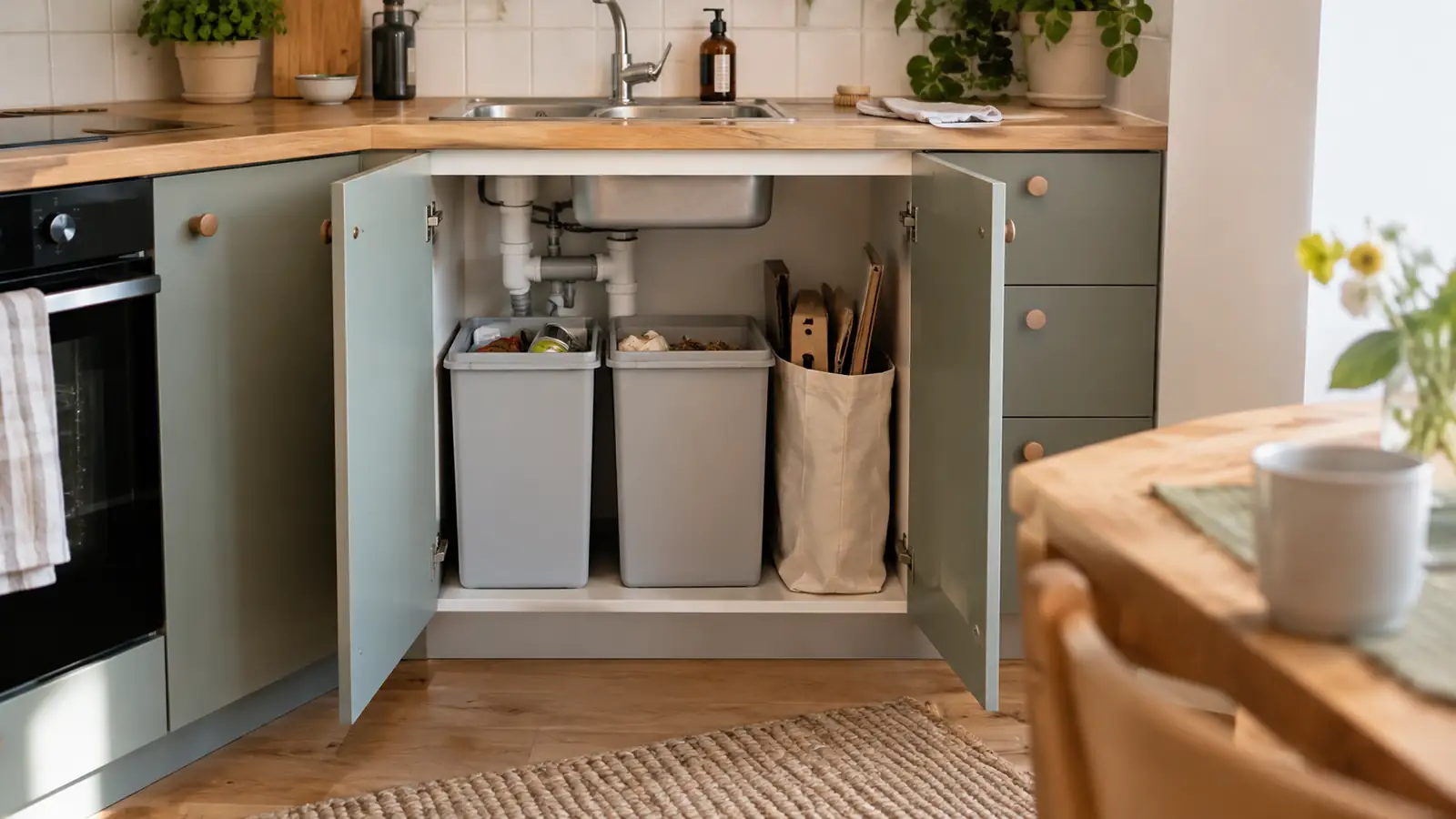
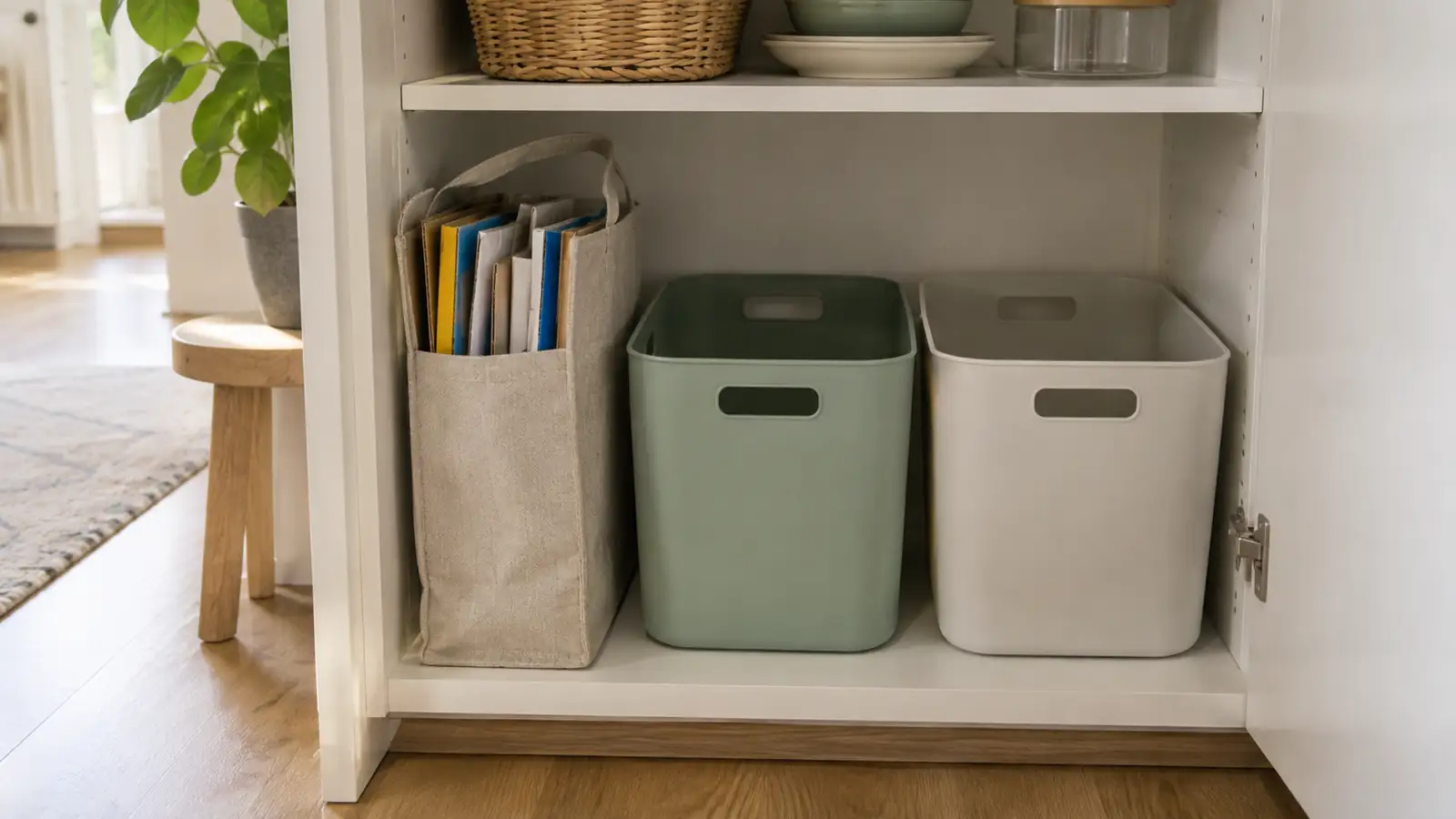
Put a small food-waste container and mixed-waste bin where you prepare food. Give empty plastic packaging its own bag or container. Keep flattened cartons in a narrow bag beside the cupboard. Glass and metal can use smaller separate containers if you produce less of them.
Smaller separate containers and more frequent trips outside can keep every sorting category available in less space.
Measure the cupboard before buying containers
Measure the clear width, depth and height beneath the sink, including pipes and hinges. Leave space to lift a container out and open its lid. The cupboard's outside measurement will not tell you whether a bin fits around the plumbing.
IKEA HÅLLBAR 10-litre bin (Opens in a new tab) comes with a lid and handle. Its top is 26.3 cm wide and 21.2 cm deep; its height is 32.6 cm. Use those upper dimensions when planning the cupboard, rather than the narrower base.
A container you already own can work for dry packaging. Choose something you can empty easily. Food waste needs a setup you can line, carry and clean without wrestling it out from behind the water pipe.
For a physical shopping trip, IKEA Vantaa in Porttipuisto (Opens in a new tab) is at Porttisuontie 18. Select the store on the product page to check availability.
Keep these common items in the right group
HSY's sorting course (Opens in a new tab) explains the packaging categories and their preparation.
| Item | Home collection spot |
|---|---|
| Vegetable peelings, coffee grounds and food scraps | Food-waste container |
| Empty yoghurt tub or plastic food package | Plastic-packaging bag |
| Empty milk carton or cereal box | Flattened-carton bag |
| Empty non-deposit glass bottle or food jar | Glass-packaging container |
| Empty food tin or metal lid | Small-metal container |
| Newspapers and ordinary advertising leaflets | Separate paper collection |
A drinking glass is not a glass package. Likewise, a broken plastic kitchen utensil is not plastic packaging. The category follows the item, not just its material. For an unusual item, HSY's waste guide (Opens in a new tab) gives the destination by name.
Make the food-waste container easy to live with
HSY recommends paper bags for food waste (Opens in a new tab), and accepts suitable compostable bioplastic bags too. Ordinary plastic bags do not belong in food waste.
Let hot scraps cool and drain food waste before putting it in the bag. Keep liquid cooking oil out of the sink: HSY directs liquid fat to mixed waste in a closed package. Empty the food-waste container every few days, sooner when necessary, and wipe away spills.
Keep spare bags beside the container. That tiny convenience matters when someone has a handful of potato peelings and very little enthusiasm for searching.
Give packaging less room to expand
Flatten cartons immediately. Empty or scrape food packaging; the HSY course says washing every package separately is unnecessary. If residue would smell while stored, a quick rinse can make your own kitchen more pleasant.
Keep the glass and metal containers low enough to carry comfortably. Put deposit bottles in a separate return bag. When one category fills up, take that category outside instead of waiting for the whole cupboard to be full.
Choose a routine that survives a busy week
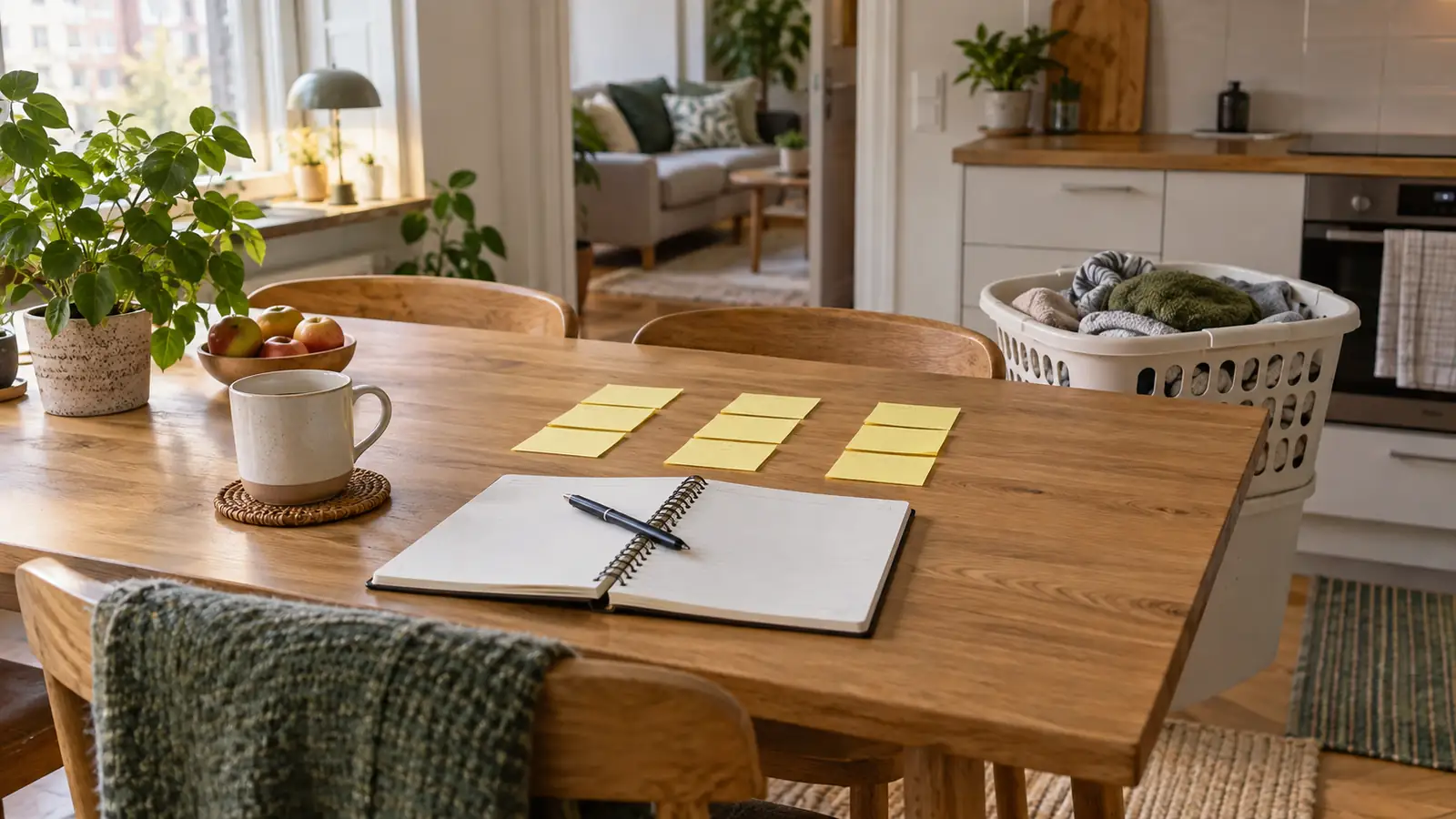
Try attaching one collection trip to something you already do, such as leaving for the shops. In a shared home, include taking the waste out in the household task agreement. Emptying the kitchen container and reaching the correct outdoor bin are one complete job.
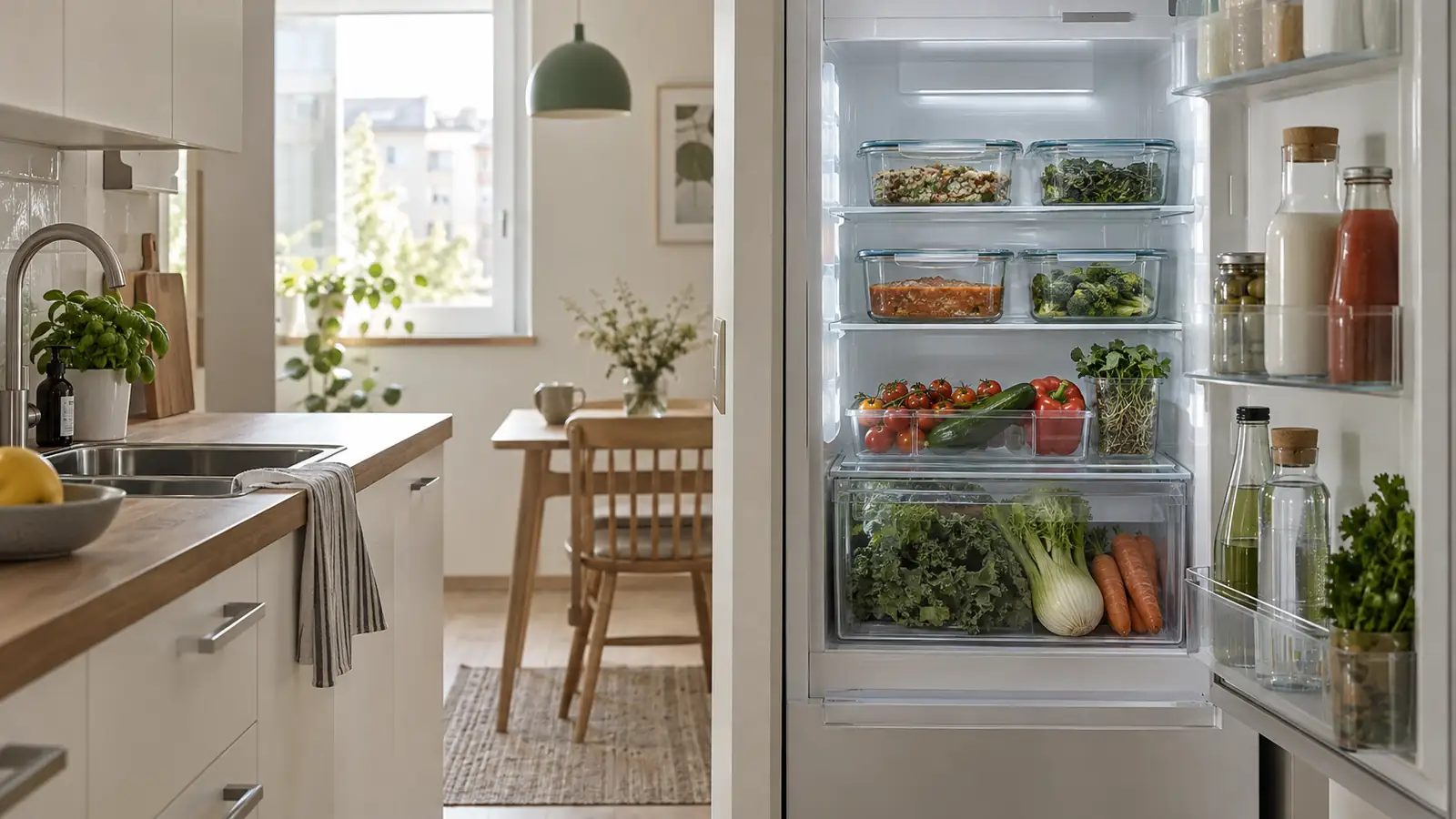
To make less food waste in the first place, try the use-first fridge system.
The finish line is a cupboard that opens, containers that come out easily and a collection routine everyone understands.