Published
KitchenHow to clean an oven without guessing its method
Find your oven model, choose its cleaning method, then deal with the racks and glass. A straightforward guide to plain, pyrolytic, catalytic and steam-assisted ovens.
Written by  Antti Heikkinen
6 min read
Quick answer
Let the oven cool, find its model number and use the cleaning method in its manual. Remove the parts it tells you to remove. Wipe an ordinary interior by hand; use pyrolysis, catalytic or steam cleaning only when the model supports it. Treat racks and door glass as separate jobs.
Start with the oven you own
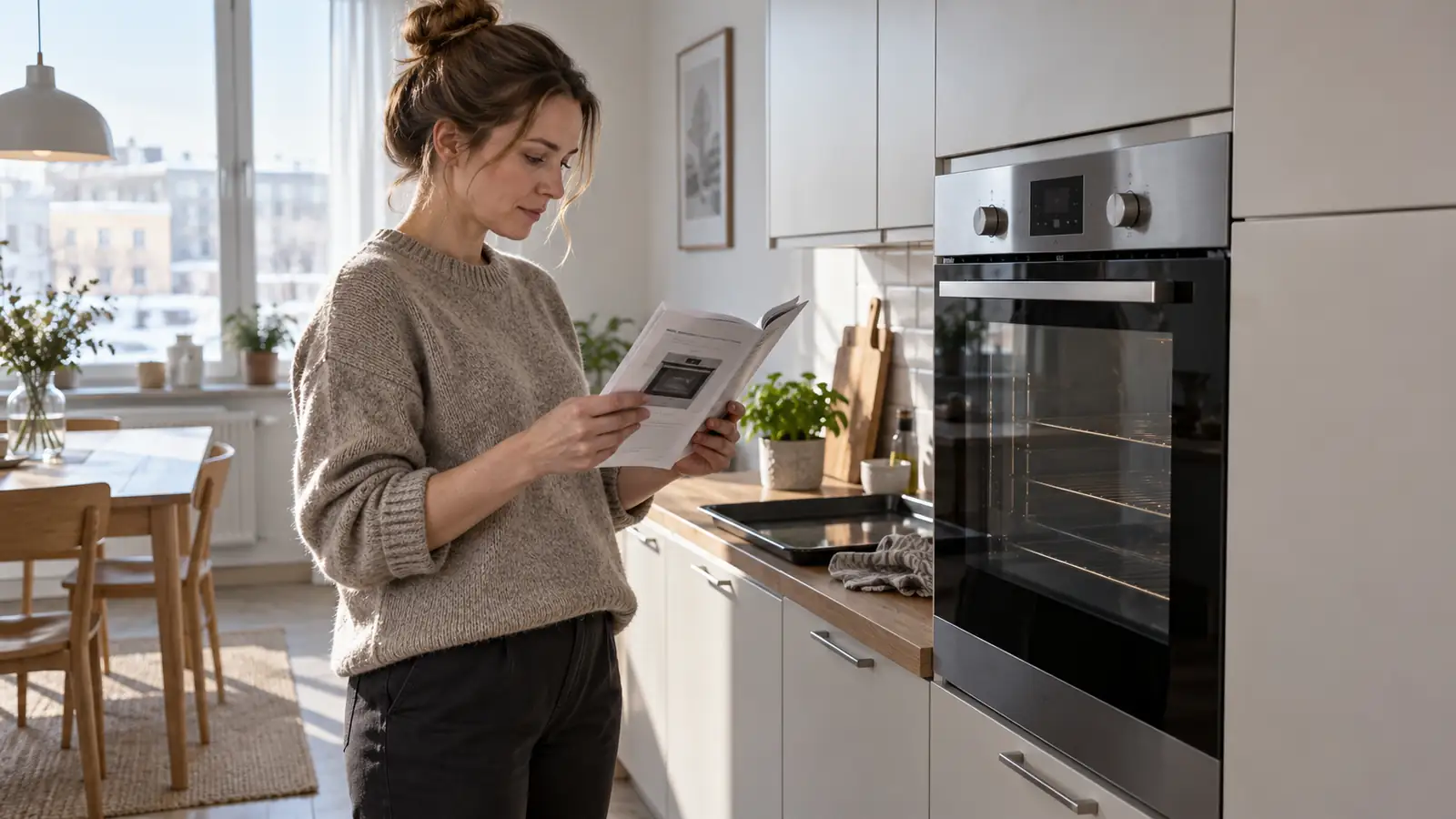
An oven can look perfectly innocent with the door shut. Then you preheat it, and last week's cheese announces itself. Let the oven cool, take out the racks and find the model number. Its manual tells you whether to wipe the inside by hand or use a built-in cleaning setting. Clean the racks and door glass as separate jobs. The mess is easier to tackle in pieces than as one sticky oven-shaped problem.
In a rental home, ask the landlord for the appliance guide if it is missing. If this clean is part of a handover, the move-out checklist covers the rest of the home.
Find the model and the cleaning chapter
Look for the booklet that came with the oven or the model label on the appliance. Some labels sit around the door opening. Electrolux explains where to find its product number (Opens in a new tab); Bosch lets owners search by E-Nr. (Opens in a new tab). Other brands may put the number somewhere else. Use the maker's support site to find the exact manual.
In that manual, look up cleaning, accessories and door glass. Check three things: which cleaning setting the oven has, what must come out before you use it, and which surfaces cannot take cleaner. Keep the model number in your phone for next time. This is the part you only need to figure out once.
Choose the method the manual permits
The cleaning method depends on the oven. Here are the common options in plain language.
Plain enamel or another ordinary interior
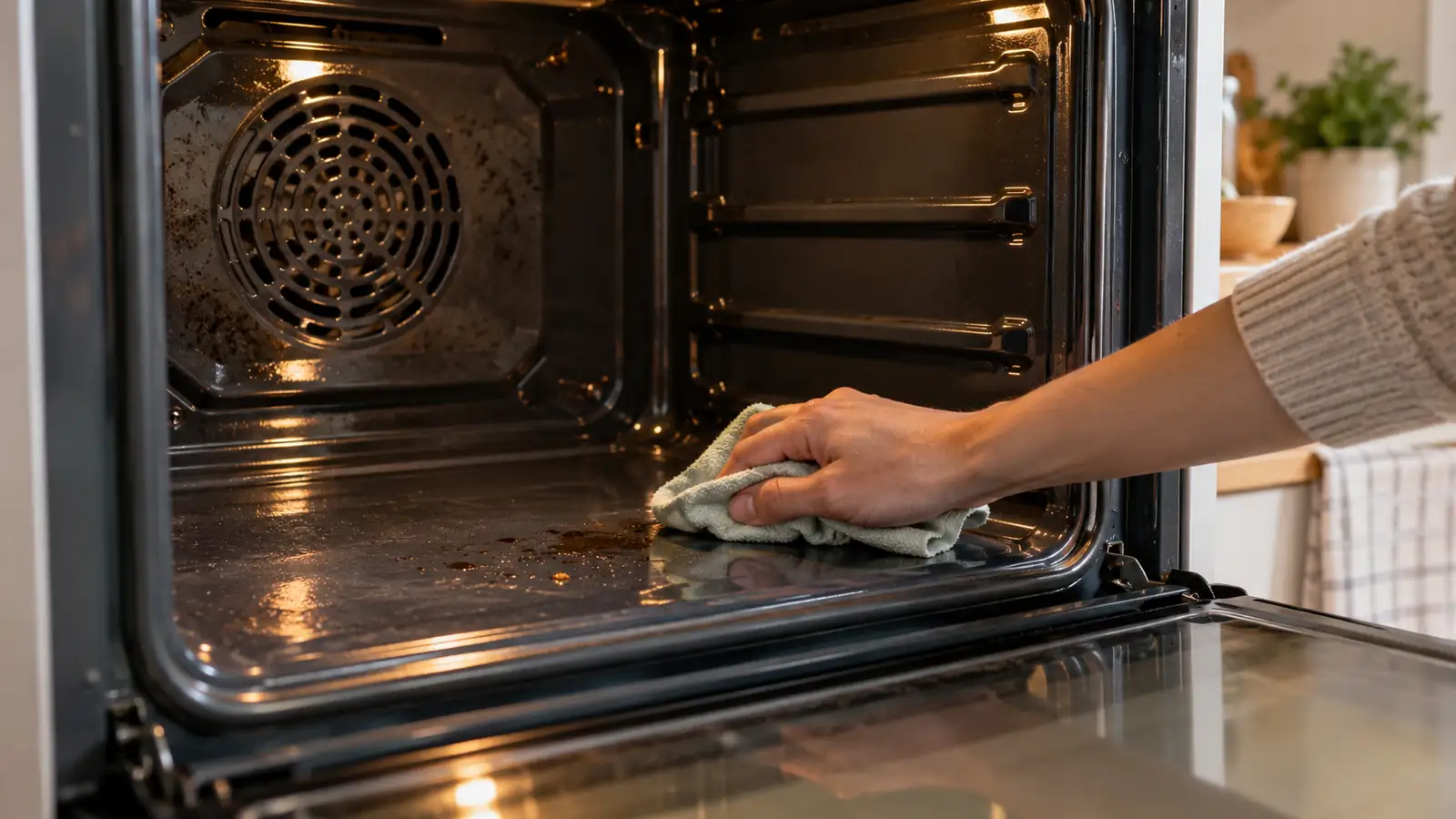
With the oven cool, lift out loose crumbs and wipe the ordinary interior with a soft cloth. Start with warm water and a mild dishwashing solution, as Martat advises for oven care (Opens in a new tab). Wipe away the cleaner afterward.
A burnt patch is annoying. Give it another gentle pass with the mild solution before trying anything stronger. Keep water and cleaner out of vents, the fan opening and heating parts.
Pyrolytic cleaning
Pyrolysis is the oven's own high-heat cleaning cycle. It leaves residue for you to wipe away after everything has cooled. It is a named setting, not a trick you can make by turning a regular oven to its hottest cooking temperature.
Follow your model's preparation list. Electrolux's pyrolysis guide (Opens in a new tab) tells owners to remove accessories and shelf supports and wipe the cavity and glass before the cycle. Your model may have different removable parts. Keep children and pets away from the hot oven, follow its ventilation directions and wait for the door lock to release before wiping out the residue.
Catalytic liners
A catalytic liner is a special coating that helps break down grease. It may cover only some walls, which means the oven floor and door still need their own wipe. Electrolux warns against oven cleaner, soap and abrasive products on catalytic coating (Opens in a new tab).
Find the coated panels in your manual and use the cycle it names. Leave those panels alone with the spray bottle. If you cannot tell which wall has the coating, ask the maker or landlord before cleaning it.
Steam-assisted or water-based cleaning
Some ovens use water or steam to soften grime. The water goes in the place the model specifies, not wherever it seems handy. Electrolux's AquaClean guide (Opens in a new tab) even distinguishes water on the oven floor from water in a steam tank.
Use the stated amount and programme, then wipe the loosened mess at the point the manual tells you to. A steam-cleaning setting does not wash the oven for you. A separate steam tank or descaling job has its own instructions.
Which oven do you have?
- The manual says to clean it by hand
- Let it cool. Wipe the allowed surfaces with a soft cloth and the cleaner named in the manual.
- It has a pyrolysis programme
- Take out the parts the manual lists, run the programme and wipe the residue after cooling.
- It has catalytic panels
- Find the coated walls. Use their cleaning cycle; keep oven cleaner and scrubbers away.
- It has a steam-cleaning setting
- Add the stated amount of water in the stated place. Run the setting, then wipe.
- You cannot identify the model
- Find the exact manual or ask the maker or landlord before using a strong cleaner or programme.
Clean racks, trays, glass and seals separately
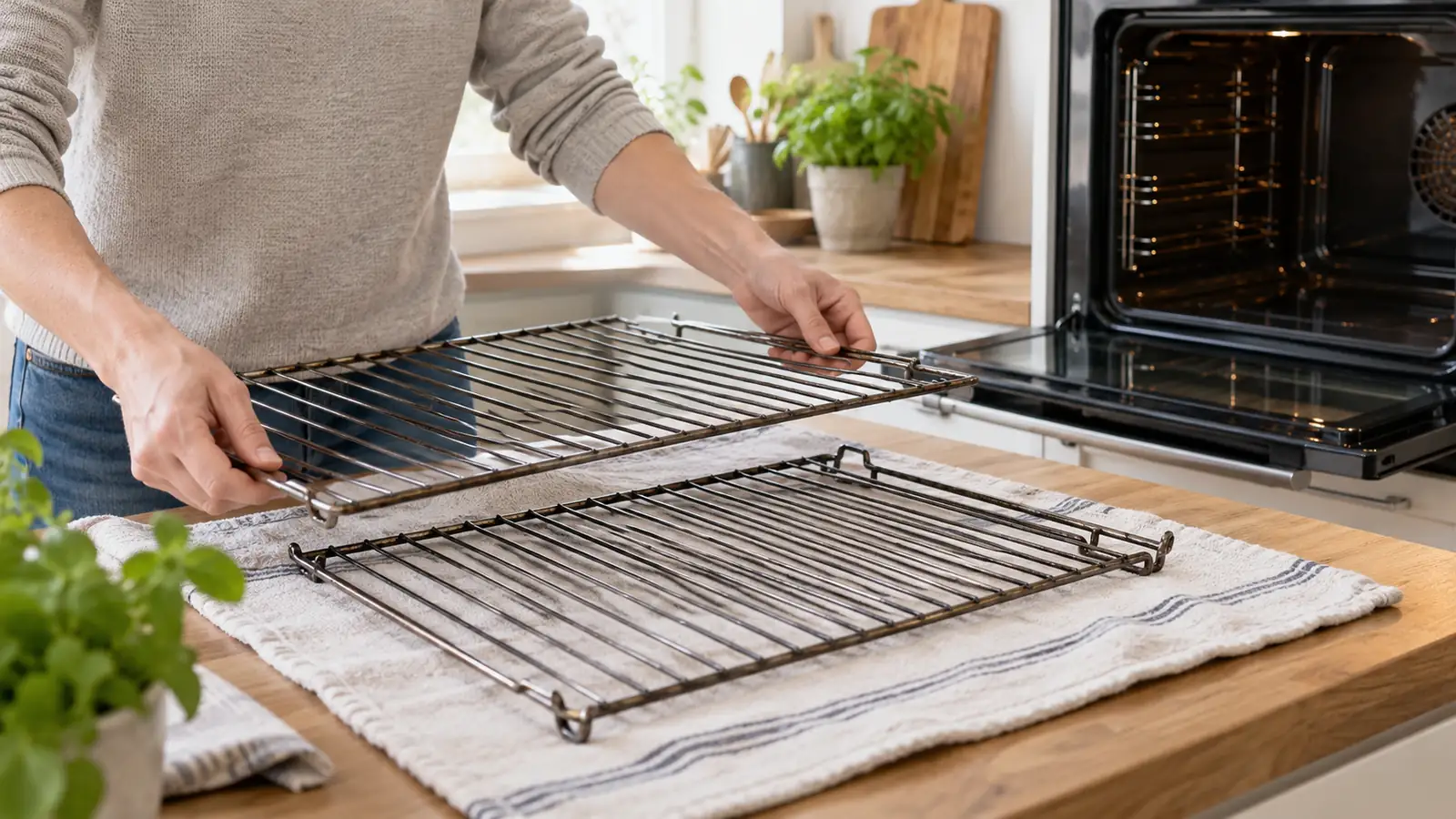
Set the removable parts on a protected surface. Check which racks or trays can soak or go in the dishwasher; telescopic rails and coated panels may have different rules. Wash only the parts the manual says you can remove, dry them as instructed and return them to their proper places.
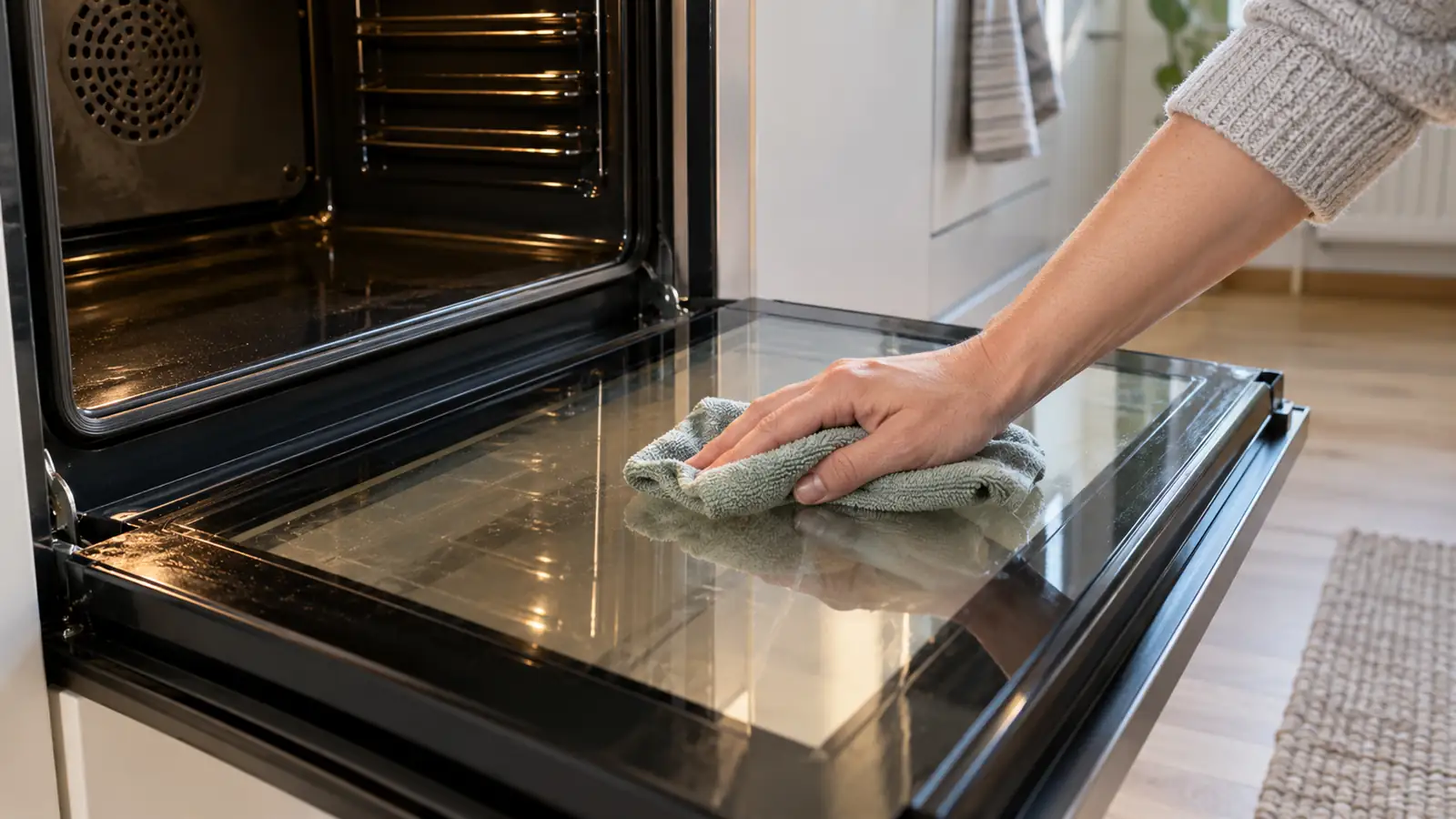
Wipe the easy-to-reach door glass first. If the dirt is between panes, do not pry the door apart because a video made it look quick. Bosch says to check the exact manual before removing a door or its glass (Opens in a new tab). If the steps are unclear, leave that job to someone who has the right instructions.
The door seal needs a gentle touch. Wipe it only as the manual allows. A torn or loose seal needs service, not another round with a sponge. On the outside, use a cleaner suited to the front panel and keep liquid out of the controls.
Use cleaning chemicals only where permitted
The oven-cleaner bottle can look like a shortcut. Read its label first. Martat notes that some oven cleaners are strongly alkaline (Opens in a new tab), and Tukes explains the use and hazard information on household cleaners (Opens in a new tab). Wear the protection the label calls for, respect its contact time and rinse as directed. Use it only on a surface the oven maker allows.
Do not mix cleaners or layer a new one over an old residue. If a product reaches a vent or a coated panel it should not touch, stop and follow the maker's advice. Stronger is not automatically faster, especially when the oven has a coating you cannot replace with a wipe.
Finish and make the next clean easier
Once the oven is cool and dry, wipe away loose residue and put the racks back. Check that the door shuts normally. Do not use the oven until cleaning-product residue is gone. A stubborn mark can wait until you have the right method; it does not need a random stronger bottle.
Next time a pie bubbles over, wipe the spill after the oven cools. Bosch also recommends dealing with cooled splashes (Opens in a new tab). The inside of the oven can stay off the ordinary weekly apartment cleaning list.
If you are booking help, check whether oven-interior cleaning is included. It is an add-on to Novah's standard move-out clean; do not assume a recurring home clean includes it. See the current home-cleaning service in Helsinki, Espoo or Vantaa, and share the oven model if it has special care rules.