Published
Home lifeWhich everyday habits use electricity at home?
Understand your home's electricity use and choose changes that matter. A practical starting point for Finnish apartments, with worked energy examples.
Written by  Novah Team
4 min read
Quick answer
Start with your measured consumption and identify electric heating, hot water, sauna and appliances. Choose a few useful changes, then compare similar days or weeks.
Start with your own home's numbers
Before appointing yourself chief light-switch inspector, look at your electricity consumption. Open your supplier's consumption view and choose a normal week. Note which days you were home, used the sauna or did several laundry loads.
Then identify what your electricity meter actually covers. Electric space heating, electric water heating and bathroom floor heating can change the picture considerably. In a district-heated apartment, some heating and hot-water costs may be handled outside your own electricity bill.
Motiva's household electricity overview (Opens in a new tab) shows how different an apartment and an electrically heated house can be. Its examples are examples, not a target that every home must match.
Look at heat-producing uses first
List your home's electric heaters, sauna stove, hot-water system and bathroom floor heating where you have them. Learn which controls you are meant to operate as a resident before changing a building-managed system.
| Use | A practical first action |
|---|---|
| Your own electric sauna | Prepare before heating and use it when ready, rather than keeping it waiting |
| Hot showers | Try a shorter shower and turn off water while doing something that does not need it |
| Bathroom floor heating | Check the resident control and whether the floor is being heated unnecessarily high; retain needed drying conditions |
| Laundry and dishes | Run appropriately filled loads and choose a suitable efficient programme |
| Lighting | Put useful light where the task is and turn unused lighting off |
Motiva's sauna advice (Opens in a new tab) recommends going in when the sauna is ready. Agree the time first, gather towels and avoid heating an empty sauna while everyone finishes other jobs.
Keep your home's required ventilation operating. Saving electricity by leaving moisture in the bathroom creates a different household problem.
Read watts and kilowatt-hours differently
Watts describe power. Kilowatt-hours describe energy used over time.
For a device drawing constant power, calculate:
Watts × hours ÷ 1,000 = kWh
A 9 W lamp on for four hours uses 0.036 kWh. A hypothetical 2,000 W heater running continuously for one hour uses 2 kWh. Real heaters and appliances may cycle on and off, so their rated power is not automatically their measured hourly consumption.
For one real product example, the current Airam Fiora grow light (Opens in a new tab) includes a 9.5 W lamp. Eight hours at that lamp power gives 0.076 kWh. That is an arithmetic example, not a plant-lighting schedule or a measurement of every part of a household system.
Choose light by the light you need
Motiva's lighting guide (Opens in a new tab) explains that lumens describe light output and kelvin describes colour tone. Watts alone do not tell you how bright a modern bulb will be.
When replacing a bulb, match the fitting, choose the light output you need and check whether the fixture uses a dimmer. A dimmer needs a compatible dimmable bulb. For a reading corner, direct the lamp where you read rather than illuminating every ceiling light.
A comfortable room can still have comfortable lighting. Start with unused fixtures and inefficient choices rather than turning an occupied home into a gloomy corridor.
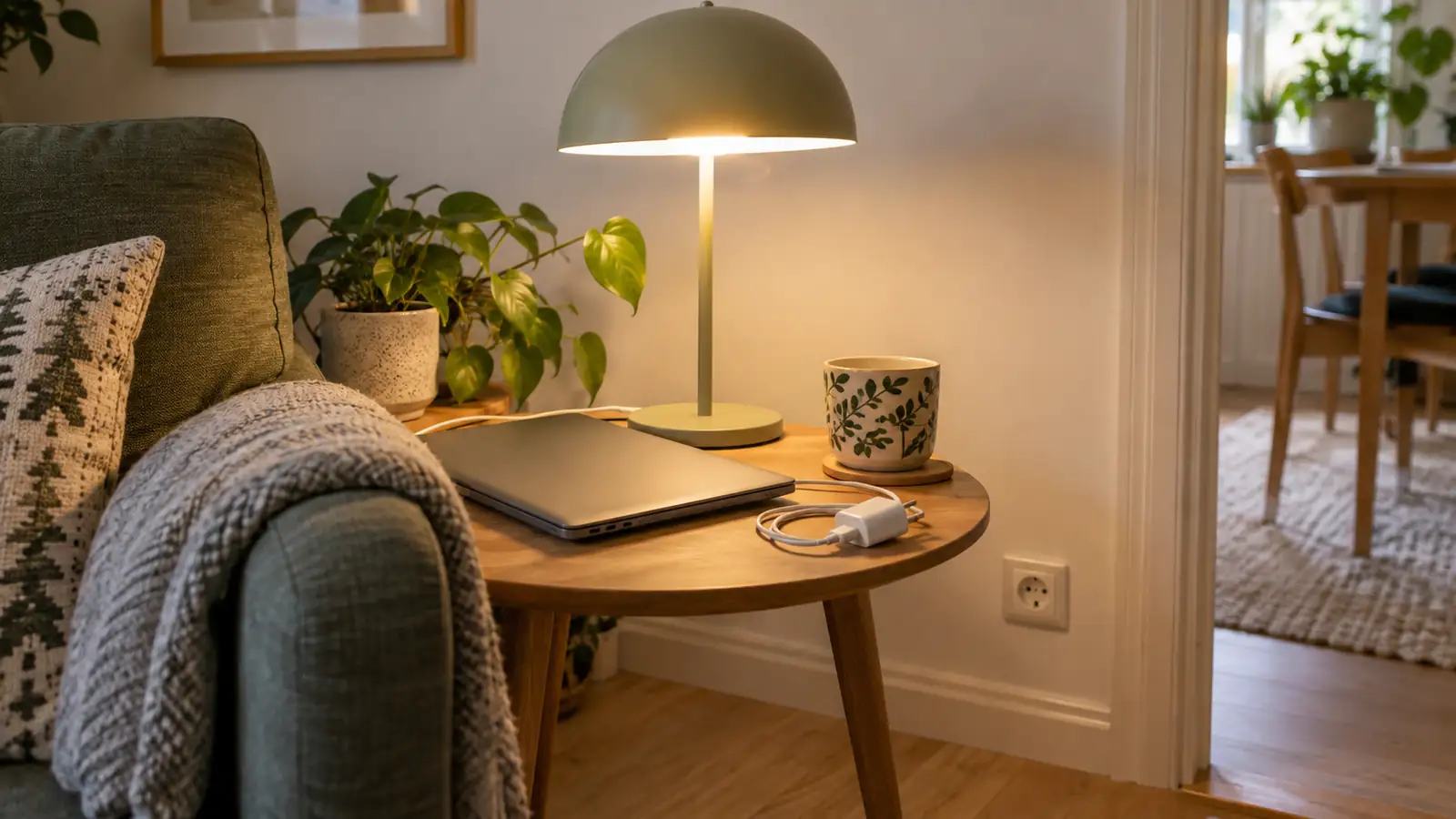
Change two habits and observe the result
Choose two changes you can repeat: a planned sauna time, appropriately filled dishwasher loads or switching off lighting in empty rooms. Write down the start date and compare a similar period.
Compare occupancy, weather and heating needs too. A warmer week may reduce consumption independently of your new routine. Use the meter to find the pattern rather than announcing a saving from one unusually quiet day.
If your contract has prices that vary by time, your supplier's current price view can help plan flexible use. Changing when you use energy and reducing the amount used are different actions. Keep laundry and cooking in a time when you can supervise them.
Fit the routine around the home
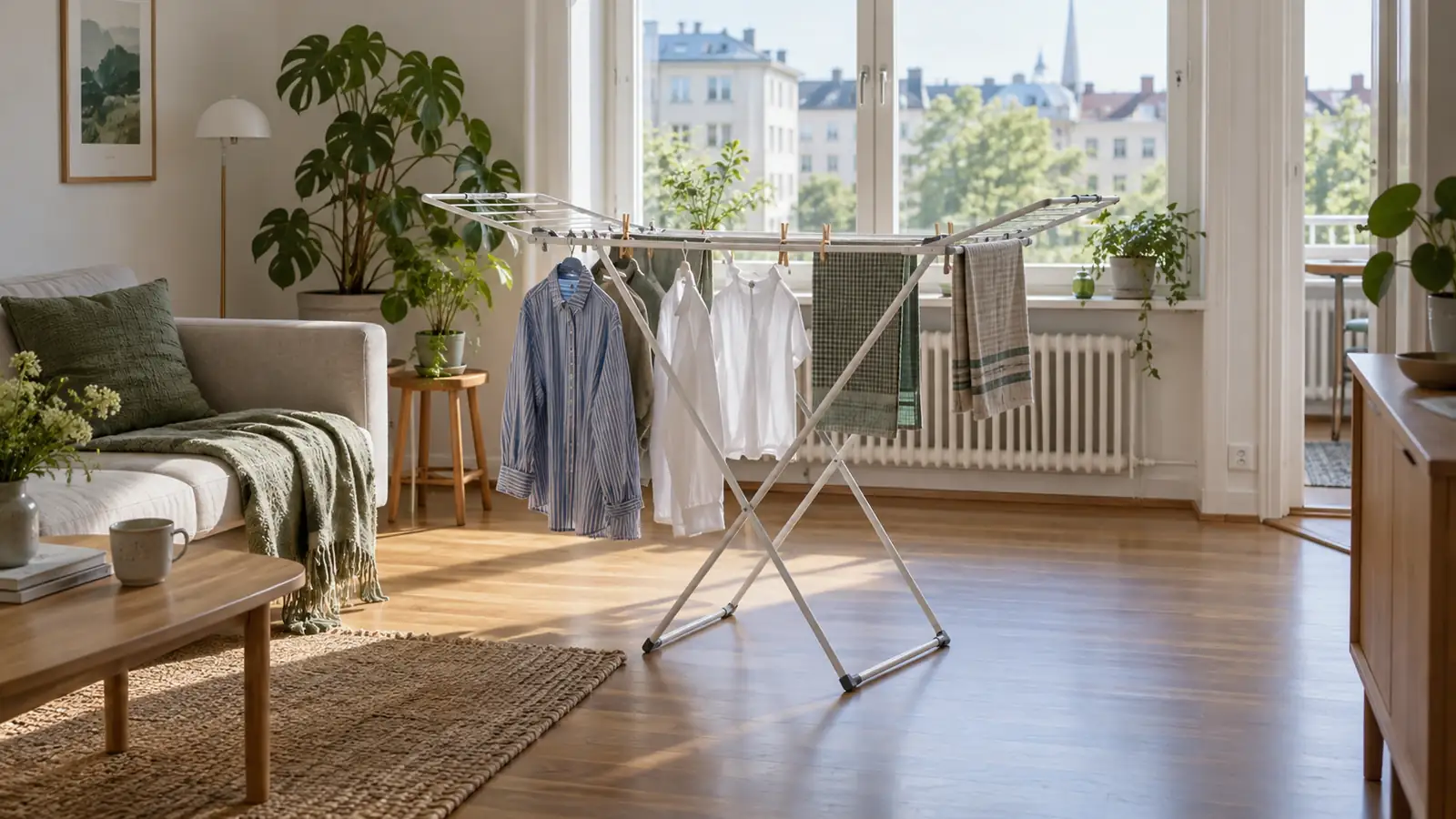
For clothes drying, use the small-apartment laundry setup. It keeps ventilation and spacing part of the plan rather than simply moving a wet load into another room.
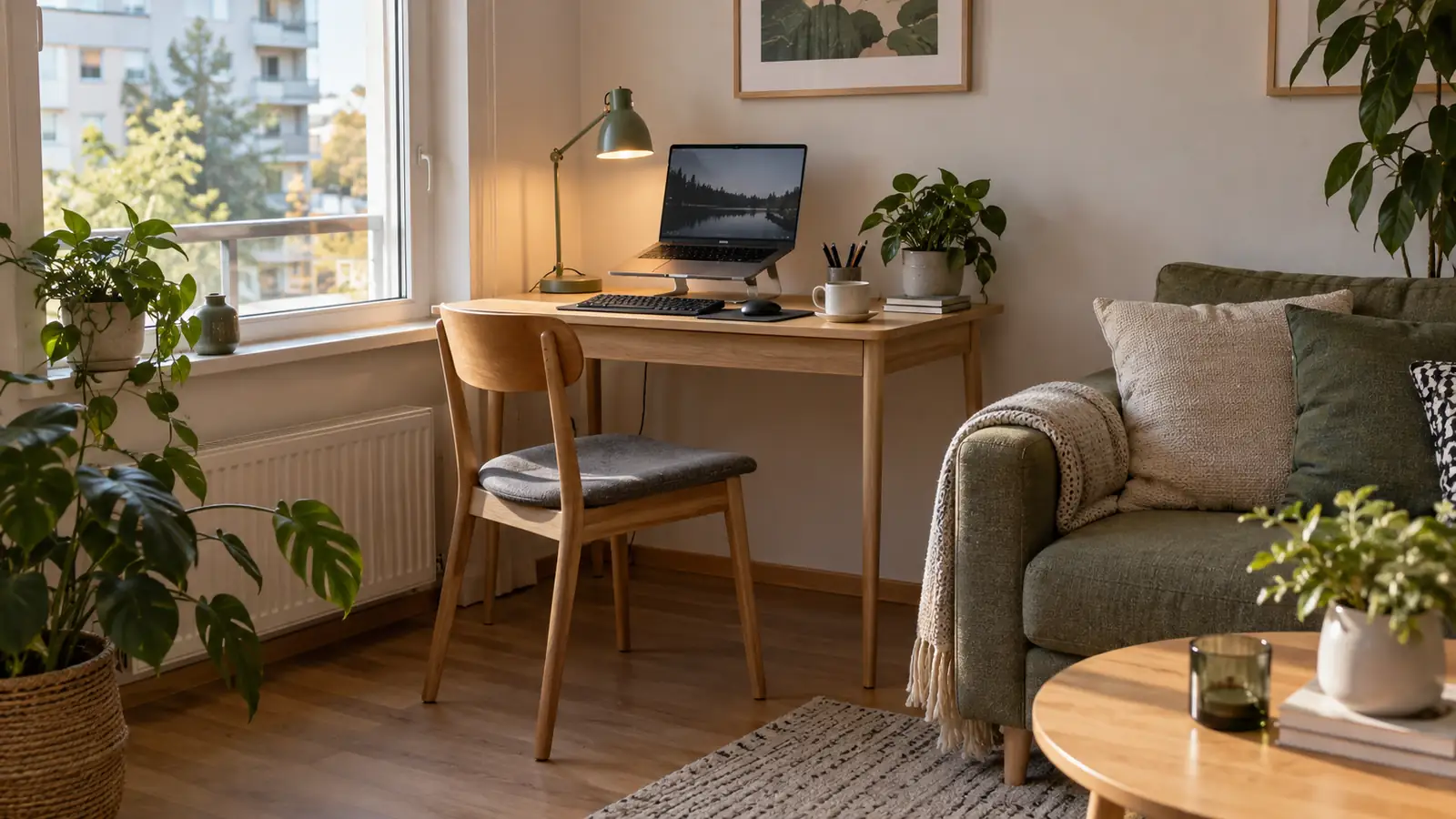
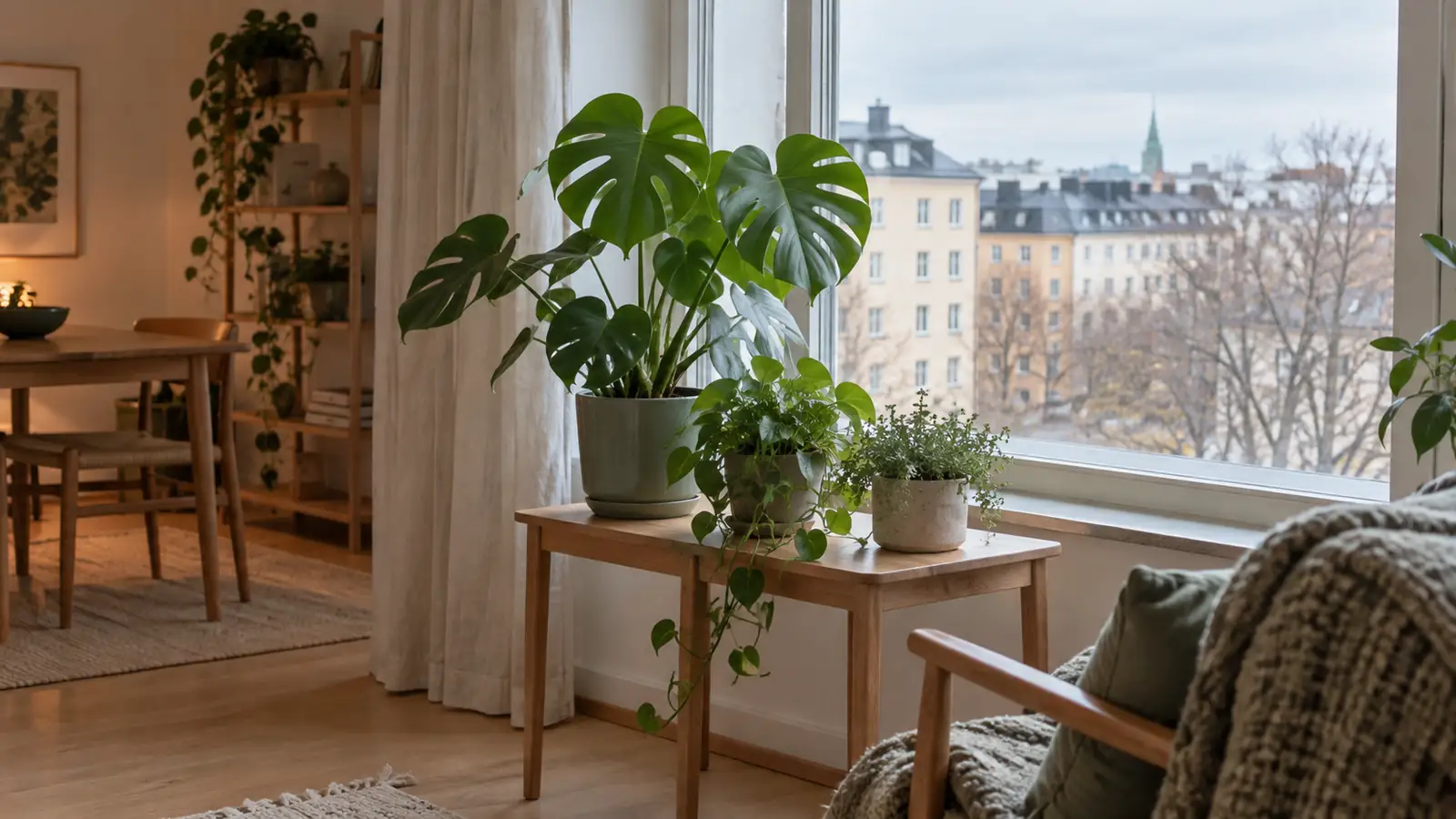
For winter greenery and the grow-light example, see houseplant care in the Finnish winter. For a desk that can close down at the end of the day, try the small-home workspace plan.
The useful outcome is understanding your own consumption and keeping a few habits you can actually repeat.