Published
Home lifeWhere do all the winter clothes go?
Make a small wardrobe work across Finland's seasons. A practical clothes rotation, storage measurements and a place for the clothes you wear again.
Written by  Novah Team
4 min read
Quick answer
Keep the current season within reach, give worn-but-clean clothes one small place and pack clean, fully dry off-season items by use. Measure storage before buying boxes.
Give this season the easy-to-reach space
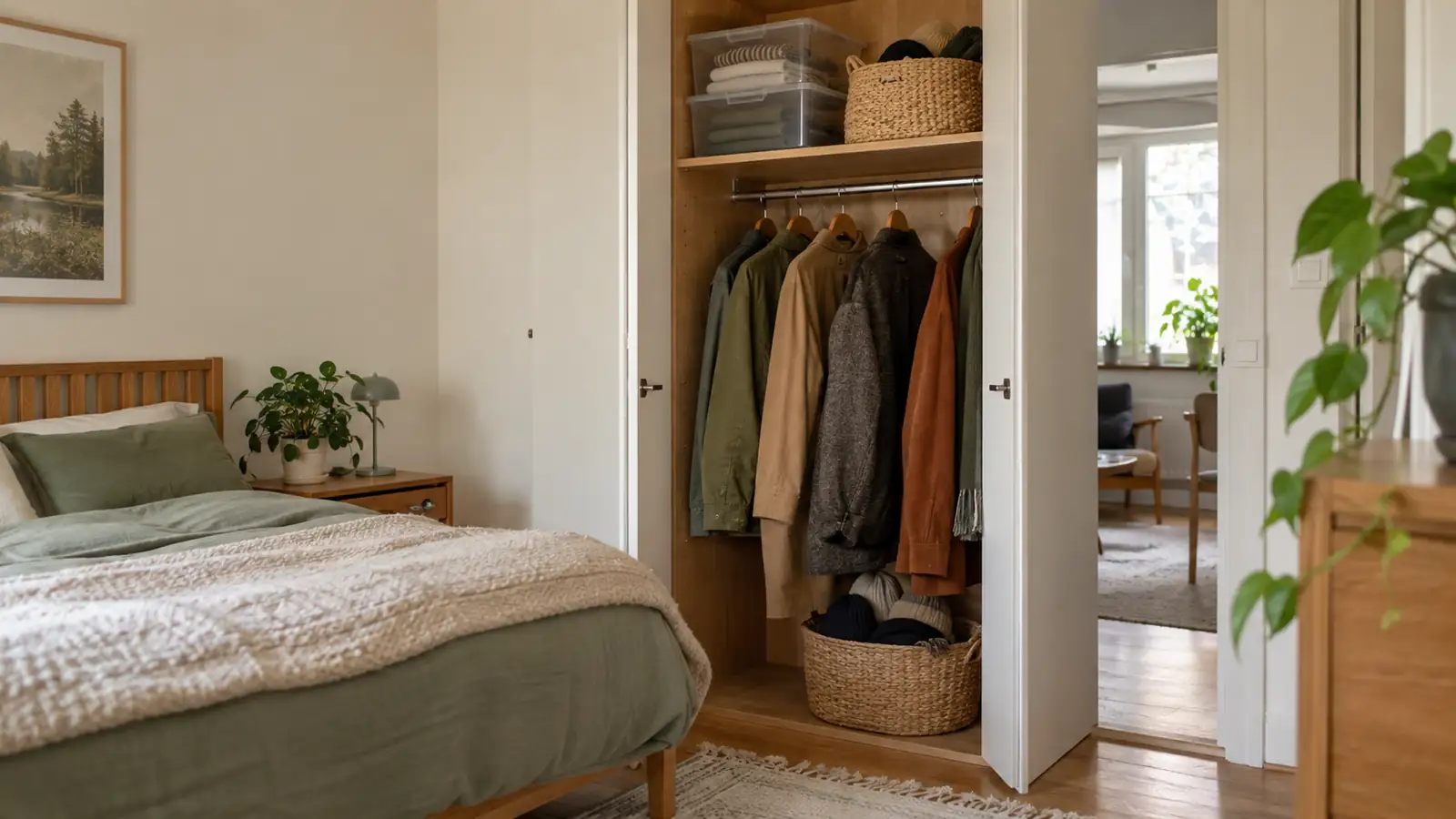
A winter coat, summer dress and swimming bag do not all need the best spot in October. Keep the clothes you currently use between shoulder and knee height where practical, and move the next season's things to less convenient storage.
Make three groups: in use now, genuinely needed later, and ready to leave the wardrobe. Start with one shelf or rail. Emptying the entire bedroom onto the bed is an ambitious way to discover that you also need somewhere to sleep.
Martat's wardrobe advice (Opens in a new tab) supports keeping the current season accessible and giving clothes their own consistent places. Use that principle without trying to turn every drawer into a showroom.
Set up three small wardrobe zones
| Zone | Keep here | Useful arrangement |
|---|---|---|
| Current season | Everyday clothing, coat and frequently used accessories | Reachable rail and shelves |
| Wear again | Clothes still suitable for another wear | One hook, basket or short shelf |
| Off season | Clean, dry clothing needed later | Labelled boxes or garment bags |
The wear-again place keeps a chair from becoming a second wardrobe. Give it a clear capacity: when the hook or basket is full, decide what returns to the cupboard and what goes to laundry.
Put hats and gloves together in a basket near the coats you use. Pair gloves before storage, rather than hoping their reunion happens in February.
Pack clothes so they are ready to wear later
- Sort by purpose or person: summer tops, swimming things, winter accessories. Keep categories small enough to find.
- Clean or air items as needed and let them become fully dry before packing. Deal with a small repair now while you remember it.
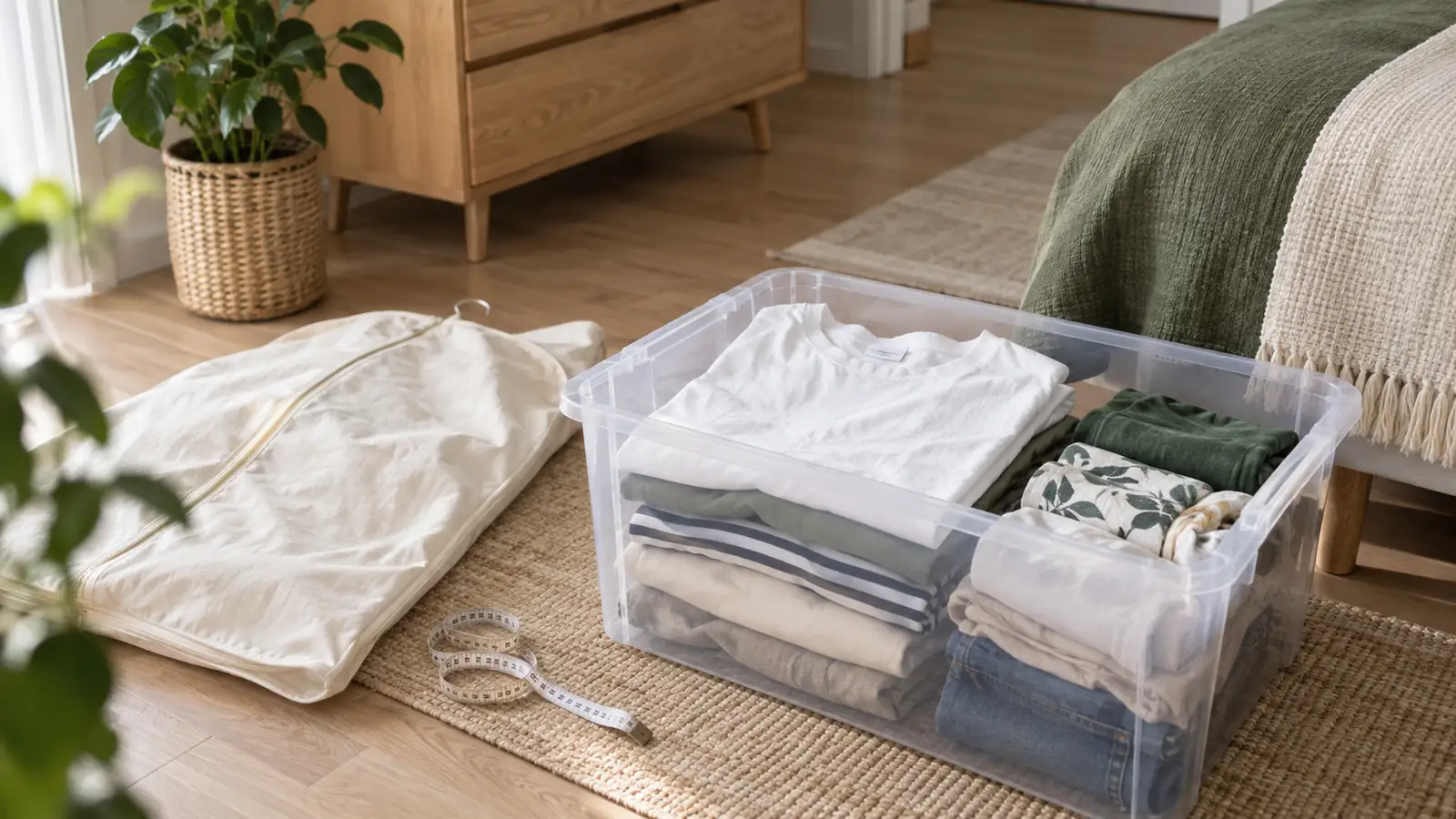
- Fold ordinary cotton clothing loosely. Hang garments that need their shape supported in a suitable garment bag.
- Label the outside with the contents and season. A plain piece of paper works.
- Choose a dry, ventilated indoor place. Put heavy boxes low and keep the things you may need first within reach.
Martat recommends clean textiles and dry, ventilated storage. A damp cellar is a different environment from a bedroom cupboard; a new box does not make the room dry. Choose another indoor location for moisture-sensitive clothing when necessary.
Two real storage options, with the dimensions
IKEA SAMLA with lid, 45 litres (Opens in a new tab) measures 57 × 39 × 28 cm. The transparent box makes a category easy to recognise. IKEA specifies indoor use and a maximum recommended stack height of 90 cm, with heavy items at the bottom.
For flatter storage, SKUBB storage case, 90 × 53 × 19 cm (Opens in a new tab) is a fabric option for wardrobes or under a bed. Measure the clear height beneath the bed and the route past its legs. The case still has to come back out.
| Your space | Start with |
|---|---|
| A high shelf | A box you can lift comfortably |
| Clear space under a bed | A low case that slides out easily |
| A spare part of a rail | A suitable garment bag |
| No spare storage | Keep fewer categories and rotate a smaller selection |
IKEA Espoo in Lommila (Opens in a new tab) is at Espoontie 21. Save the exact product name and dimensions before going; use the product page's store selector for availability.
Make the change of season a small job
When the weather changes, bring out one category first. A light jacket can stay available while heavier coats arrive. You do not need to predict every November morning in advance.
Return packed clothing to its labelled spot after a trip or holiday. If a category keeps overflowing, review its contents before buying another box. Storage works best when the item has a useful role in the home.
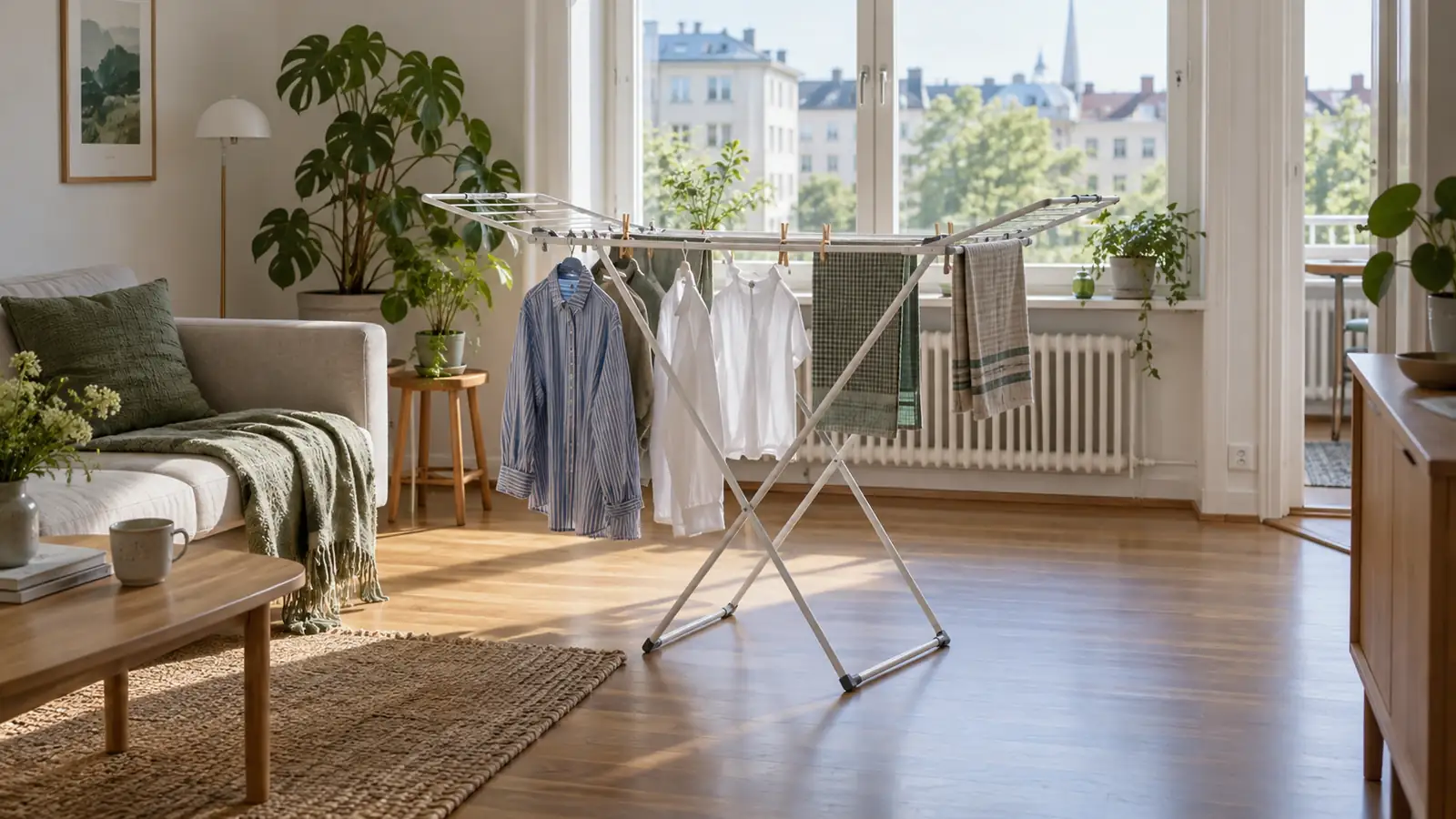
For the drying stage, use our small-apartment laundry setup. If balcony cushions are part of your seasonal shuffle, follow the balcony winter preparation plan for their separate indoor storage.
The finished wardrobe should make tomorrow's clothes easy to find and next season's clothes easy to retrieve.