Published
Bathroom and saunaHow to clean a bathroom floor drain
Lift the cover, remove visible hair and clean what you can reach. If the water still pools, call building maintenance.
Written by  Mikko Virtanen
5 min read
Quick answer
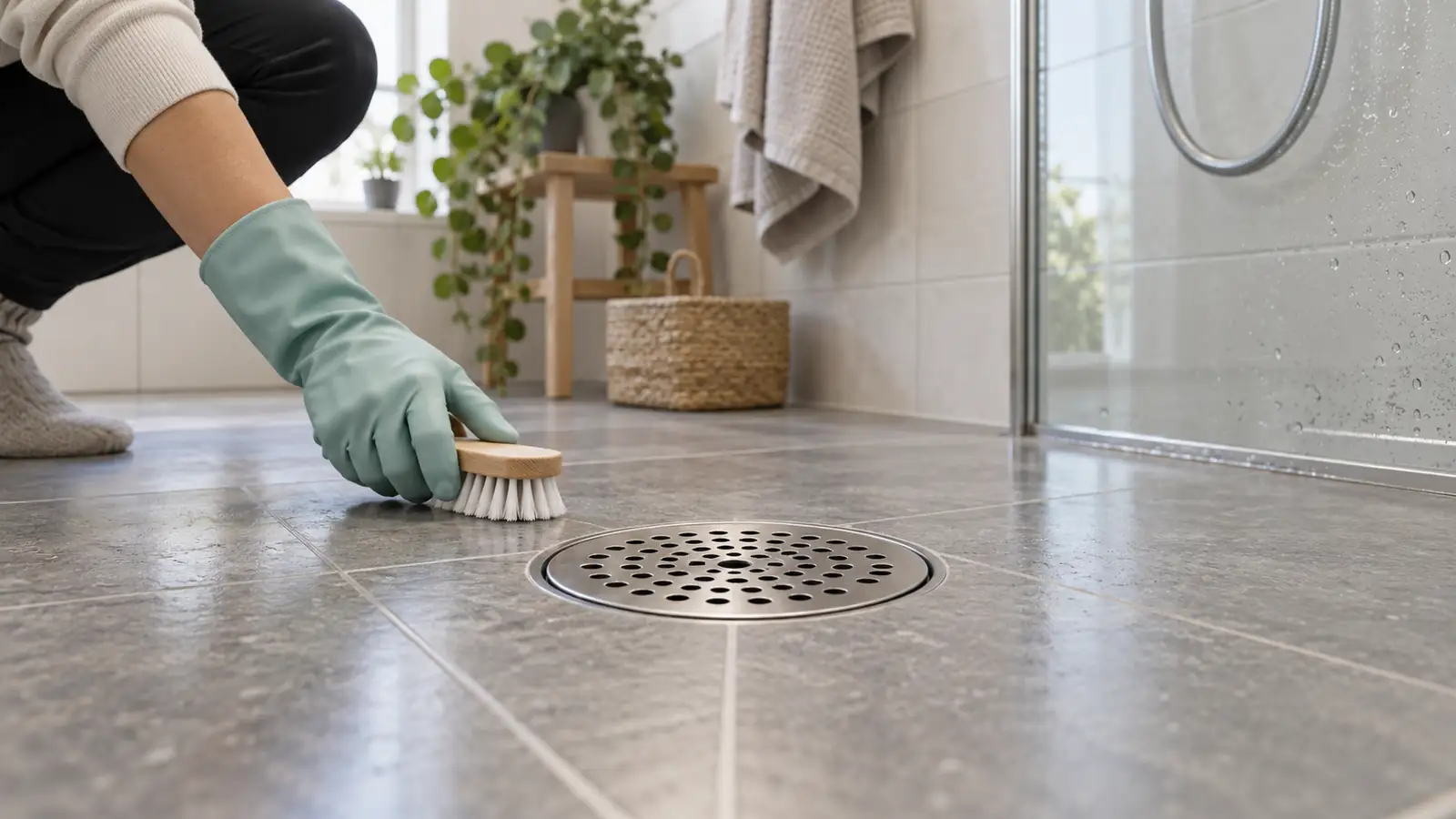
Lift the cover, take out the hair you can reach, wash the visible parts and put everything back. Remove a water trap only with instructions for that drain. If water still pools, a part will not fit or the smell stays, report it to maintenance.
Start with the part you can safely clean
The shower drain has a lousy way of announcing a problem: a puddle around your feet. Lift the cover and pull out the hair and debris you can reach. Wash the cover and the visible part of the drain, then put everything back firmly. If water still sits there after you have cleaned the parts your model allows, call building maintenance. Let them deal with what you cannot see.
Some drains also have a removable water trap. You can clean it if you know the model and have its instructions. HOAS shows its residents how to clean the accessible drain (Opens in a new tab); Vieser shows removal on its own model (Opens in a new tab). Your building's instructions decide what you should remove.
Check the drain before removing anything
Look at the cover. Does it lift easily, or does it need a tool? A long or heavy cover may hide a smaller drain and need its own lifting method. Find the maker's mark or check the home's care papers. Do not pry against the tiles to win an argument with a stuck cover. Vieser describes a tool for some large covers (Opens in a new tab).
Hair on the grate is a small cleaning job. Water backing up, reaching another fixture or escaping the wet area is a maintenance problem. Stop using the shower if water is rising, and use the building's urgent fault channel if it threatens another room. A smell can have several causes, including dirt or a water trap that is dry or out of place; the smell alone will not tell you which. Vieser's instructions show what to check on its drain (Opens in a new tab).
Clean or call maintenance?
- Hair is caught on the cover
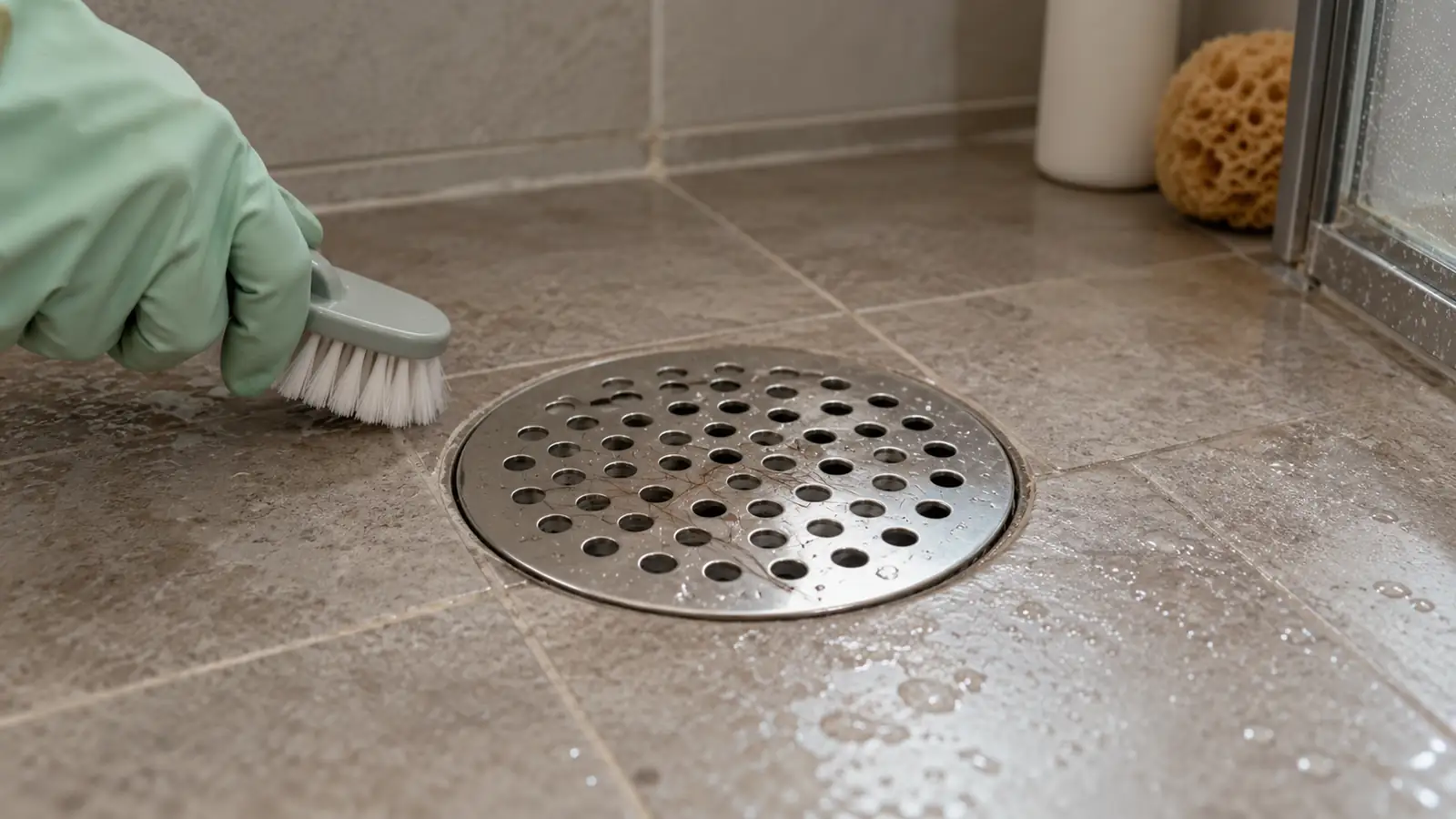
- Pull it out, wash the cover and visible walls, then check the flow.
- You know the trap model and have its guide
- Wash and refit the insert as shown. Check that the seal is in place.
- A part sticks or will not fit back
- Do not force it. Tell building maintenance which part caused trouble.
- Water backs up, or slow flow or smell remains
- Stop using a backing-up shower and report the problem to maintenance.
Set up a clean, contained work area
Let the shower water drain away. Get gloves, a small soft brush, a cloth and a bag for the hair. Keep any removed parts together, where nobody will step on them. If the instructions say you may remove the water trap, take a photo of how it sits first. It is a handy reminder for putting it back.
Put hair in the bin, not down the pipe. Use a mild cleaner suitable for the drain and follow its label. Skip the dramatic bottle of drain opener for an ordinary hair clean. If one has already gone down the drain, tell maintenance what you used before anyone opens it.
Clean the cover and accessible chamber
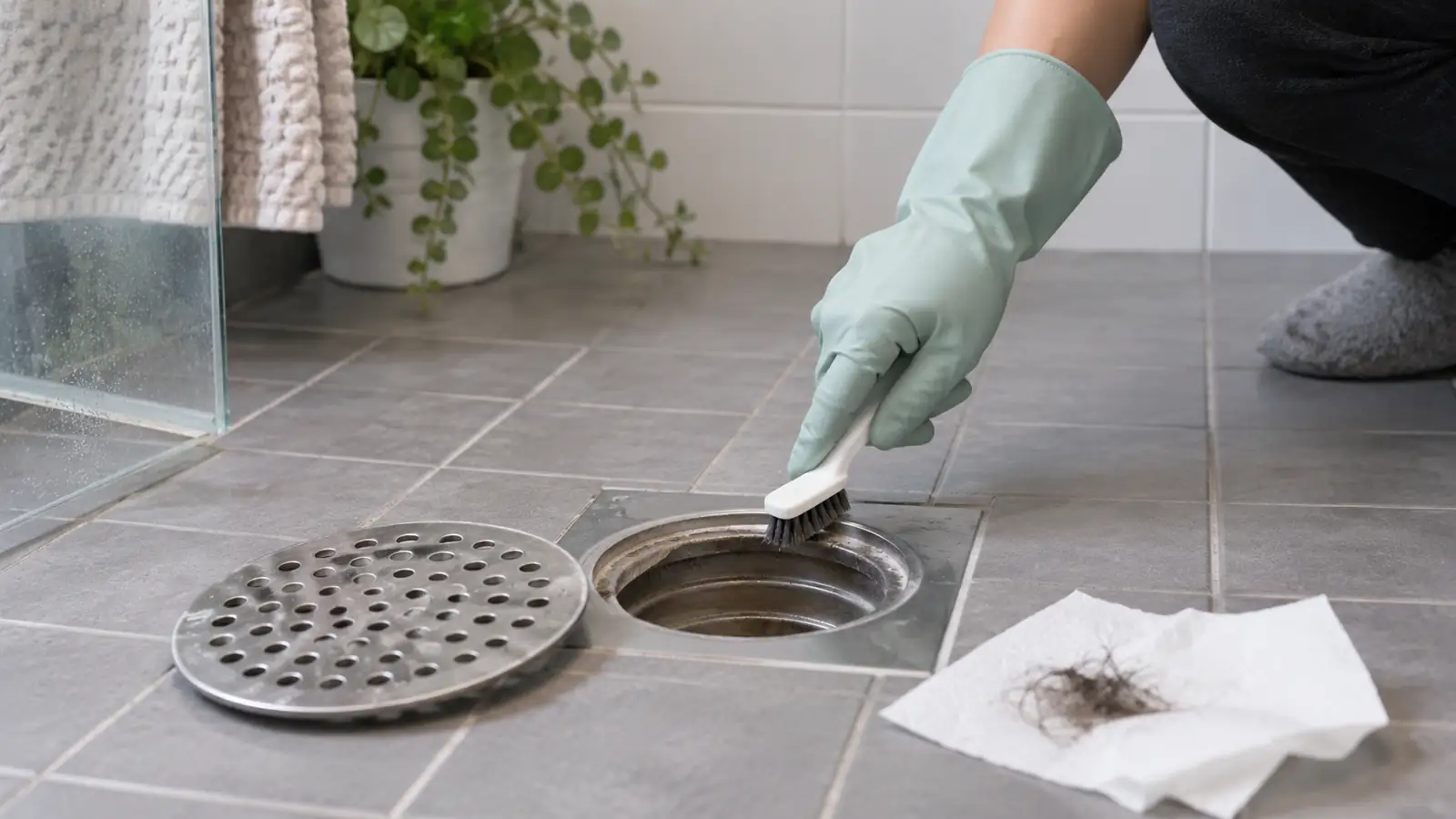
- Lift the cover using its handle, edge or specified tool. Put it somewhere it will not scratch the floor.
- Pull hair and loose dirt from the cover and the opening below it. Bag the waste.
- Brush both sides of the cover and the reachable drain walls. Rinse as the product and drain instructions allow.
- Look for a clearly removable trap. If you cannot identify it or it resists, stop here and refit the cover.
That cover-level clean is often enough. HOAS's resident guide (Opens in a new tab) describes the same practical steps: gloves, hair removal and brushing the accessible walls. A long channel cover does not tell you what the parts below it look like, so check the model before going further.
Remove a water trap only when its instructions allow it
The water trap holds water that keeps drain smells out of the room. On some drains, it has a lift-out insert; on others, the parts work differently. Vieser's guide for its drain (Opens in a new tab) shows how to wash the insert, check its seal and press it back into place. Use that sequence only for the matching model.
For an identified removable trap, follow its instructions, wash the part and check that the visible seal is intact. Put it back in the right position and make sure it sits fully. If it will not fit without force, call maintenance. Do not push a wire or tool into the pipe because the visible part looks clean.
Reassemble and check the result
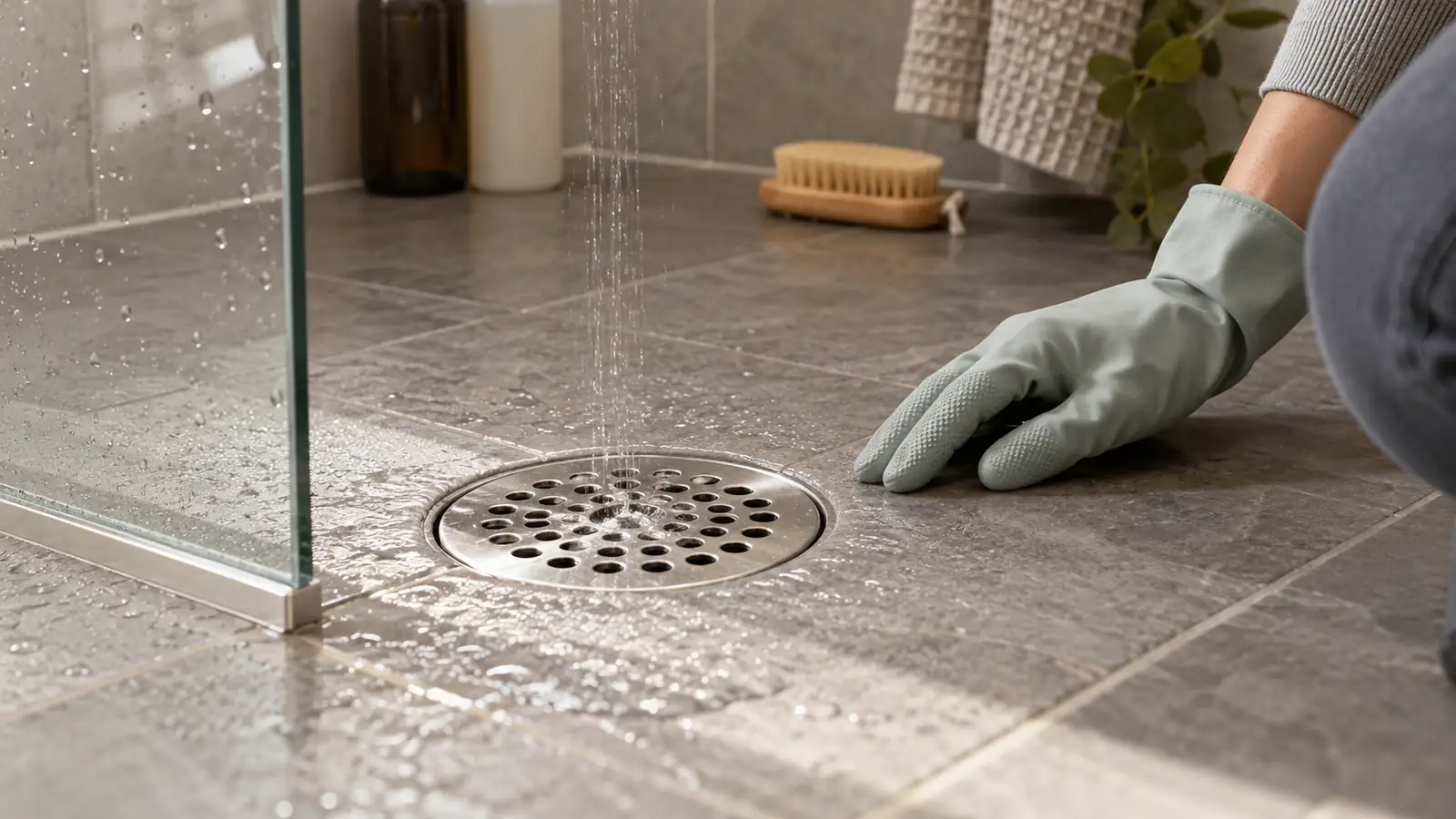
Set the cover flat and check that no part has been left on the floor. Follow the maker's instructions for adding water to the trap, then run a modest amount of water. Does it drain as usual? Check once more after the next shower.
If a smell appears after cleaning, check the removable trap's position against its instructions. A trap in an unused bathroom may also have dried out; add water as your housing provider advises. HOAS tells its tenants to report a problem that cleaning has not fixed (Opens in a new tab).
When to call building maintenance
Call if a cover will not lift normally, a seal is damaged, a part will not go back, water backs up, another drain is affected, or cleaning has not fixed the flow or smell. Use the urgent fault route for water escaping the bathroom. Tell maintenance about any drain chemical already used. They need that information before handling the drain.
In a rental, the right contact and division of work come from your housing provider. HOAS's instructions (Opens in a new tab) are an example for HOAS homes, not a rule for every apartment. Ordinary bathroom cleaning is different from clearing a pipe blockage.
Keep it manageable between cleans
Pick visible hair off the cover before it gathers below. Check the drain when you clean the shower floor, or sooner if water starts to slow. Empty a hair catcher if you use one, and leave the cover sitting flat. No elaborate calendar needed.
For a move, add the accessible drain to your move-out cleaning checklist. For help with everyday bathroom surfaces, see Novah's home cleaning service in Helsinki.